Read the plate first
Remanufacture shops in Iran already talk 13D and 13E2 in the same breath as V94.2. A useful page splits the two engines and still asks for dimensional inspection. GT13D carries BBC heritage. GT13E2 is the later Alstom and ABB machine. They do not share a shopping list. Below are three plant-style cases — warehouse language versus the plate, a 13D nozzle at a 13E2 outage, and a scaled scan — then what aftermarket still has to prove, then a filled request. Euroturbine will not merge the two frames in one quote.
Write BBC, ABB or Alstom as the plate shows it, then GT13D or GT13E2. Site name alone is not enough. Iranian warehouses often say BBC-13D and mean GT13D. That is usually right, and we still want the plate photograph. Combustion liners live on a different clock from rotating blades. Hot isostatic pressing — HIP — on 13E2 buckets follows the same metallurgical gates as other E-class nickel blades. Do not scale a 13E2 blade from a 13D scan. The airfoil that looks related is how the wrong cooling and the wrong stack-up arrive together.

Case 1 — Warehouse said BBC-13D, the plate is GT13D
The name on the plate is a history of ownership, not a reason to merge the shopping list. A BBC plate on a 13D and an Alstom plate on a 13E2 can sit in the same Iranian fleet. Photograph the plate. Write the letters you see, then the model. If the tag in the warehouse says BBC-13D, send that tag and the plate together so engineering can close the loop. Warehouse language and plate language sometimes drift after a change of owner.
A combined-cycle site sends a request that only says ABB parts, site name, no model. The warehouse tag is BBC-13D. The plate photograph is GT13D. Euroturbine writes GT13D and prices that engine. The 13E2 sister unit on the same fence stays off this quote.
Case 2 — 13D nozzles arrived at a 13E2 outage
Combustion hardware and hot-gas-path rows are separate lines on both engines. They are not interchangeable between 13D and 13E2. The store that bins everything under ABB will send a 13D nozzle to a 13E2 outage. If 11N2 hardware also lives on the same site, give it its own request. Three plates in one fence still mean three bills of materials.
The 13E2 combined-cycle unit opens. A crate of 13D nozzles sits on the floor because the store used the ABB bin. Euroturbine will not bless that crate. We ask for the 13E2 OEM numbers and send the 13D metal back to its own job.
Case 3 — Someone scaled a 13D scan to make a 13E2 blade
Reverse engineering from a 13D sample is normal on that engine. Using that scan as a scaled 13E2 drawing is not engineering. A 13D sample is evidence for a 13D row. It is not a drawing for a 13E2 row. Cooling, stack-up and alloy pedigree have to be proven on the engine you actually run. Euroturbine will stop a job that tries to grow one airfoil into the other by a factor someone wrote on a whiteboard.
The 13E2 combined-cycle unit has no drawing. A contractor offers a 13D scan multiplied by a factor. Euroturbine writes stop. We will scan a 13E2 sample, or we will wait for one. We will not pour a grown-up 13D airfoil into a 13E2 disc.
What aftermarket still has to prove — and what the request looks like
Drop-in stack-up so the part sits in the disc or the casing you have. Alloy pedigree with a heat number. Coating specification if the row is coated. NDT on the certificate. Those four are the same conversation you already have on V94.2. HIP on 13E2 buckets follows the same gates as other E-class nickel blades: alloy, remaining wall, hours, last inspection. A filled request looks like this. Plate photograph: BBC or ABB or Alstom, then GT13D or GT13E2 — site name only is not enough. Per line: stage, rotating or stationary, OEM number, quantity, hours, new-make or repair or HIP. Combustion liners on their own OEM numbers. If 11N2 also lives on site, a separate request. Photographs of a sample root if the tag is faded.
GT13D · GT13E2 · Casing repair
One family story, two engines, three names on old plates. Write the letters you can photograph, then the model.
Frequently asked questions
We say BBC-13D in the warehouse. Is that GT13D?
Usually yes. We still want a photograph of the nameplate. Warehouse language and plate language sometimes drift after a change of owner. The photograph closes that gap before anyone pours metal.
Should liners travel on the same line as blades?
No. Give liners their own original-equipment numbers. Combustion life is not blade life. A blade set that arrives without the liners the outage needs will not restart the unit.
Can you HIP 13E2 buckets?
Yes, when the alloy and remaining wall allow it. The metallurgical gates are the same as other E-class nickel blades. Hours and the last inspection report travel with the request.
Related Euroturbine pages
Pick 13D or 13E2 as one line, then send the plate photograph
Add the original-equipment list. Euroturbine will not merge the two frames in one quote, and will not scale one airfoil from the other.
Request a quoteMore articles
Why Cooled Turbine Blades Need an Airflow Test Before They Ship
APS, LVPS, CVD, HVOF and Pack Cementation: Name the Coating Process
Aftermarket Supply for a Legacy Siemens V93
Fir-Tree Blade Roots and Turbine Discs: The Blade Is Cast, the Disc Is Forged
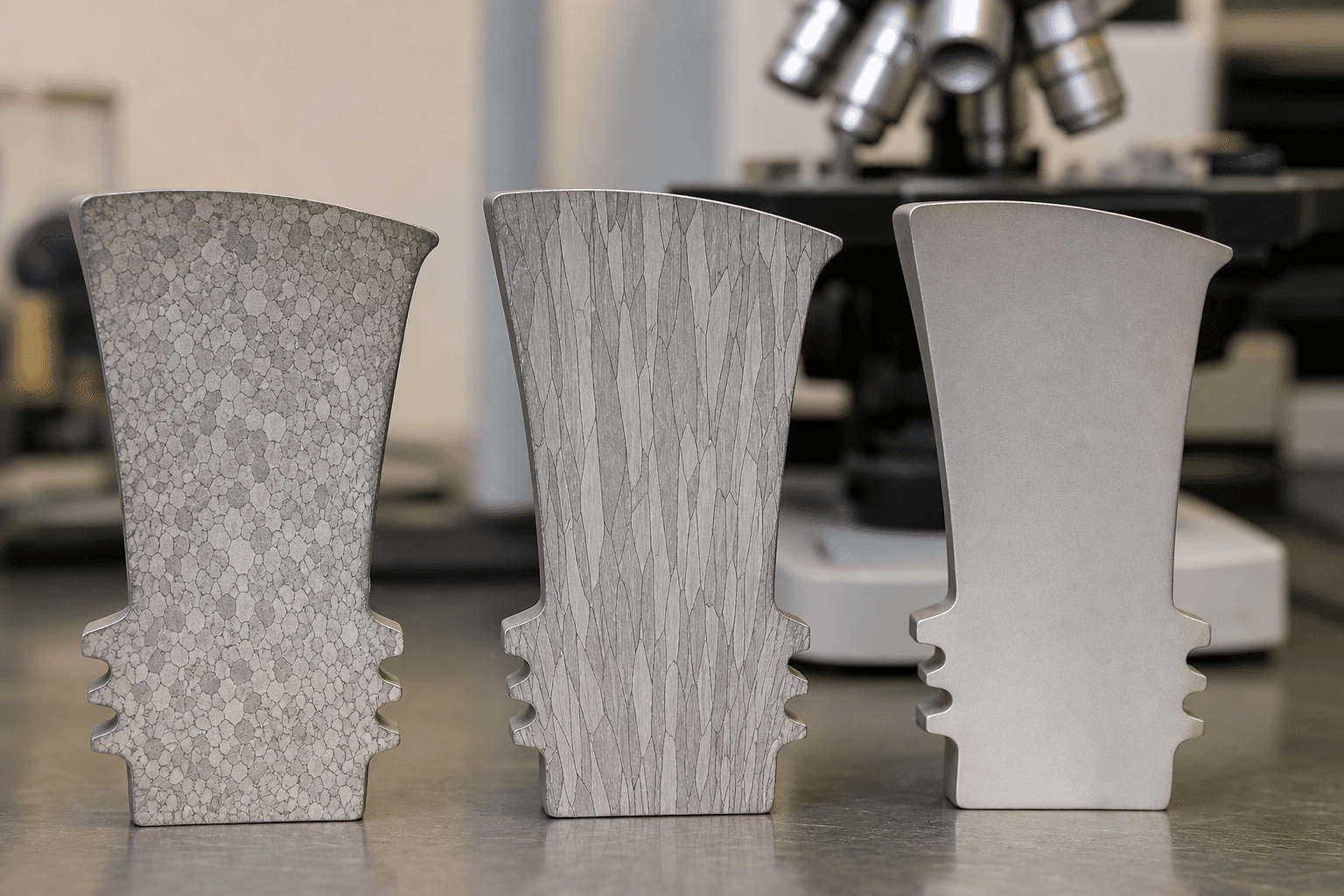
Equiaxed, Directionally Solidified and Single-Crystal Blades: Three Different Products
Last updated: August 29, 2026