Compressor-station logic
The MS5002 lives on pipelines and process drives. Starts, load and the story at the load coupling differ from a Frame 5 generating set. Copying an MS5001 bill of materials is how the wrong nozzles arrive at a compressor station. The machine has two shafts. High-pressure turbine rows and power-turbine rows are not one lump called turbine blades. Below are two plant-style cases, then how far site repair is allowed, then a filled compressor-station request. Euroturbine splits the list before anyone prices metal.
On the request write MS5002, the site duty, the stage, the original-equipment numbers, and hours or starts if you have them. Gas compression is the duty we see most. Other process drives exist; say which one. Stores that grew up on Frame 5 generating sets will try to reuse those bins. That habit is expensive. Photograph the plate and the row. If the plate is gone, photograph the driven equipment so it is obvious this is not a power unit.
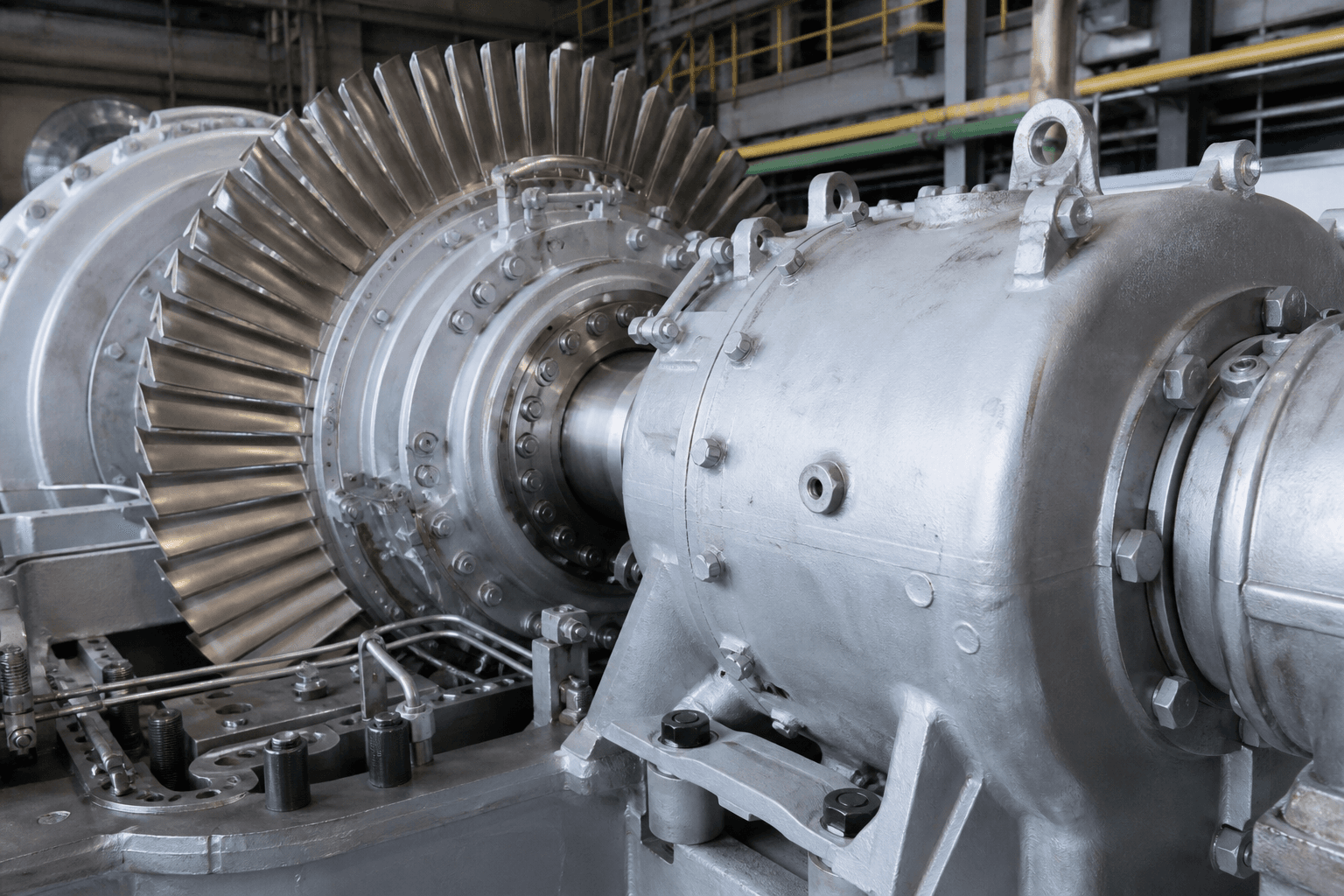
Case 1 — Compressor station, the store sent Frame 5 nozzles
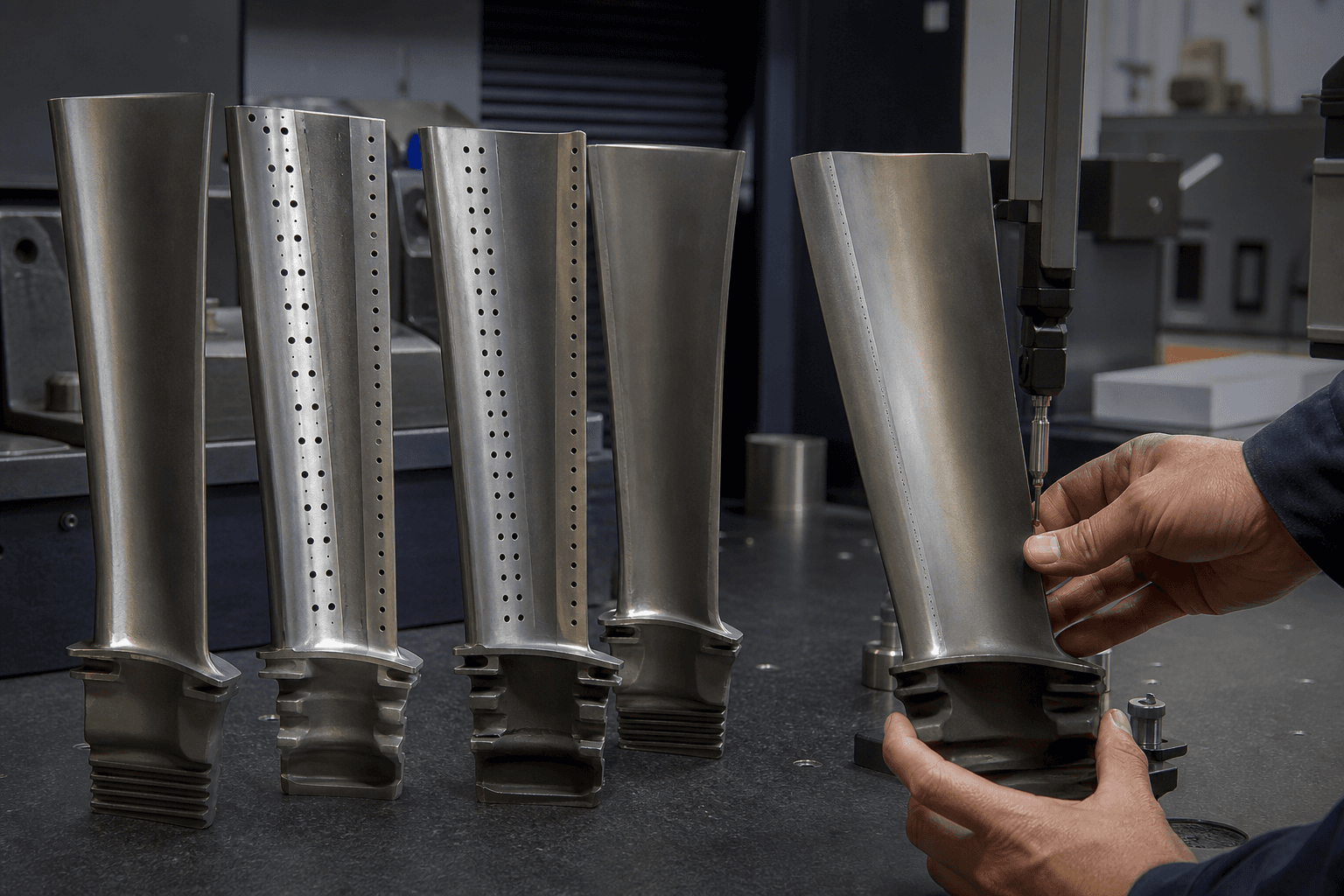
A generating Frame 5, the MS5001, spends its life at a grid-related speed and a relatively steady load. The MS5002 follows the compressor or the process. Starts can be more frequent. Load can swing. The coupling and the driven train change how the power turbine is used. Part numbers follow that duty. A bucket that sits in an MS5001 disc is not assumed to sit in an MS5002 disc until numbers and dimensional inspection — CMM in every shop — say so. Euroturbine will not bless a swap from the word پنج.
An MS5002 compressor station opens a hot-gas-path outage. The central store ships nozzles tagged Frame 5. The plate on the package is MS5002, gas compression. Euroturbine sends the crate back unopened as a quote line and asks for the MS5002 OEM numbers. A telephone comparison of two airfoils is not interchange.
Case 2 — Two shafts, two conversations
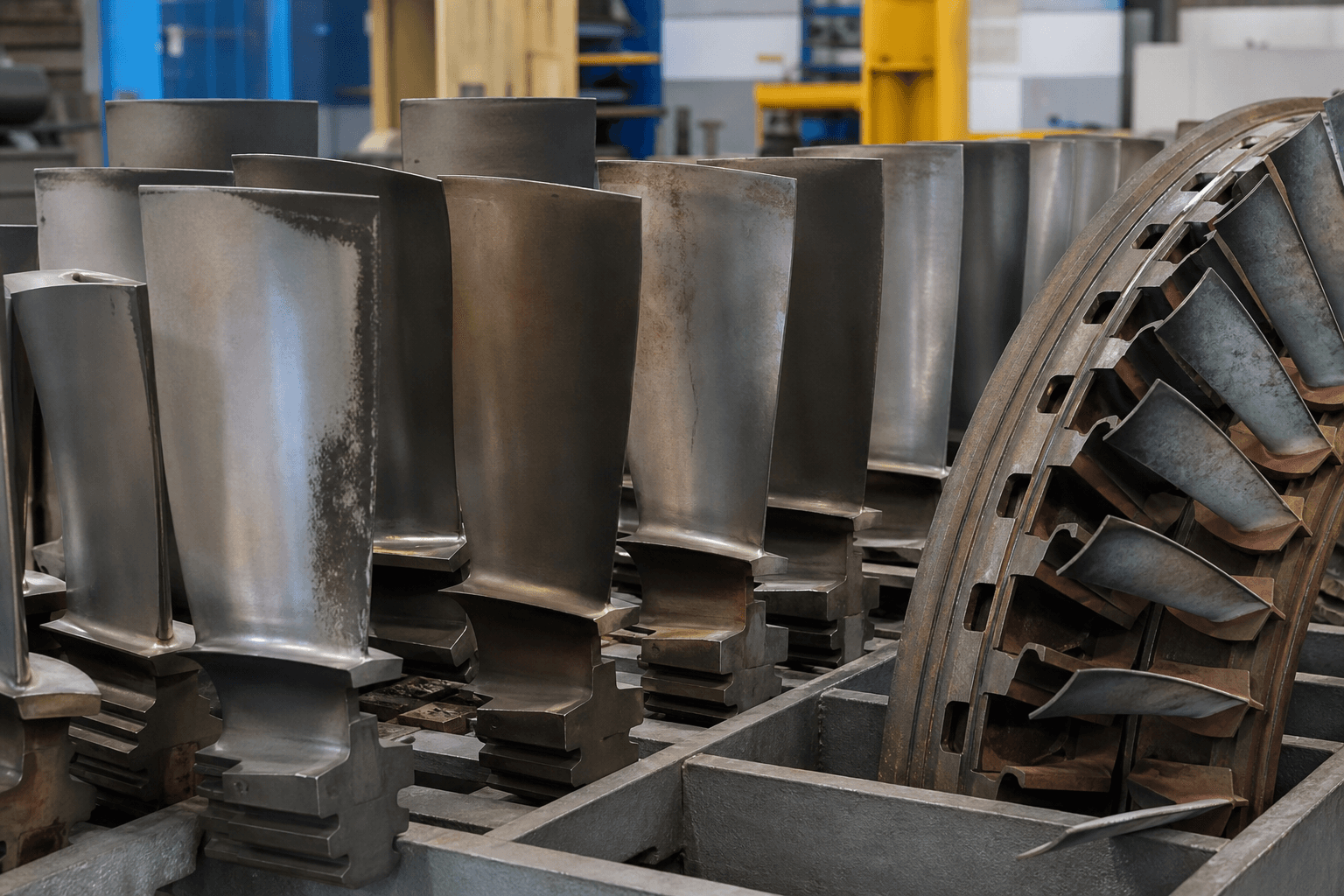
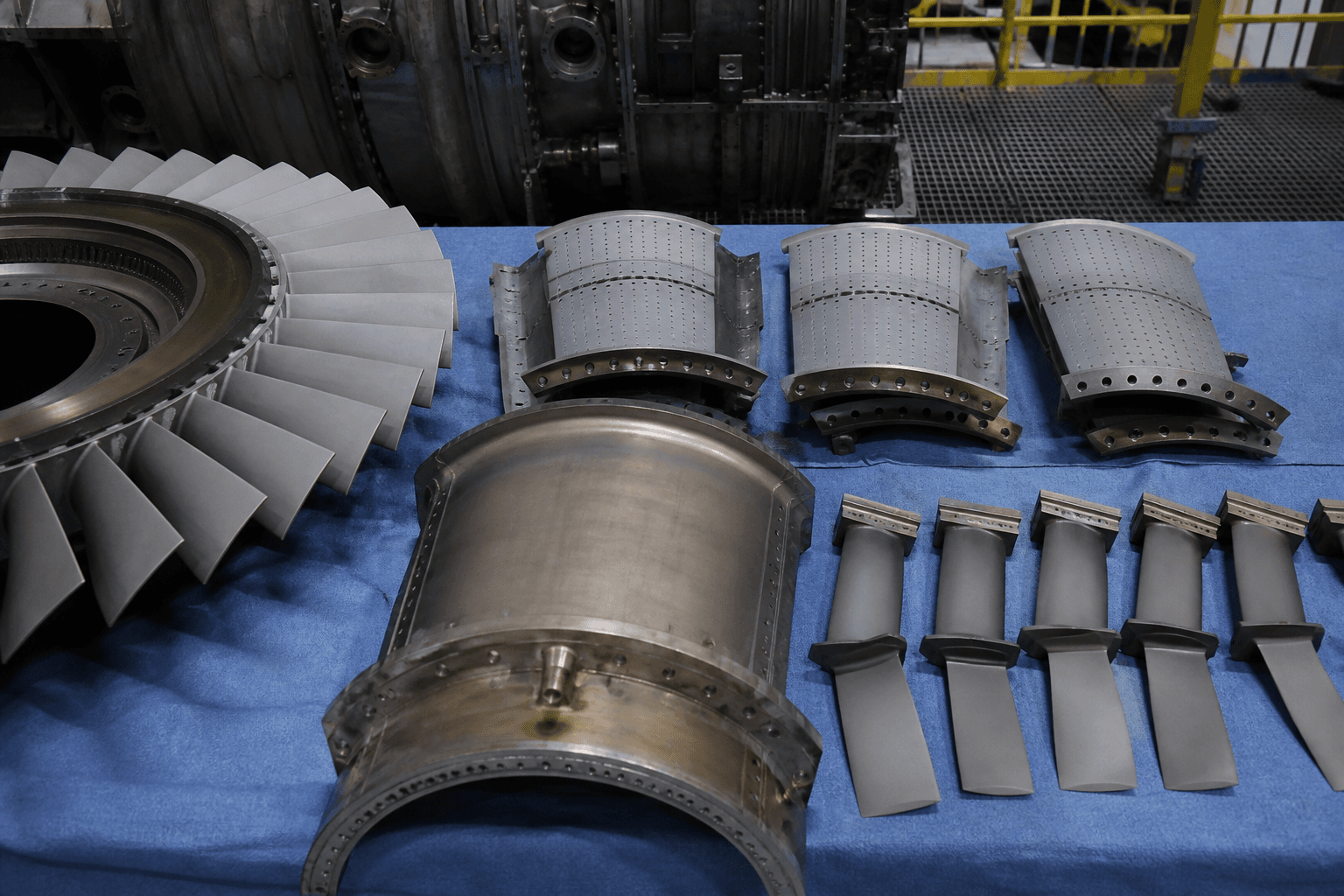
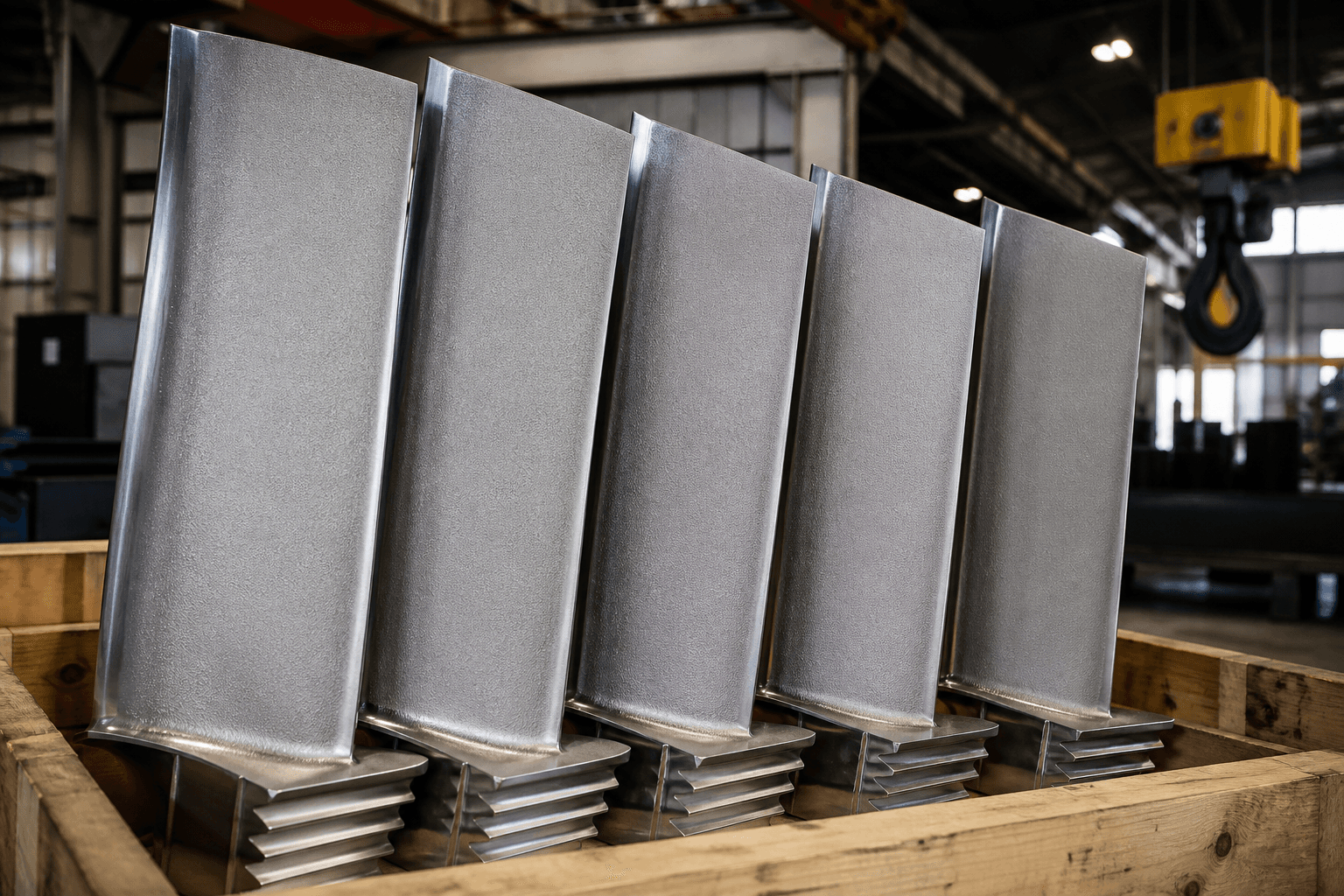
High-pressure turbine rows see the gas first. Power-turbine rows turn the load. They do not share a single line on a competent request. If the store writes only turbine blades, Euroturbine sends the list back. That is slower than splitting the list on day one. If you are unsure which shaft a worn sample came from, send a photograph of the root and the disc or the casing it sat in. Engineering can usually tell from the fir-tree and the airfoil before anyone guesses a number.
The same compressor station sends one worn sample labelled پره توربین. The root photograph shows a power-turbine fir-tree. Euroturbine writes PT on that line and asks for the high-pressure rows as a separate list. Repair versus new-make on this vintage follows remaining wall and the duty you actually run, not the power-generation playbook.
Result 1 — Site blend of a small nick is allowed
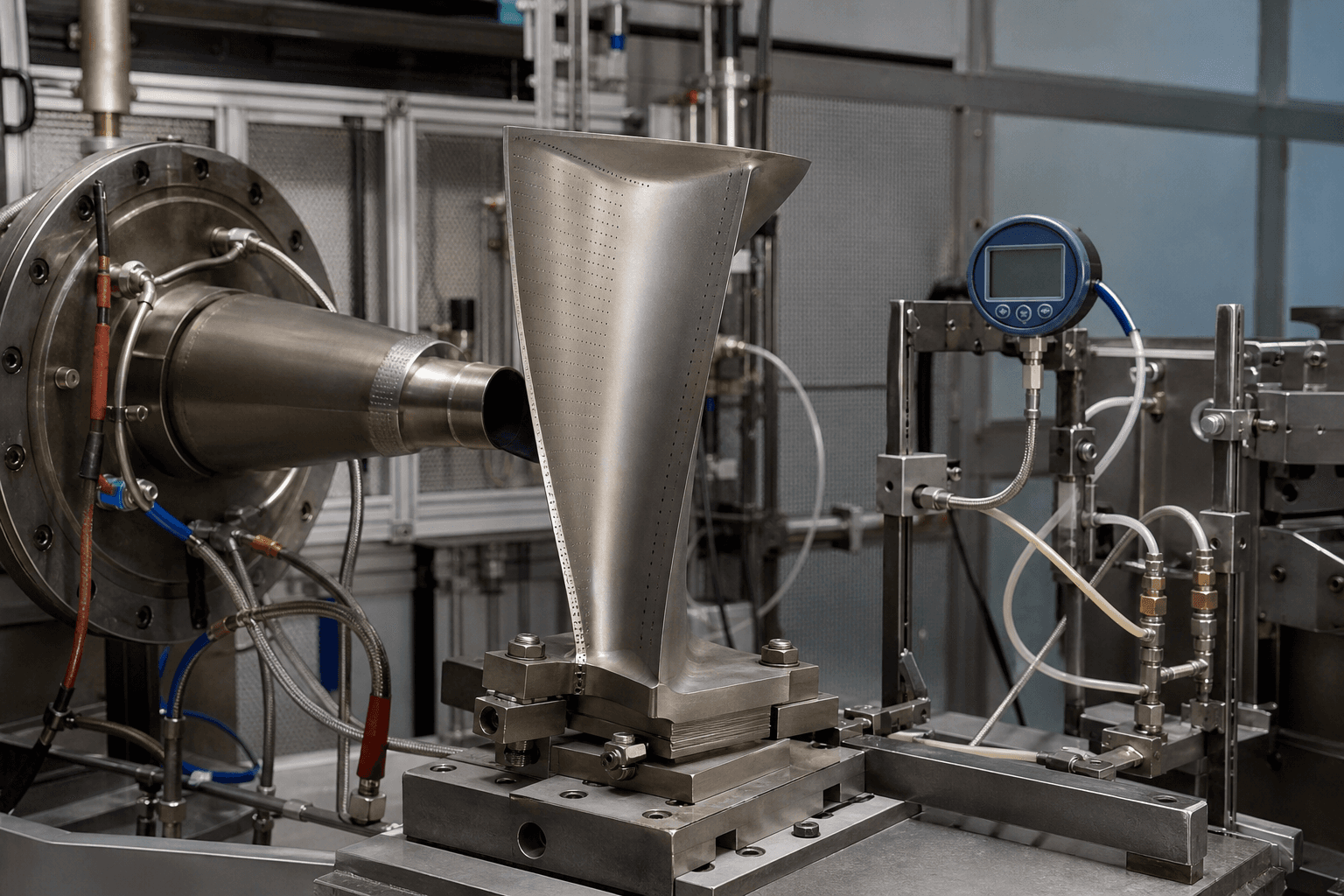
Local blending and inspection of a small nick can stay on the station if the workscope says so. Fluorescent penetrant — NDT — comes first. Then blend to a drawn contour, measure, release. This is not a weld. Case: an MS5002 power-turbine vane with a small foreign-object nick, remaining wall enough, no crack into the platform. Euroturbine writes blend and inspect on the station, not a shop crate.
Result 2 — Casting, coating and a first-stage root stay on the shop route
Do not field-weld a first-stage root without a written workscope Euroturbine has signed. Casting and coating stay on the shop route even when the compressor station is hours from a heavy-duty store. The metal still has to travel to a foundry or a coating booth. Send the plate and the row the same week the vibration or temperature excursion appears, not the week the machine is already down. A station far from a store feels the delay; that is not a reason to strike an arc on a running-stage root.
What a complete compressor-station request looks like
Nameplate: MS5002 — those letters, not Frame 5. Duty: gas compression, or name the other process drive. Split: high-pressure rows on their own lines, power-turbine rows on their own lines. Per line: OEM number, stage, rotating or stationary, quantity, hours and starts, new-make or repair. Photographs of the plate, the row, and if the plate is gone the driven train. If a worn sample is the evidence, root and both sides. Last NDT if the parts have already run. Euroturbine will say yes only after numbers and dimensional inspection, not after a telephone comparison with an MS5001 bucket.
A two-shaft mechanical-drive machine borrows the Frame 5 nickname in too many stores. It does not borrow the Frame 5 bill of materials.
Frequently asked questions
Can Frame 5 buckets drop into an MS5002?
Do not assume it. Geometry and duty differ. Euroturbine only says yes after original-equipment numbers and dimensional inspection. A telephone comparison of two airfoils is not interchange.
Is aftermarket common on this vintage?
Yes. The constraint is the quality of the sample and the documents that travel with it, not a policy argument about original equipment. A worn sample that has already lost wall is still only evidence, not a drawing.
Can we repair first-stage blades on the station?
Blend and inspect a small rub locally if the workscope allows it. Casting, coating and any weld on a first-stage root stay on the shop route. Do not field-weld without a workscope we have signed.
Related Euroturbine pages
If the MS5002 nameplate is in hand, photograph the plate and the row
Euroturbine will split high-pressure and power-turbine lines before quoting, and will keep MS5001 numbers off the same page.
Request a quoteMore articles
Last updated: August 29, 2026