Combustion has its own bill of materials
A V94.2 outage that only shops blades and forgets liners, transition pieces and the burner casing will stop again on temperature spread. Temperature spread is a combustion problem until proven otherwise. Iranian remanufacture pages often open with burner casings and mixing chambers, sometimes with a hundred-thousand-hour claim. Hours are a hint. Distortion, crack length and remaining thickness decide. Below are three plant-style cases — liner, transition piece, burner casing — then three results after a long run, then a filled outage bill. Mixing chambers and burner casings stay two parts.
Liners fail by oxidation, cracking and loss of tile or thermal barrier coating. Transition pieces crack at welds and at inlets. Burner casings and combustion casings distort and crack after long hours. Iranian shops often quote heat treatment and a remaining-life assessment after about a hundred thousand hours. That can be valid if remaining life and risk are written down. It is not valid as a slogan on a page that names no crack length. New-make liners exist when repair limits are exceeded. The data-pack rule is the same as on blades: heat, inspection, and a workscope before anyone lights a furnace.
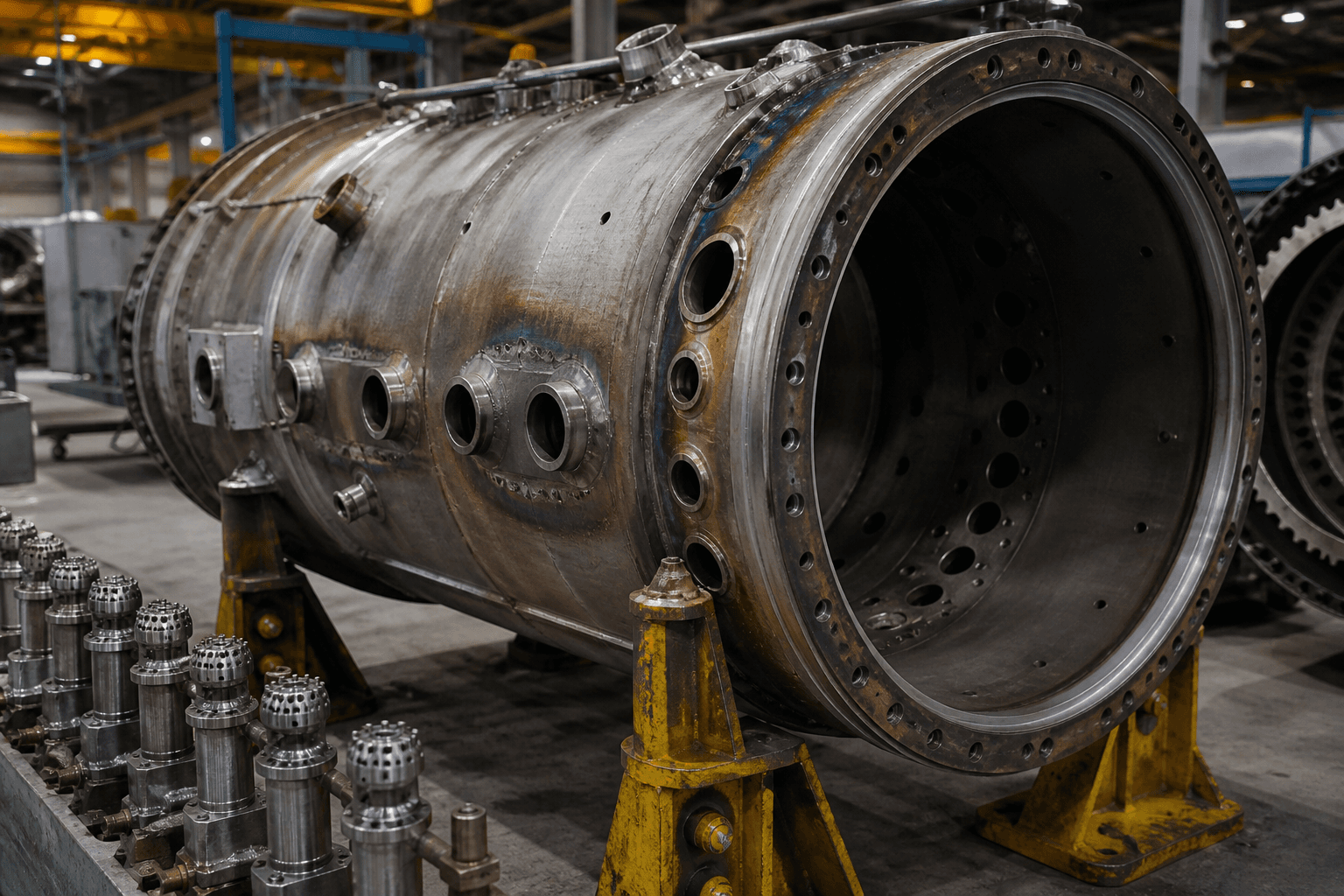
Case 1 — Liner set missing from a V94.2 blade crate
A liner oxidises, cracks, and loses tile or thermal barrier coating — TBC in every shop. That is a hot-gas and a thermal-cycle story. It does not share a clock with a rotating blade. A blade set that arrives without the liners the outage needs will not restart a unit that already had a temperature-spread complaint. Photograph each liner as it comes off. Mark crack ends if you can. That photograph is worth more than a sentence about a hundred thousand hours.
A combined-cycle unit on V94.2 shops first-stage buckets and forgets the liners. Temperature spread was already on the last run report. Euroturbine writes liners as their own OEM lines: quantity for the set, hours, photographs of the hot face, new-make or repair. The blade crate is a different bill.
Case 2 — Transition piece cracked at the inlet weld
A transition piece, often written TP in Iranian shops, cracks at welds and at the inlet where the gas turns. Buying only blades because the store already has a blade conversation will not close that crack. Give each TP its own OEM number. Photograph the weld and the inlet. If remaining wall and crack length sit inside the repair map, Euroturbine writes weld or blend, heat treatment, NDT — non-destructive testing — again. If the crack is too long or in a forbidden zone, we write replace.
The same V94.2 unit sends a TP with a crack at a known inlet weld, a few tens of millimetres, wall still inside limit. Euroturbine writes repair, not a new serial. A neighbouring TP on the same unit with a crack into a forbidden zone is a replace line. One sentence «ترنزیشنپیسها» does not cover both.
Case 3 — Burner casing, not a mixing chamber
A burner casing or combustion casing goes oval and grows long cracks after very long hours. A mixing chamber is a different OEM number — Iranian shops usually say میکسینگچمبر. Do not bury either under a line that says hot-gas-path set or casing. Use the name the last outage report used, plus photographs of the inside and the outside. Mark where each crack starts and where you think it stops.
The V94.2 combined-cycle unit sends a heavy ring tagged casing. The last outage report said burner casing. A mixing chamber on the same machine is clean. Euroturbine writes the burner casing as its own item and leaves the mixing chamber off this furnace story. We will not print a plant name we did not work.
Result 1 — Repair and heat treatment
This is the job when cracks are short, they sit in a zone the specification allows to weld or blend, the bore is still close to round, and remaining wall is above the repair minimum. The shop maps every indication, welds or blends only inside that map, heat-treats so the weld and the parent metal sit in a known condition, then inspects again. You get the part back with a workscope that says which cracks were closed. You do not get a verbal «درست میشود». Hours alone — including a hundred thousand — are not this permit.
Result 2 — Remaining-life assessment, then a written interval
This is the job when the metal can physically go back, but operations will not accept «احتمالاً یک دوره دیگر کار میکند». Remaining-life assessment, written RLTA in every Iranian reliability group, means metallography or replica where needed, a crack-growth and thickness argument, and a signed note: you may run until this many hours or this many starts, or you must replace at the next outage. Iranian remanufacture pages often advertise this after about a hundred thousand hours. It is honest only when remaining risk is written down. It is not a slogan on a page that names no crack length.
Result 3 — Replace the liner, the TP or the casing
This is the job when a crack is too long or in a forbidden zone, the bore is oval beyond the stack-up, remaining wall is below the minimum, or the part has already used up the heat-treat and weld cycles the alloy can take. New-make liners exist when repair limits are exceeded. The data-pack rule is the same as on blades: heat, inspection, and a workscope before anyone lights a furnace. Sending a casing through a furnace anyway only postpones a leak or a temperature-spread complaint.
What a complete combustion bill of materials looks like
Frame nameplate: V94.2 combined-cycle, or the plate you have. Last temperature-spread data if it exists. Liner or can lines: OEM number, quantity for the set, hours, photographs of the hot face, new-make or repair. Transition-piece lines: OEM number, quantity, photographs of welds and inlets, repair or replace. Burner casing or basket: its own item, photographs of inside and outside, crack starts marked, hours and starts, previous heat treatment if any. If the last outage report said mixing chamber, write mixing chamber as a separate line so it is not merged with the burner casing. Euroturbine will split remanufacture from new-make after we have seen the metal, not after a slogan about combustion experience.
Liners and transition pieces · Inner casing and mixing chamber · Request a combustion quote
Temperature spread is a combustion problem until the liners, the transition pieces and the casing have been named on the bill of materials.
Frequently asked questions
Is a casing at 100 000 hours always cheaper to repair than to replace?
No. Distortion, crack length and remaining thickness decide. Hours are a hint, not a permit. Repair is cheaper only when remaining risk is written down and the shop visit still costs less than a new serial, including the chance of a repeat failure.
Do you new-make liners as well as repair them?
Yes, when repair limits are exceeded. The data-pack rule is the same as on blades: inspection first, then a written workscope, then metal. A liner without that pack is as weak as a blade without a heat number.
Is a mixing chamber the same part as a burner casing?
No. They are different parts. Use the name the last outage report used, and send photographs. Euroturbine will not merge them under one line that only says casing.
Related Euroturbine pages
Put combustion on the outage list before the blades leave the site
Send liner, transition-piece and casing numbers with photographs. Euroturbine will split remanufacture from new-make after we have seen the cracks, not after a sentence about hours.
Request a quoteMore articles
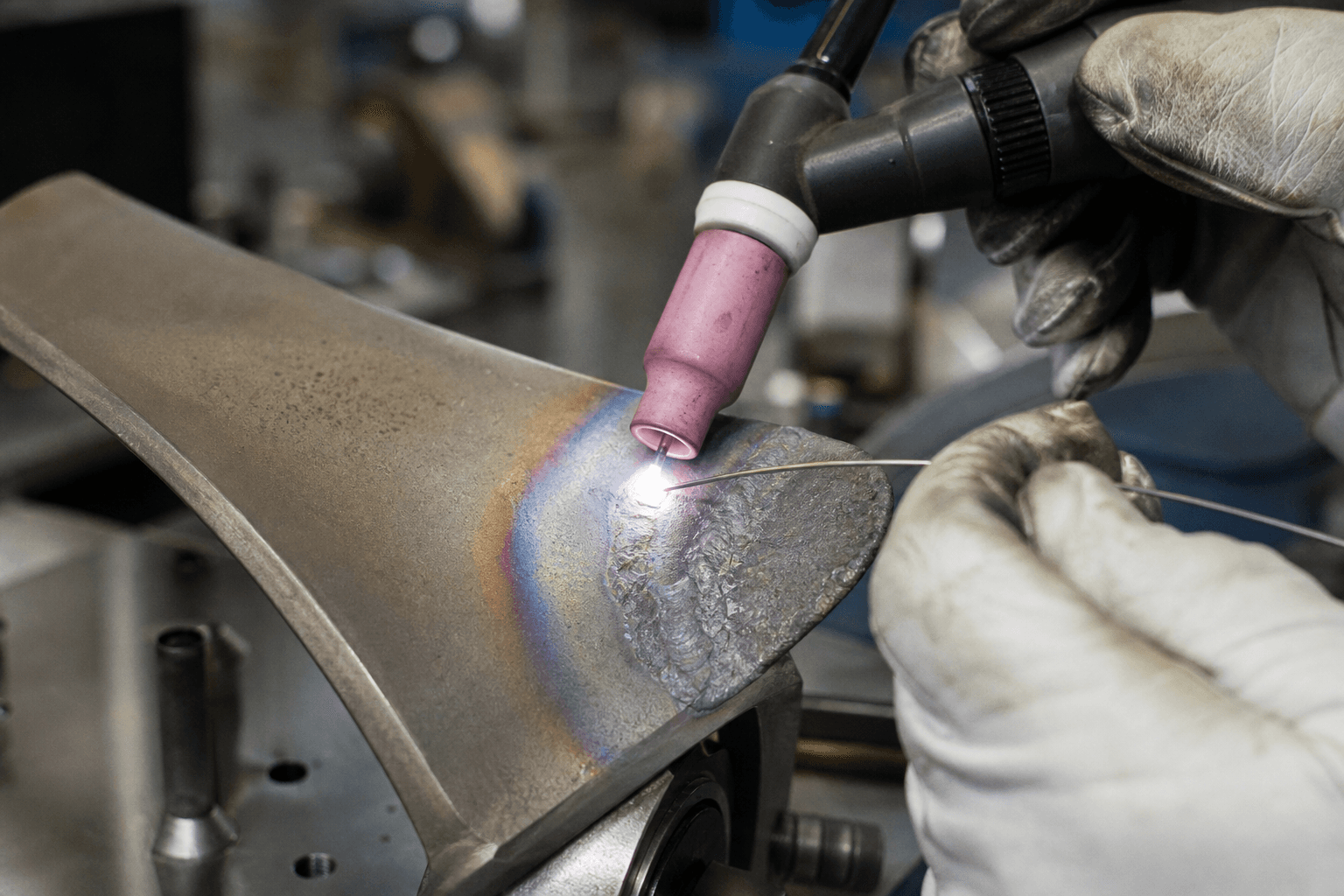
When a Cracked Turbine Blade Can Be Welded and When It Should Be Scrapped

Oxidation and Hot Corrosion on Blades: Two Different Damages, Two Shop Jobs
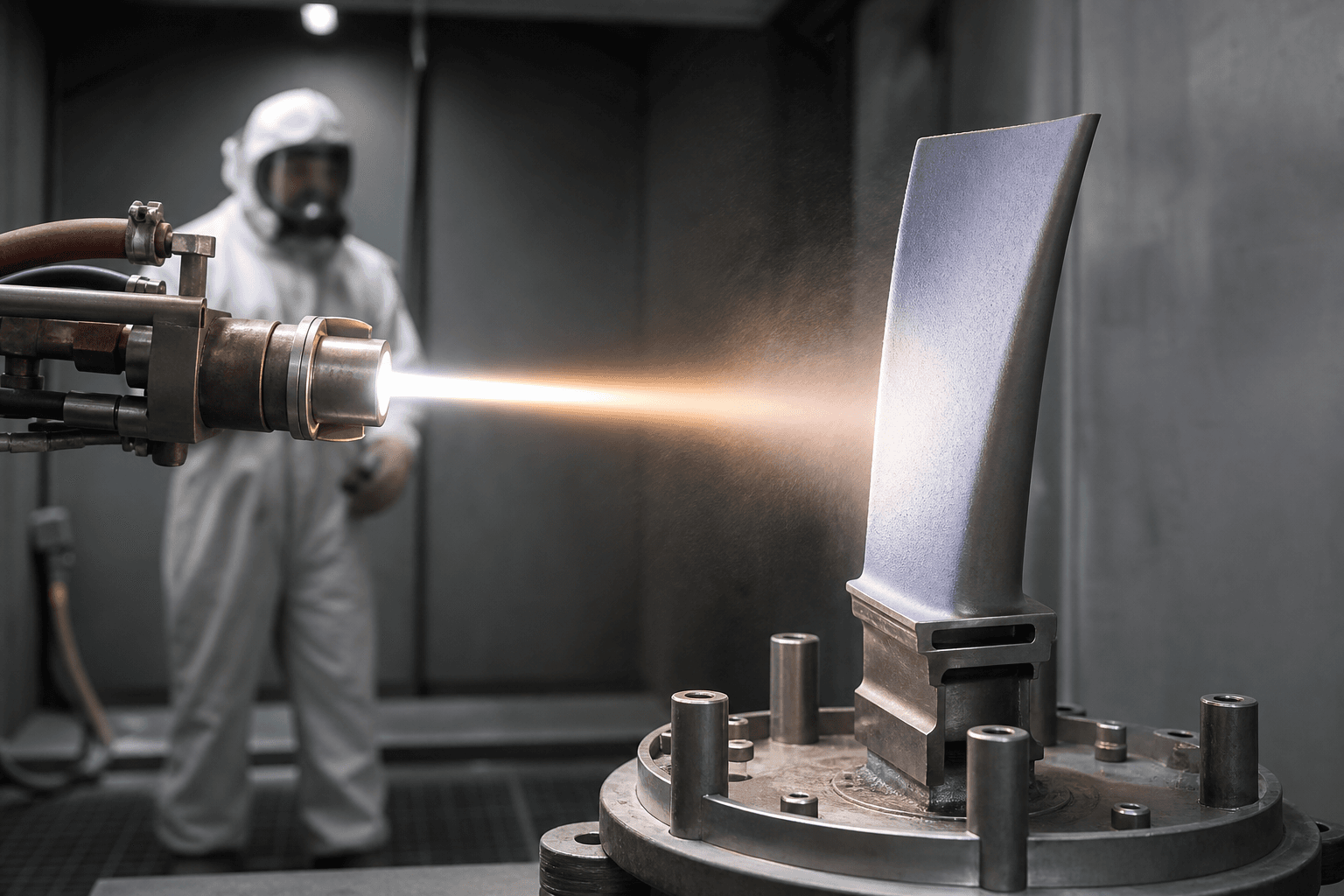
APS, LVPS, CVD, HVOF and Pack Cementation: Name the Coating Process
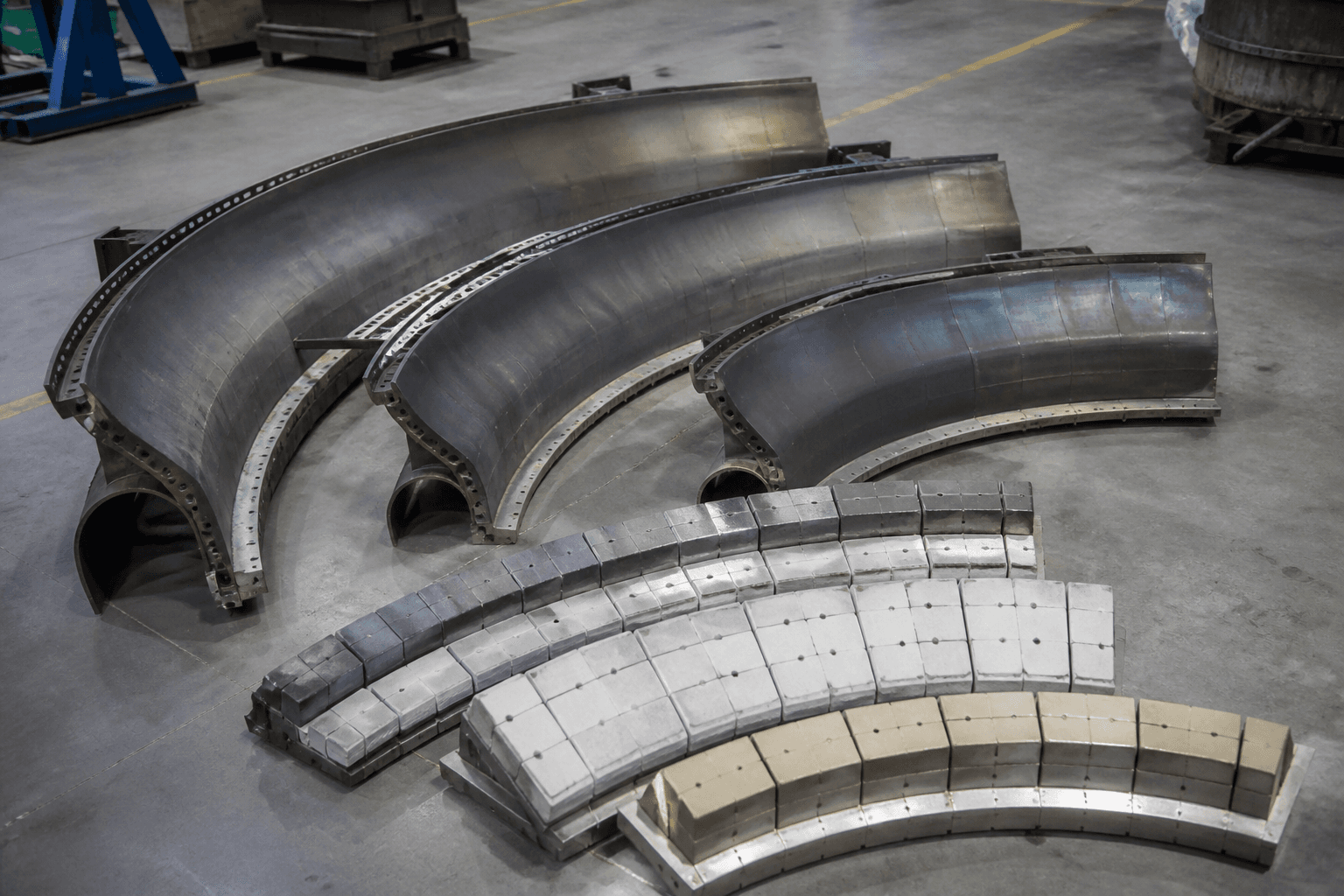
Heat Shields and Shroud Segments: The Stationary Ring Around the Blade Row
Hot-Gas-Path Parts for the GE MS5001 Frame 5
Last updated: August 29, 2026