Hot gas path basics
If you search پره توربین گازی you are usually looking for a replaceable airfoil in the hot gas path — not a brochure about the whole machine. In the store that word can mean a rotating blade or a stationary nozzle. Euroturbine treats the search as a buying question: does the part spin, which stage is it, which frame is on the nameplate. Until those three things are written down, a storekeeper and a metallurgist can be talking about two different crates.
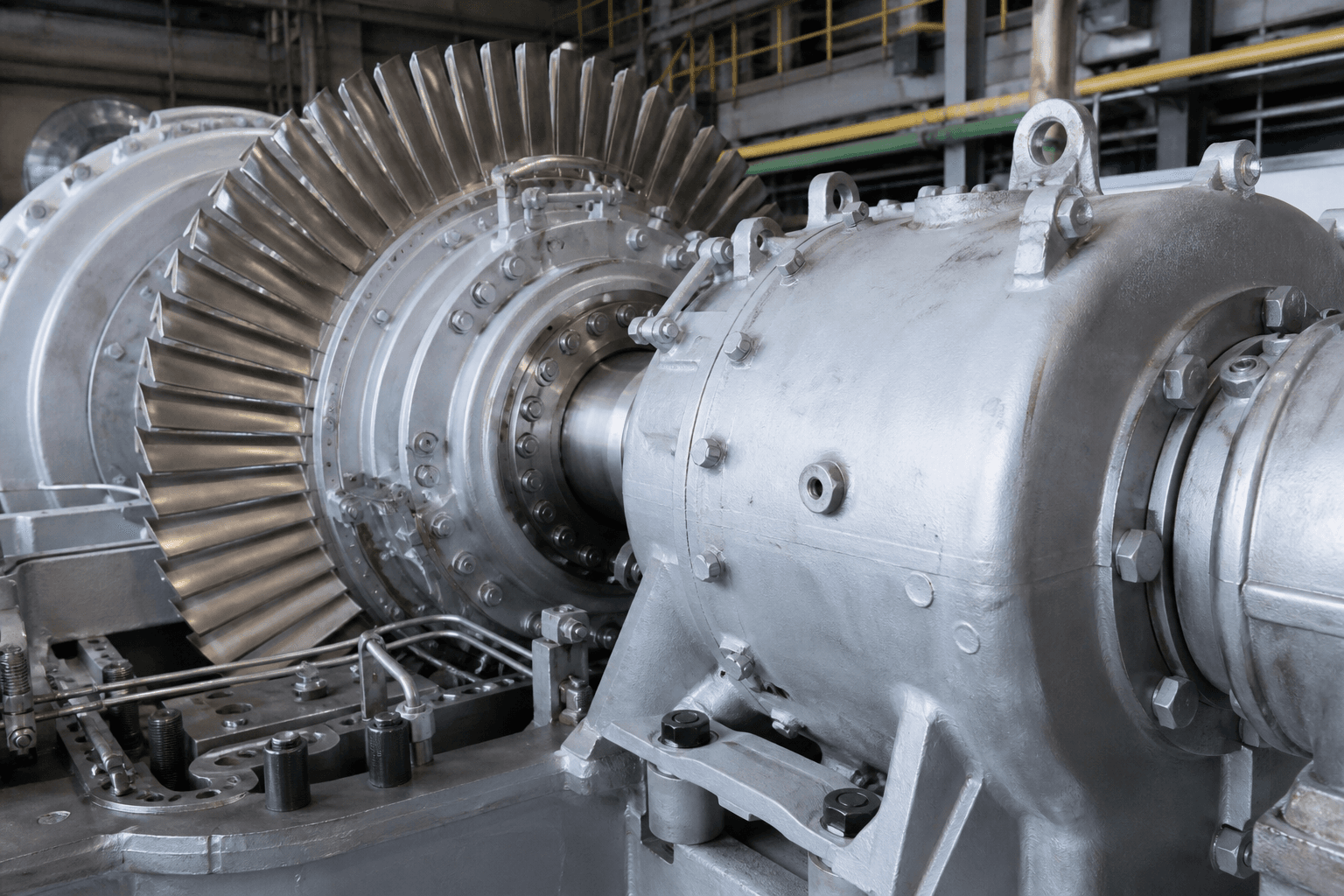
After the combustor, hot gas is turned into shaft work in the turbine. The airfoils that spin with the rotor are blades. General Electric calls those buckets. The airfoils that stay in the casing and aim the gas at the next rotor row are vanes or nozzles. Siemens shops also say Leitapparat for the stator assembly. In everyday Persian both families sit under پره. That is why a one-line request is not enough. Write rotating or stationary, then the original-equipment manufacturer part number — written OEM in every Iranian store. The number is what the warehouse and the foundry can both defend.
A rotating blade spins with the rotor and sits in a disc slot
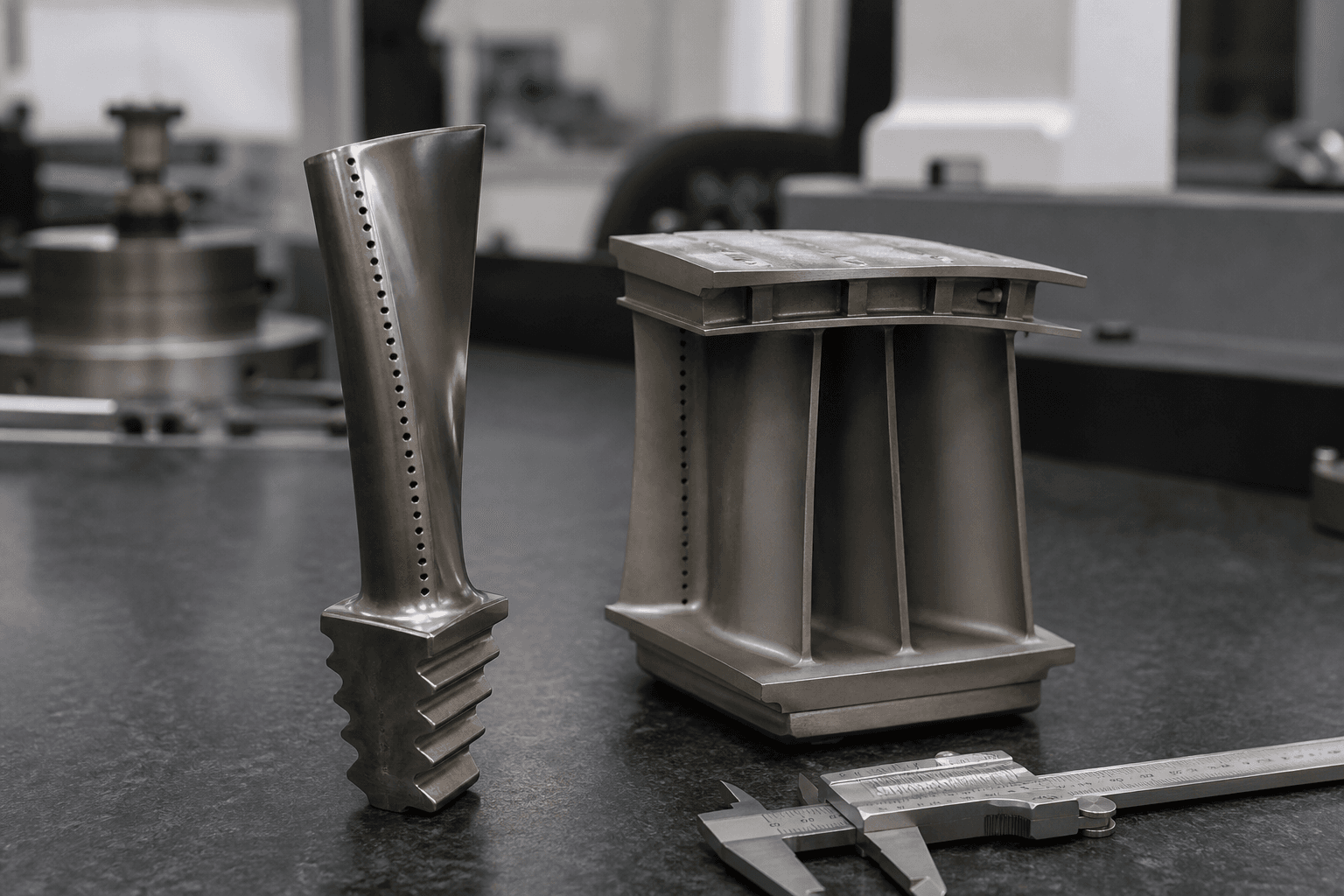
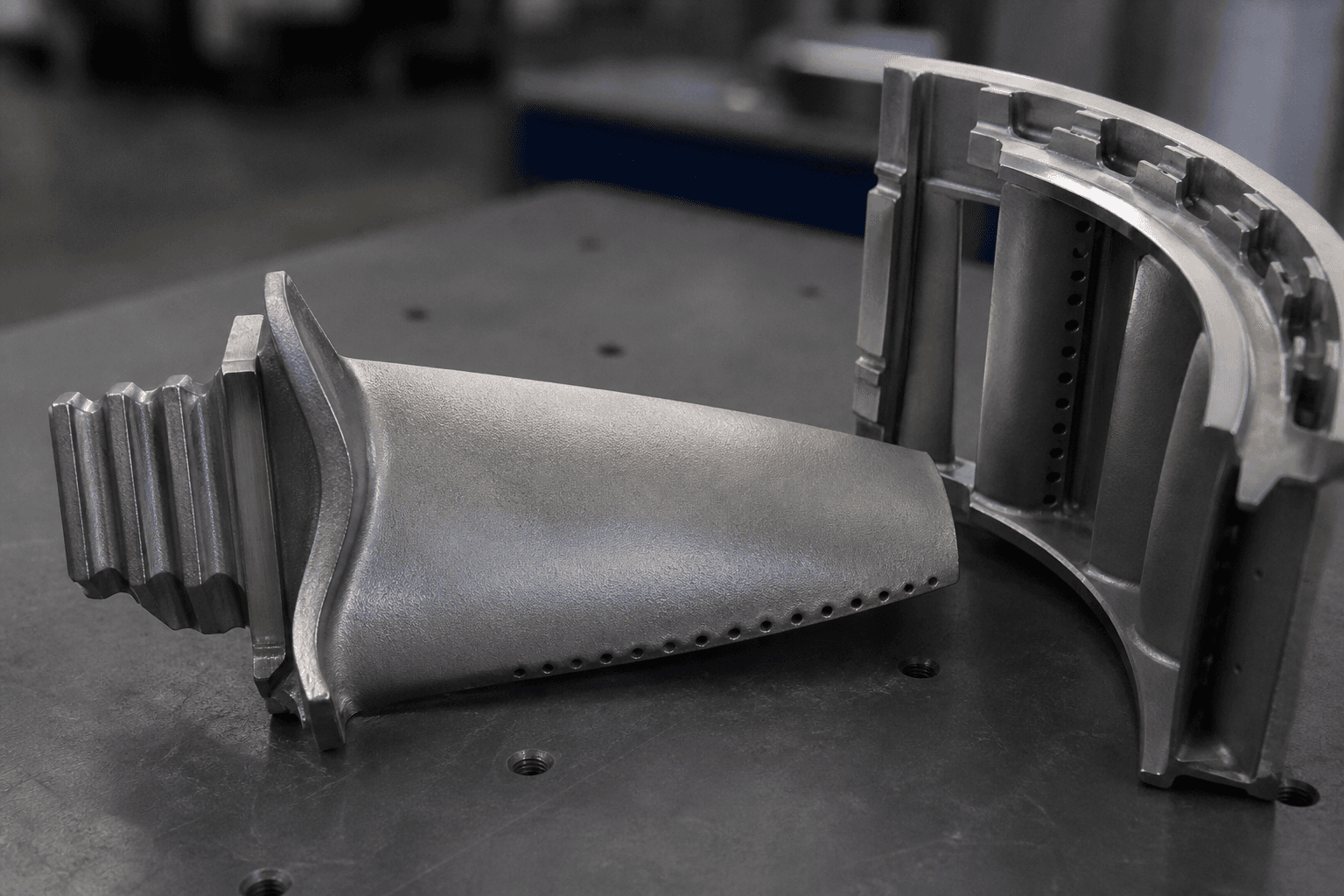
The rotor blade extracts work from the gas and sits in a machined slot on the turbine disc. The root is usually a fir-tree: a serrated profile cut after the airfoil is cast, so the blade can load into the disc and lock under centrifugal force. Stage 1 sees the hottest gas and usually needs internal cooling plus a ceramic thermal barrier coating, written TBC in every shop. Typical vacuum-cast alloys on heavy-duty frames are IN738 or IN738LC, IN939, GTD111 and Rene 80. Because the part spins, creep from centrifugal load is what usually ends its life, together with oxidation, tip rub and coating loss.
Compressor airfoils are a different family. They are often forged or machined from bar, they see a different temperature, and they do not belong on a hot-gas-path request unless you have written کمپرسور. A page that only lists “پره اینکونل” has not told the foundry which of those two families you mean. Euroturbine will ask for stage and rotating versus stationary before a price goes on paper.
Case. A combined-cycle 9E opens and the store writes «پره مرحله اول». The crate that arrives can be a first-stage bucket or a first-stage nozzle segment — two OEM numbers, two coatings, two ways of sitting in the machine. If the request had said rotating, stage 1, and the stores number, the foundry would have poured one family. Without those three lines the week is spent sending the wrong box back.
A stationary vane turns the gas onto the next rotor row and is usually a segment
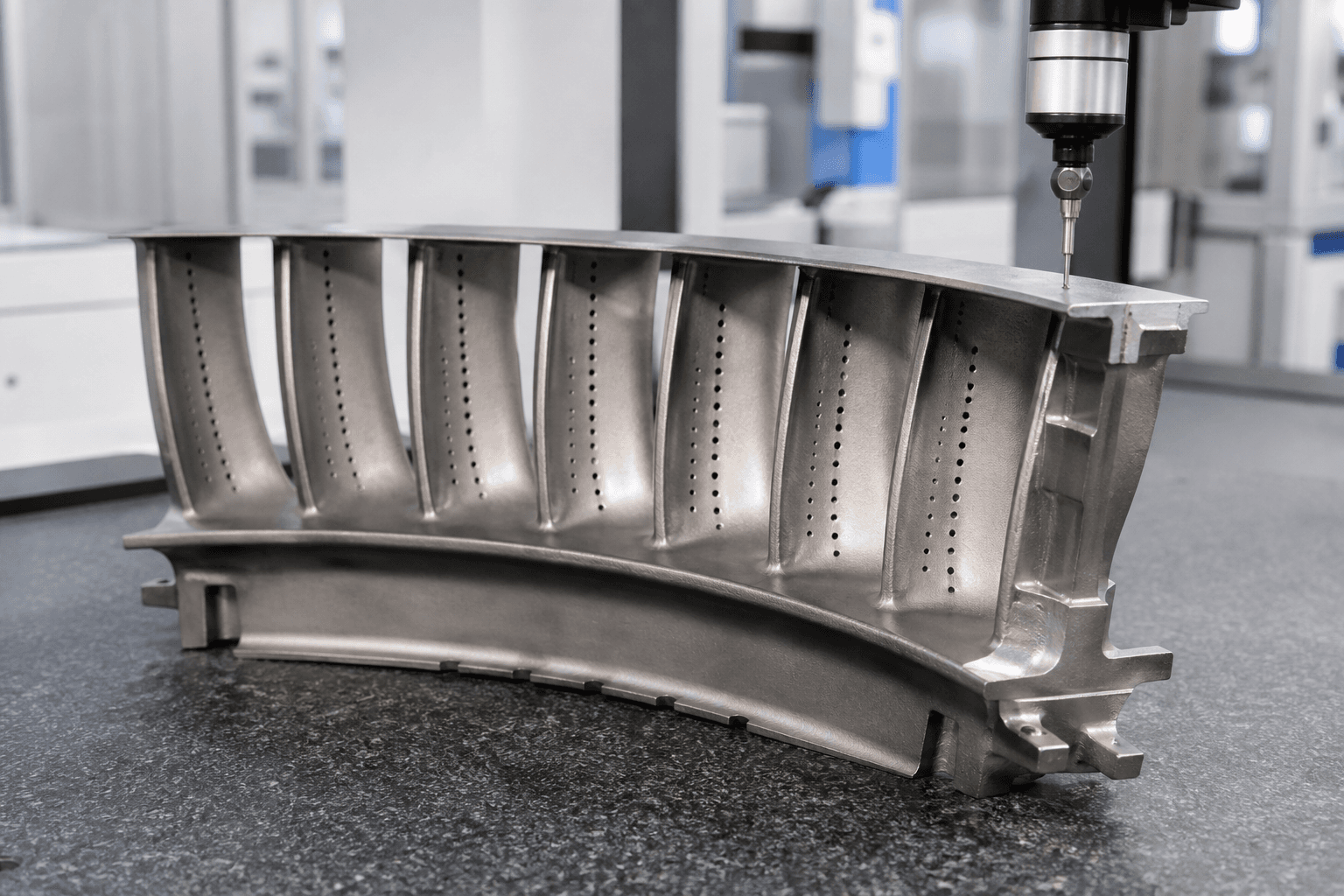
The vane — nozzle in GE language — turns and accelerates the gas onto the next rotor row. On first stages it is often a segment, several airfoils in one casting, not a single loose airfoil. Because it does not rotate, creep from centrifugal load is not the main driver. Plants often specify cobalt-base or nickel-base alloys, still vacuum-cast, then the platforms are machined and the gas-path faces are coated. Cooling holes and trailing-edge thickness decide remaining life more than a catalogue alloy name.
Siemens shops also use Leitapparat for the stator assembly. That word is the same stationary row, not a third part. If your request says «نازل» on one line and «وین» on the next, write the OEM number once so purchasing does not order two sets. Euroturbine prices the number, not the nickname.
Case. A V94.2 outage list says «پره ثابت مرحله اول». The part that closes the case is a nozzle segment with a defined throat. A single airfoil from a later stage will not make that throat. Euroturbine will not quote a loose vane against a segment number. Write segment or single vane, then the stores number, then the coating from the last shop visit.
An RFQ without stage, rotating or stationary, and the OEM number cannot be priced
A catalogue page that only says «پره توربین گاز از اینکونل ۷۳۸» is missing the three fields a buyer actually uses. Stage tells the foundry the cooling pattern and the coating stack. Rotating versus stationary tells them whether the root is a fir-tree in a disc or a segment in a stator ring. The OEM number is the only line the warehouse and the pouring floor can both defend. Alloy alone is a brochure. Euroturbine will not quote a mixed row from that one line.
You still need the coating system and whether the disc slot on a used rotor is still nominal. A new blade with a new-book fir-tree will pinch in a worn slot and sit loose in a blended one. Those two facts sit next to the three fields above. They are not optional decoration for a later email.
Case. An SGT-600 station sends «پره اینکونل، فوری». The package has a gas-generator turbine and a free power turbine. Without stage and rotating versus stationary, the crate can be a compressor airfoil, a gas-generator blade, or a power-turbine blade with an interlocking shroud. Those three parts do not interchange. Euroturbine answers with the three missing fields, not with a price on Inconel.
If you send a disc or a compressor airfoil instead of a hot-gas-path blade, the part will not sit in the slot
The blade sits in a forged turbine disc. The disc is not the blade. Disc slots are machined in a forging; hot-gas-path blades are usually vacuum investment-cast, then the root is machined and the airfoil is coated. If purchasing treats “دیسک و پره” as one line, the foundry may be asked to pour a disc, or the store may issue a disc drawing against a blade serial. Neither crate will close the outage. Name which OEM number you are buying.
Compressor rotor blades are a third family: often forged stainless, titanium or nickel, sometimes machined from bar. They do not take a thermal barrier coating the way a first-stage turbine blade does, and they do not see the same gas temperature. A product page that only lists SGT-600, V94.2 or Frame 5 compressor airfoils is not answering a hot-gas-path request. Putting that page on the outage table wastes the clarification week.
Case. A V94.2 store issues a compressor-blade drawing against a request tagged «پره توربین». The part that arrives is stainless, uncoated, and the fir-tree does not match the turbine disc. The unit stays open while the correct vacuum-cast row is sourced. If the request had said turbine, rotating, stage, and the OEM number, that crate would not have left the other warehouse.
What to write on the RFQ so the right پره arrives
Write the frame — for example V94.2 or MS9001E — then the stage, then rotating or stationary, then the OEM number, the quantity, new-make versus repair, and the next outage date. Photos of the root and both sides of the airfoil save a week of clarification. If the last shop visit recorded alloy or coating, copy those lines. Euroturbine uses that pack to confirm interchangeability, not to decorate a quote.
Case. A 9E reliability group sends those seven fields plus a photo of a first-stage bucket root. Euroturbine can say drop-in new-make or a repair path in the same answer. A sister request that only says «پره ۹E» waits until someone names rotating, stage 1, and the stores number. The metal is the same question. The missing lines are what hold the date.
If the RFQ only says «پره» you will get the wrong quote or the wrong row. Name blade or vane.
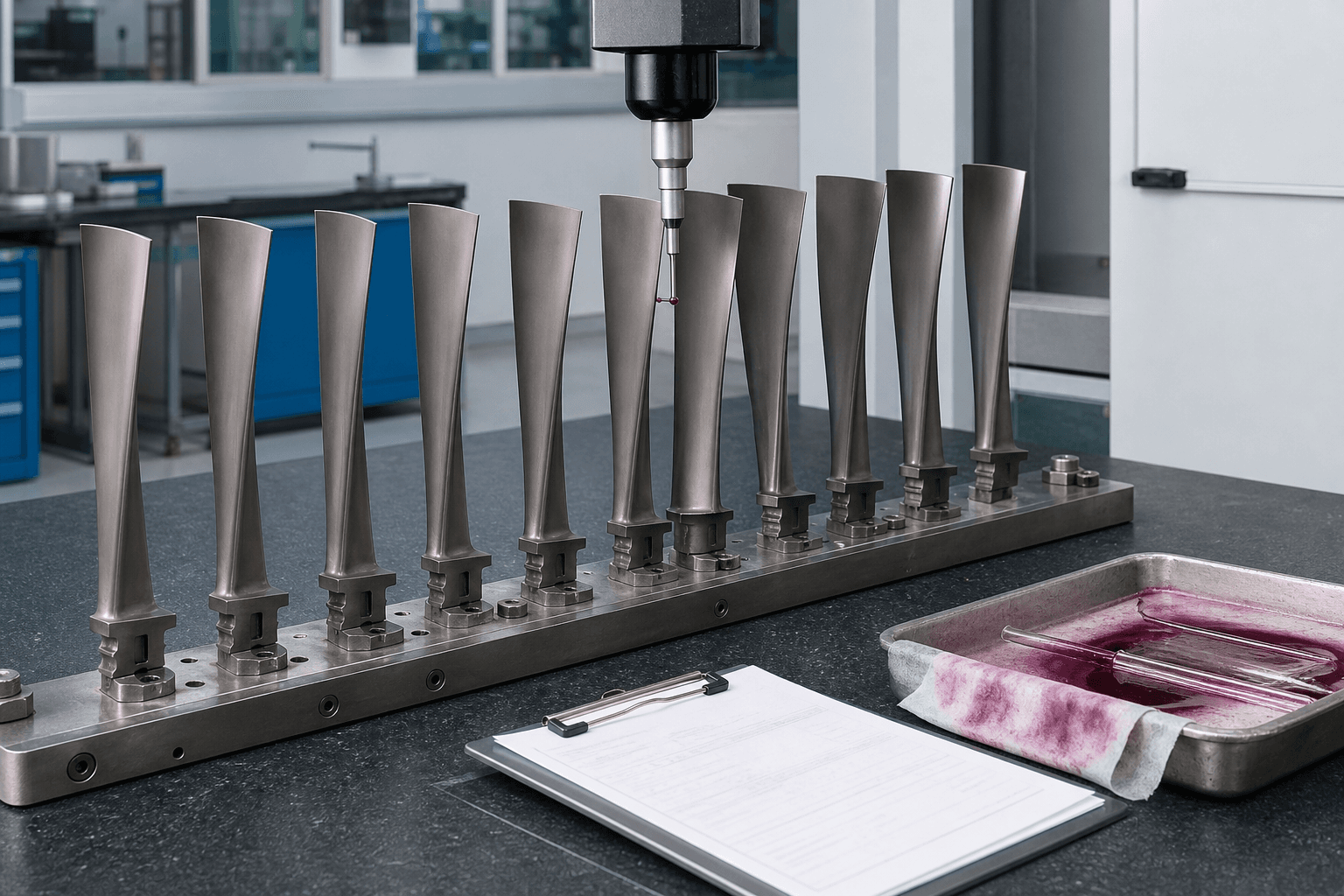
Euroturbine manufactures and inspects aftermarket blades and vanes through a European foundry route: investment casting, coating, then non-destructive testing — written NDT, meaning penetrant, radiography or ultrasonic without cutting the part — and a check on a coordinate-measuring machine, written CMM, which compares the fir-tree and the airfoil to the drawing. That is the commercial answer behind the search پره توربین گازی: a named part with a file, not a generic turbine.
Frequently asked questions
Is «پره» always a rotating blade?
No. In Iranian RFQs پره often covers both rotor blades (buckets) and stator vanes (nozzles). Always write stage and rotating vs stationary on the request.
What is a bucket?
Bucket is the GE term for a turbine rotor blade. Same family as بلید / پره متحرک.
Which frames does Euroturbine cover?
GE MS5001/5002/6001B/9001E, Siemens V94.2, V93, SGT-400/600, V94.3A, ABB GT13, Mitsubishi 701, Zorya UGT-25000.
Related Euroturbine pages
Need the correct blade or vane for the next outage?
Send frame, stage, OEM number and whether the part rotates. Euroturbine will confirm interchangeability.
Request a quoteMore articles

Last updated: August 29, 2026