Surface damage
If the leading edge has only lost ceramic and the metal is lightly oxidised, strip and recoat may be enough. If hot corrosion has eaten into the wall — often with green or yellow scale where salt and sulfur have been present — you are measuring remaining thickness, not polishing dirt. Calling both “پوشش خراب شده” is how the next interval surprises the plant.
Oxidation is metal reacting with oxygen at temperature. It gets worse where the thermal barrier is gone. Hot corrosion (and sulfidation) needs salt and sulfur — from fuel, from inlet air, or sometimes from wash chemistry. The workscope changes: a different coating stack, sometimes a note on alloy, and a hard look at whether any wall is left. If a whole row shows the same attack after a fuel change, that is a root-cause job, not a row of identical welds.

Result 1 — Oxidation, coating loss, wall still there
Oxidation is metal reacting with oxygen at high temperature. It gets worse where the thermal barrier is gone. If the leading edge has lost ceramic, the metal is only lightly oxidised, and remaining wall is inside limit, the job is strip and recoat — sometimes a local blend. Case: a 9E first-stage bucket after a long base-load run, brown oxide on the leading edge, thickness still good. Euroturbine writes recoat, not scrap. Polishing the edge clean before photographs destroys this diagnosis.
Result 2 — Hot corrosion has eaten the wall
Hot corrosion and sulfidation need salt and sulfur — from fuel, from inlet air, or sometimes from wash chemistry. The scale is often green or yellow. You are measuring remaining thickness, not polishing dirt. The workscope changes: a different coating stack, sometimes a note on alloy, and a hard look at whether any wall is left. Case: a coastal or sour-fuel unit, first-stage vanes with coloured scale and wall loss. Euroturbine writes wall map first. If wall remains, a corrosion-resistant coating stack. If wall is gone, replace. Assuming one TBC fits every fuel is how you buy the same scale next interval.
Result 3 — The whole row shows the same attack
After a fuel change or a wash-chemistry change, every blade in the row looks the same. That is a root-cause job, not a row of identical welds. Case: all first-stage 9E buckets show the same coloured scale after a fuel switch. Welding tips without naming the fuel and the coating is wasted metal. Euroturbine wants leading-edge and platform close-ups, the fuel you fire, the last compressor wash, and hours — before anyone quotes a polish.
What to send with the photographs
Close-ups of the leading edge and the platform before anyone cleans the scale. The fuel. The last compressor wash. Hours and starts. Euroturbine will say which of the three results above you are in: recoat, wall-map and a different stack, or root-cause plus replace.
Frequently asked questions
Is green scale always hot corrosion?
It is often a clue, not a verdict. A trained look plus a wall map — and sometimes the lab — decides.
Does IN939 always resist this better?
It is sometimes specified for a different corrosion balance. It is not a magic swap onto a disc that was designed for another grade.
Should we wash the compressor more often?
Wash chemistry can also attack coatings. Change wash practice together with operations, not only with the repair shop.
Related Euroturbine pages
Name the damage on the request, not only “bad coating”
Send leading-edge photos and the fuel type. Euroturbine will pick recoat, analysis or replace.
Request a quoteMore articles
How a Compressor Blade Differs from a Hot-Gas-Path Blade
Equiaxed, Directionally Solidified and Single-Crystal Blades: Three Different Products
How to Buy Aftermarket Gas Turbine Blades Before the Outage
APS, LVPS, CVD, HVOF and Pack Cementation: Name the Coating Process
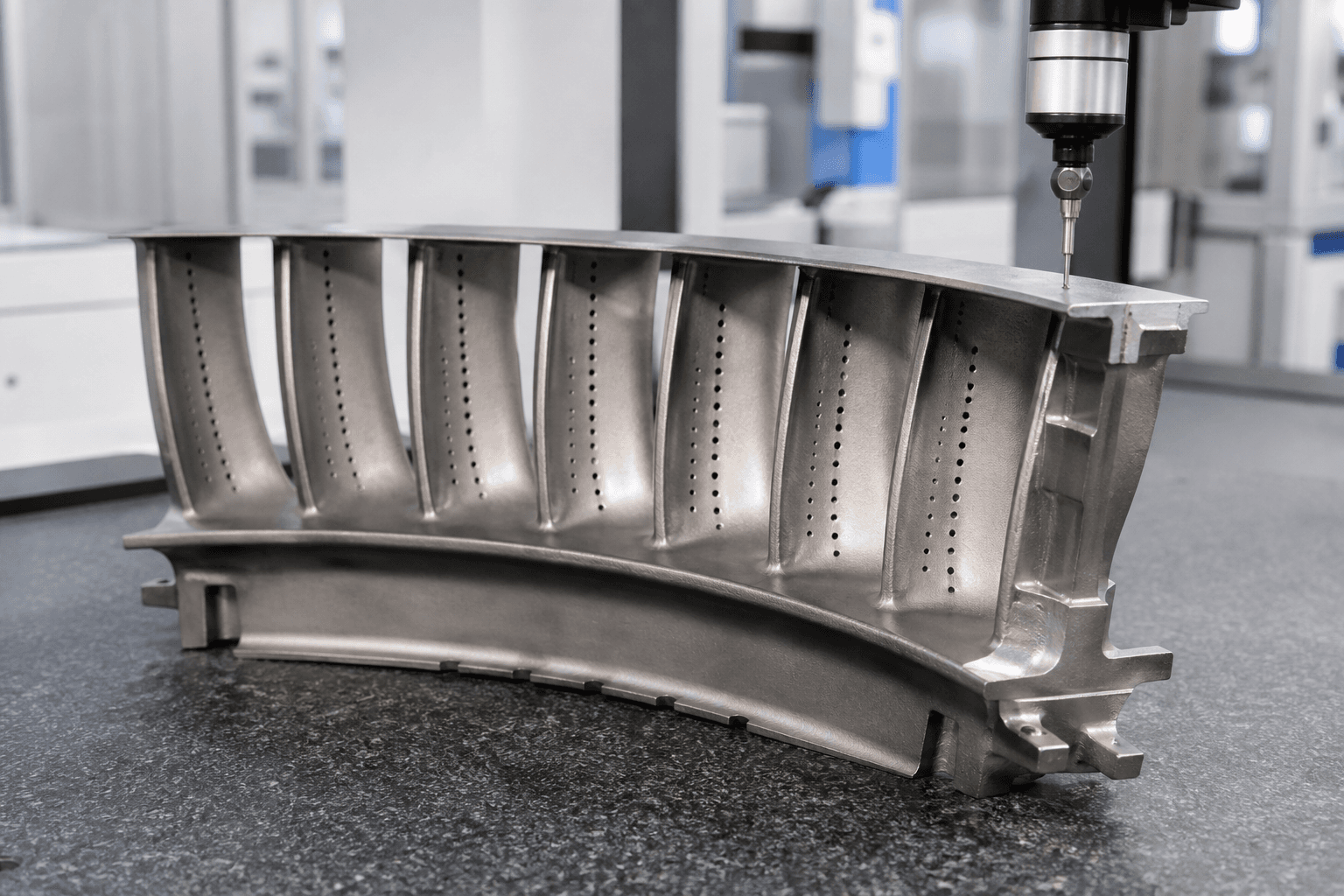
Nozzle Segments and Stationary Vanes: How to Buy a Stationary Row
Last updated: August 29, 2026