Procurement
Buying a gas-turbine blade is not like ordering a catalogue spare from a shelf. You are buying remaining life, a date the unit can restart, and a file of certificates a reliability engineer can put on the outage table. Price without alloy, coating and inspection is only a number. Euroturbine quotes when those three sit on the same page as the price.
The Iranian market searches خرید پره توربین، بلید فریم ۹، پره V94.2. The useful answer is a specification, not a slogan. Write alloy, coating, inspection and interchangeability first. Price second. The original-equipment manufacturer number — written OEM in every store — is the line that ties the aftermarket serial back to the stores catalogue.
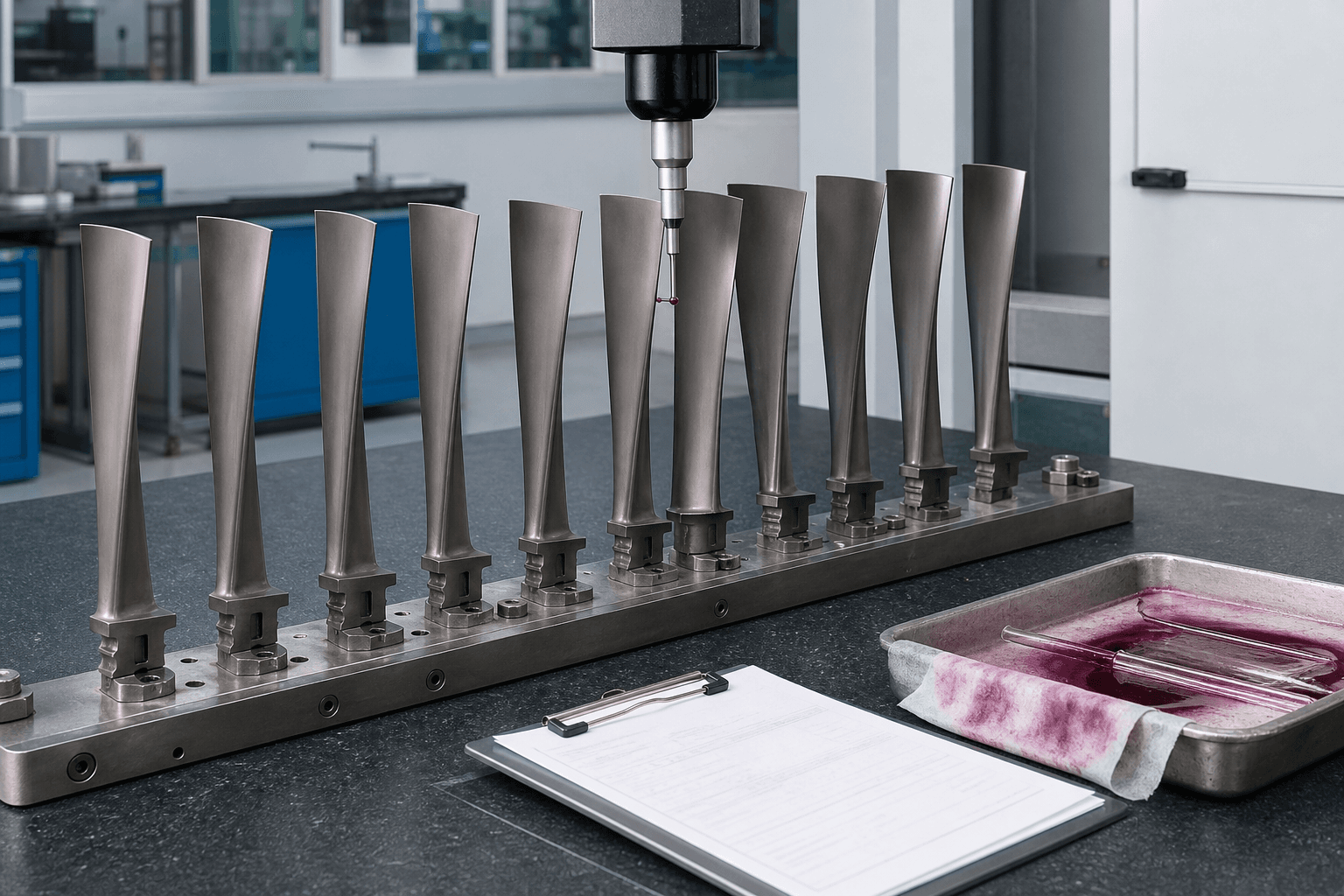
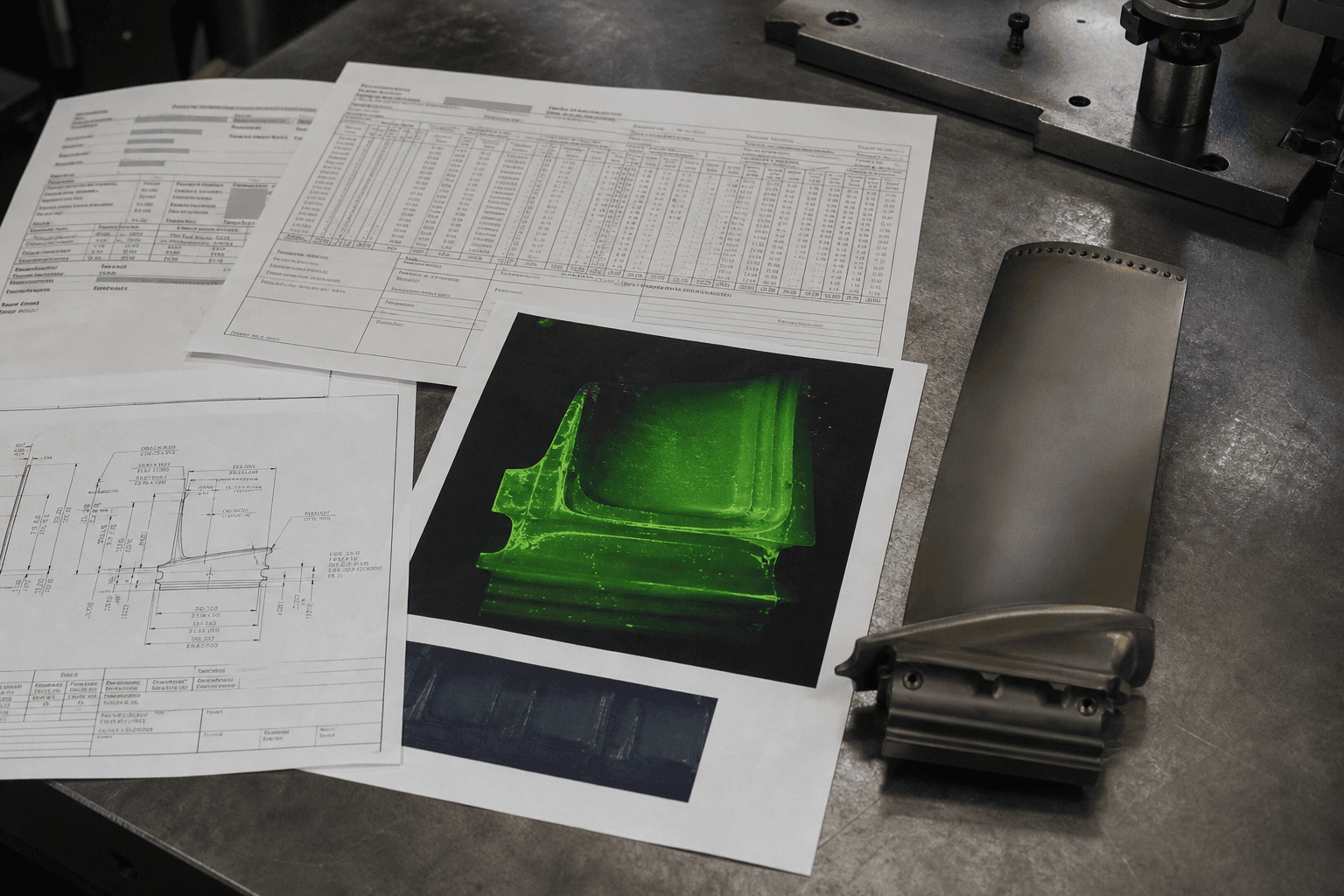
The material certificate, dimensional inspection and NDT must travel with the blade
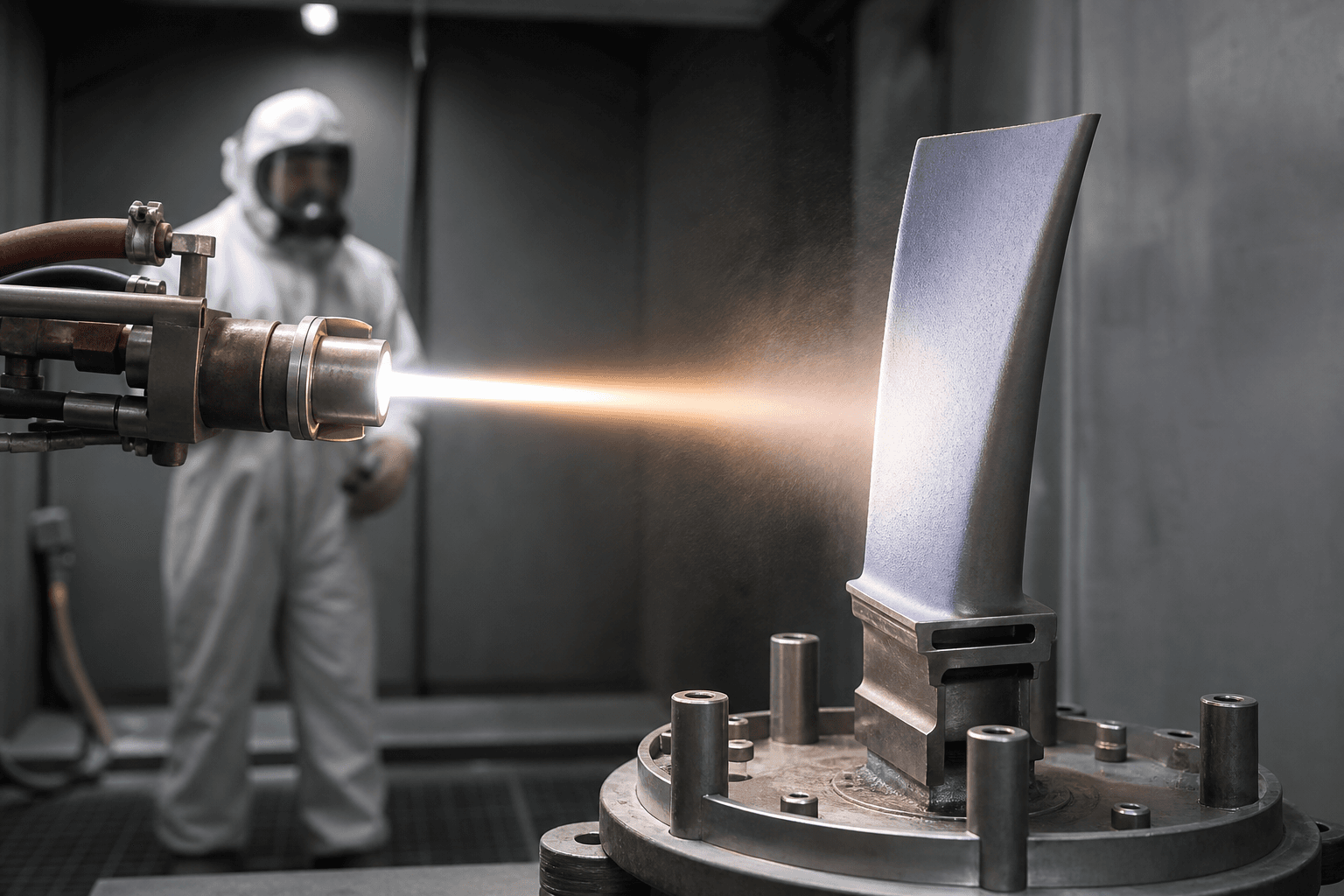
A useful stock-keeping line — the way a serious Iranian product page lists a named blade — names four fields before price: material (for example IN738, IN939 or GTD111), process (vacuum investment cast, root machining, heat treat), coating (ceramic thermal barrier, metallic MCrAlY, or over-aluminide), and tests. The tests are non-destructive testing, written NDT: fluorescent penetrant, X-ray or radiography, and airflow on cooled rows. Then add the heat number, a check on a coordinate-measuring machine — written CMM — against the original-equipment stack-up, and a map from the aftermarket serial to the stores number. Without those four fields the page is a brochure.
CMM is not a photograph of the blade next to a ruler. It is a measured fir-tree, platform and airfoil against the drawing the disc was cut to. NDT is not a stamp that says “بازرسی شد”. It is a report that names the method, the acceptance class and the serial. Euroturbine will not ship a row whose certificate pack is a logo and a date.
Case. A combined-cycle 9E buyer is offered a first-stage aftermarket bucket at a low unit price with no heat number and no CMM file. The invoice looks cheap until the fir-tree is offered to a used disc and the slot does not close. The outage then pays for a second row plus the days the case stayed open. If the same offer had arrived with alloy, coating stack, NDT and CMM against the OEM number, the low price could have been the correct commercial choice.
Say new-make, repair or HIP before anyone writes a price
New-make is the job when wall thickness, crack length or coating life is beyond the published repair limit. Repair is the job when the airfoil can be restored inside that limit: tip restore, blend, allowed weld, strip and recoat. Hot isostatic pressing — written HIP in every shop — is a furnace under pressure that closes internal voids. HIP is the job when creep porosity dominates, remaining wall is still there, and the alloy is a candidate. It is not a cheaper new blade and it is not a weld. Euroturbine will name which of the three applies if you send fired hours and the last NDT report.
Mixing the three doors on one purchase order without naming them is how a plant pays for a pour and then discovers the scrap blades only needed a recoat. Write the door on the request. If you do not know the door, send hours, last NDT and photographs of the root and both airfoil faces. The workscope comes back as new-make, repair or HIP — not as “درست میشود”.
Case. A V94.2 first-stage vane set comes off after a long run. Remaining wall is inside limit, coating is tired, NDT shows no forbidden-zone crack. Euroturbine writes strip and recoat, not a new pour. A sister set on the same outage has a root crack. That line is new-make. Putting both sets on one “پره نو” line wastes the foundry slot that the cracked set actually needed.
Different mass or coating in one rotating row changes the vibration
Mass, natural frequency and coating family must match inside one rotating row — especially stage 1. An aftermarket blade that is heavier or lighter than the neighbours moves the balance and the resonant frequencies. A different coating stack changes surface damping and the thermal growth of the airfoil. That is not a catalogue mix you can correct with a longer bolt. Euroturbine will not ship a mixed stage-1 set without a written engineering note that names the mass band and the coating family.
Interlocking shrouds on a free power turbine — SGT-600 class — are a geometry feature, not a marketing line. If the aftermarket part loses the lock, the row no longer damps as a ring and vibration changes. Mixing an original-equipment blade with an aftermarket blade in that row is the same problem: two masses, two coats, one disc. Engineering can sometimes sign a mixed row. The store cannot sign it by issuing two part numbers into one crate.
Case. A 9E stage-1 bucket row has twenty original-equipment airfoils and four aftermarket replacements bought as “همان پره”. The four are a different coating family and sit outside the mass band. The unit trips on vibration after the first fired week. If engineering had reviewed mass and coating before the crate left, the four would have been held and a matched set shipped. The invoice mix was cheaper than a matched row. The trip was not.
Casting and coating take weeks to months, not the last two weeks before the outage
A cooled first-stage blade is wax, vacuum pour, HIP if the specification calls for it, fir-tree machining, coat, CMM and airflow. That chain is measured in weeks, often more than one calendar month for a hollow stage-1 row. Coating slots fill the same way. They do not appear because the outage is in fourteen days. Freeze the bill of materials when the outage date is known — typically months ahead on Iranian combined-cycle calendars — and send the OEM list in ordinary time.
AOG — the aviation letters plants use when the unit is already down — exists for a missing row or a cracked set found on opening day. It is not a method for planning the whole stage from a one-line description. Air freight shortens the road if the serial exists. It does not shorten a pour. Euroturbine will name the foundry week we actually have. We will not write a two-week promise on a first-stage hollow blade that has not been waxed.
Case. An SGT-600 station freezes the power-turbine row twelve weeks before the stop. Euroturbine books the coat slot and the CMM week against that date. A sister station sends the same list sixteen days before the outage. The honest answer is a shop already in process, or wait for the next window — not a story that the foundry can skip six weeks. The calendar is the constraint. Urgency does not pour metal.
Send the list. Euroturbine will confirm drop-in interchangeability and quote European-route new-make or a repair and HIP path with the certificate pack named in the same answer as the price.
Frequently asked questions
Is cheaper always worse?
No. Price is a problem only when the data pack is missing. A documented aftermarket blade can be the correct commercial choice on E-class and legacy frames.
Can I mix OEM and aftermarket in one stage?
Only after engineering review of mass, frequency and coating. Do not mix rows on stage 1 without a written note.
What if I only have a worn sample?
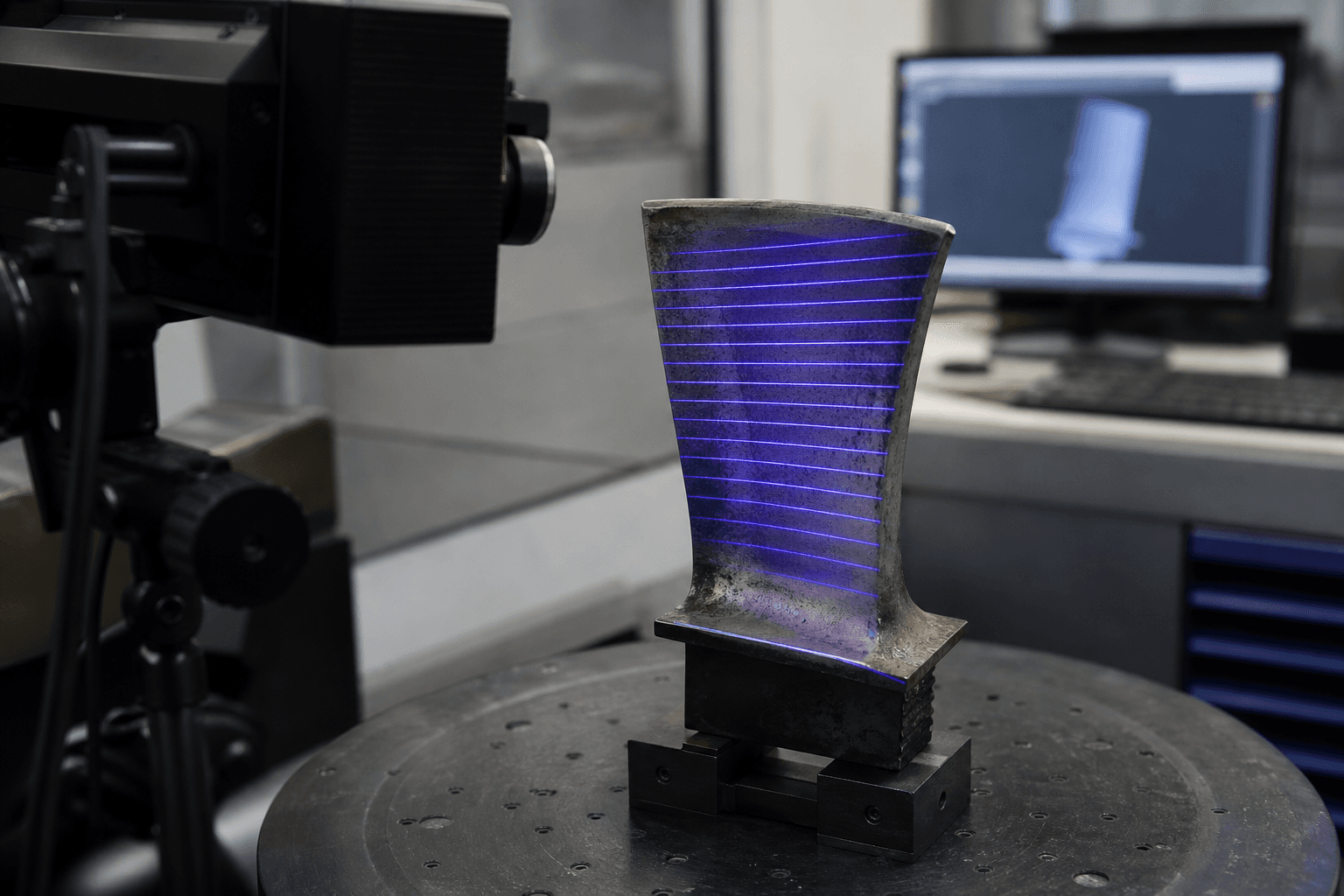
That is a reverse-engineering job. Euroturbine scans, models and casts from the sample when the OEM drawing is gone.
Related Euroturbine pages
Get a blade quote that includes the data pack
Euroturbine quotes aftermarket blades with alloy, coating and inspection in the same conversation as price.
Request a quoteMore articles

Aftermarket Parts for a Siemens SGT-400 Oil-and-Gas Package
From a Worn Sample to a New Cast Blade
APS, LVPS, CVD, HVOF and Pack Cementation: Name the Coating Process

Vacuum Investment Casting of Turbine Blades: From Wax Pattern to Inspected Metal

Repairing Inner Casings and Mixing Chambers After Long Service Hours
Last updated: August 29, 2026