Frame guide
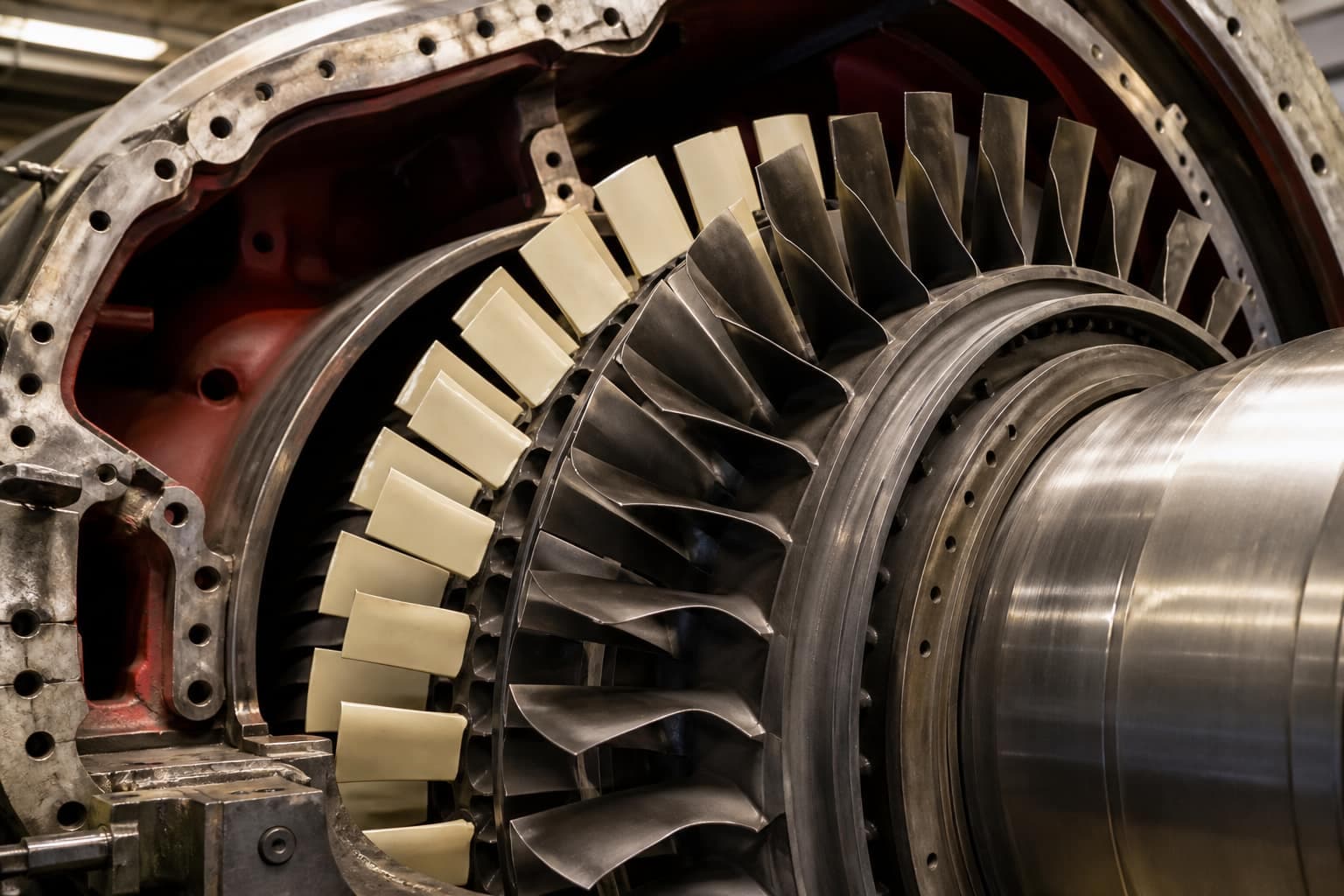
The MS9001E (Frame 9E) is one of the most widely installed heavy-duty gas turbines in Middle East and European 50 Hz power plants. Euroturbine treats it as a flagship aftermarket programme.
The MS9001E — Frame 9E — is a 50 Hz workhorse. Euroturbine treats first- and second-stage buckets, nozzle segments, transition pieces, combustion liners, shroud segments and bearings as drop-in hardware: OEM-equivalent alloy and coating, no field machining of the casing during a planned outage. OEM means the original equipment manufacturer number already in your stores. The shopping list is not one paragraph. The four buying cases below are the lines that actually stop a 9E outage, plus what a filled RFQ contains.
Stage-1 buckets are the first line that stops the outage
First-stage 9E buckets are investment-cast nickel superalloy, typically GTD111 or IN738 class, with TBC — a thermal barrier coating — where firing temperature demands it. Second-stage buckets are a separate OEM number and often a different coating stack. Writing “بلید ۹E” on a request is not a line. Euroturbine needs the OEM number, the stage, the quantity, and whether you want new-make or HIP on a service-run set. HIP is hot isostatic pressing, used to close internal voids when remaining wall still allows it.
Case. A combined-cycle 9E opens in fourteen weeks. The plant orders “stage 1 and 2 blades” with no OEM numbers and no HIP decision. The foundry cannot reserve a slot on a family name. Two weeks later someone finds the last shop sheet: stage 1 wants new-make, stage 2 can HIP. That delay is the outage, not the pour. Euroturbine writes those as two lines on day one.
Nozzle segments need the throat and the coating, not only a vane shape
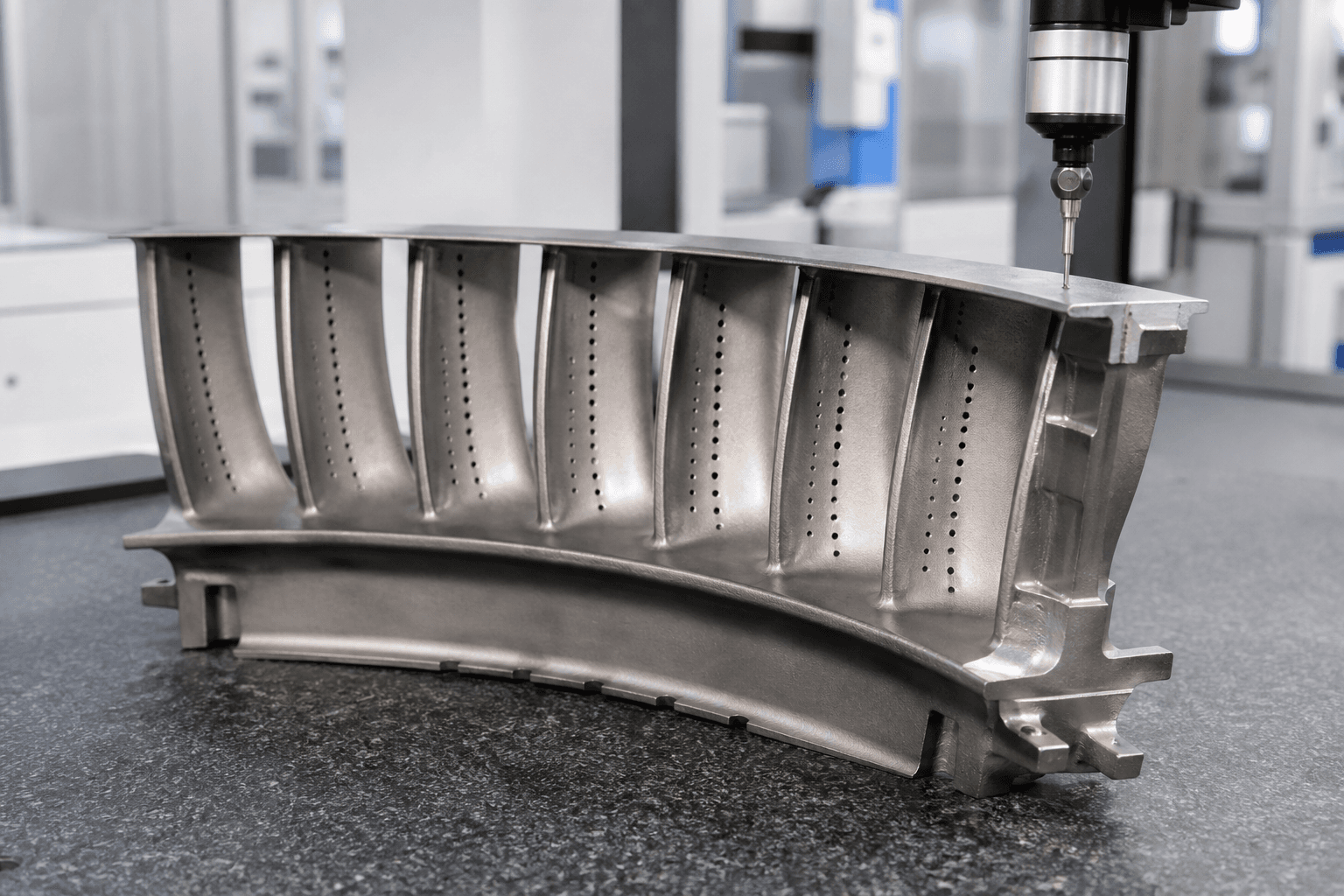
A 9E nozzle segment is a cooled casting. The throat area sets the row. The coating stack — TBC, MCrAlY or both — has to match that row, not a photograph of a white vane. CMM — a coordinate measuring machine — checks airfoil and throat before release. NDT — non-destructive testing — is FPI plus a volumetric look on the casting. A “وین ۹E” line without throat and coating is how you discover a second delay after the buckets arrive.
Case. Buckets are on site. The nozzle crate arrives with a ceramic face and no CMM extract for the throat. The row stacks tight on one side. The case stays open while someone argues whether to machine or to wait. Euroturbine releases 9E nozzles with throat and airfoil on the same sheet as the coating spec.
If you only buy the duct, the case will not close
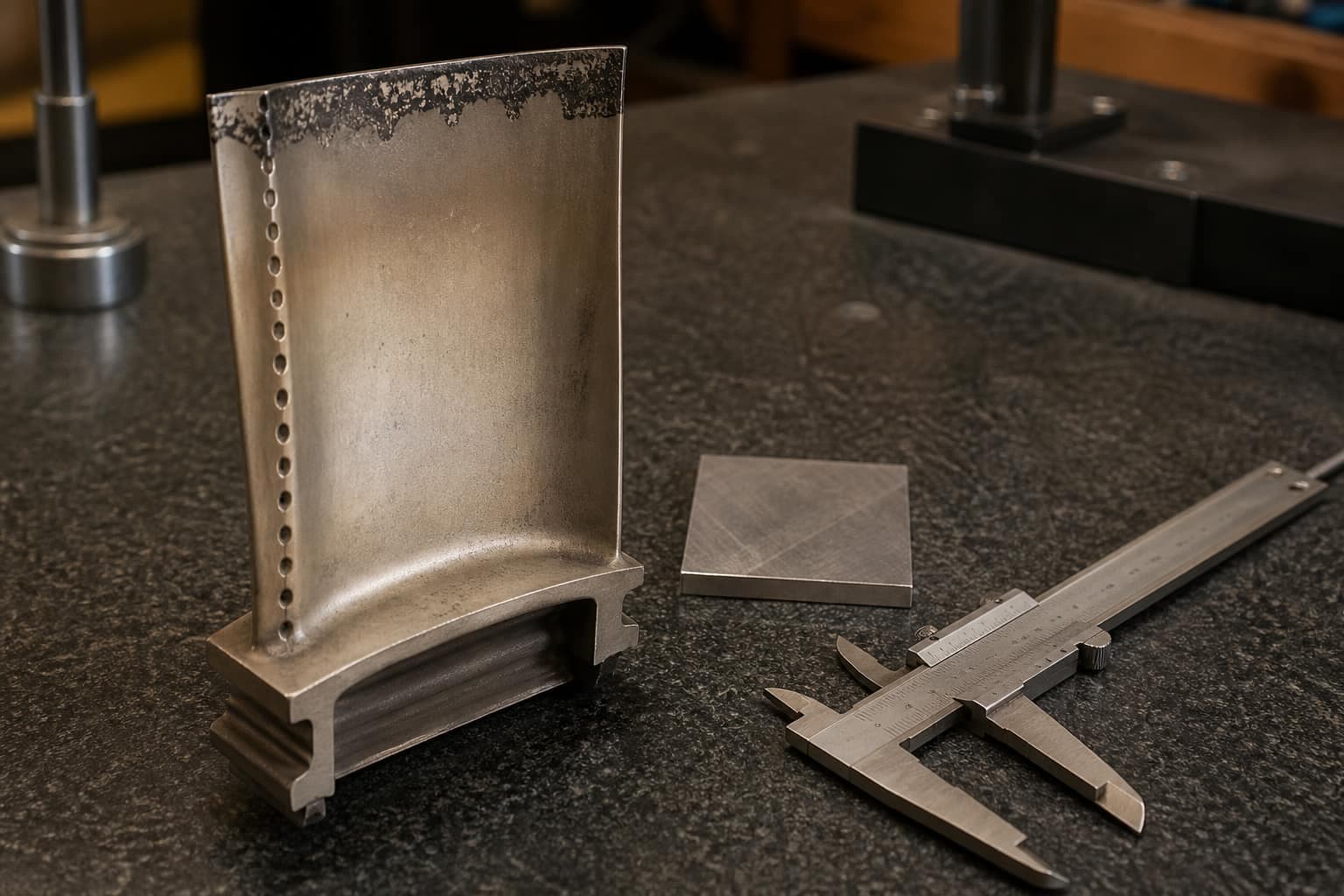
The 9E transition piece is not one casting. The duct is one OEM number. The seals on the inlet and exit lands are other numbers. The cooling sleeve is another. A shop that ships the shell and writes “ترنزیشنپیس” on the crate has not finished the job. You cannot bolt a bare duct to the liner and the first-stage nozzles and expect the machine to start. The missing seals show up on opening week, when nobody has a foundry slot and air freight cannot invent a gasket that has not been made.
Case. A combined-cycle 9E. First-stage buckets and liners are on site. The transition ducts arrived two days before case-open. Seals and sleeves were “بعداً میرسد”. The outage lost a week waiting for those lines. Euroturbine writes the duct, the seals and the sleeve on the same RFQ line for MS9001E. That is the order. Not a slogan about a kit.
Liners fail on cooling holes and the flame face, not on looking round
A 9E combustion liner is the tube the flame sits in. It has a multi-hole cooling pattern and TBC on the face that sees fire. Wear at the cross-fire tubes — the pipes that join one combustor to the next — and at the tile edges is not dirt you wipe off. A visual “it still looks round” is not an accept criterion. Wall thickness and NDT decide repair versus new-make. Ordering only buckets is how a plant discovers the liner line mid-outage.
Case. Buckets, nozzles and transition ducts are on the critical path. The liner set is “later”. Opening week shows blocked cooling holes and TBC spall at the flame face. Repair might have been possible twelve weeks earlier. On opening week it is new-make with no slot. Euroturbine puts liners on the same 9E request as the buckets, with the cooling pattern and the coating written on the line.
What a filled 9E RFQ actually contains
Nameplate: MS9001E, 50 Hz, combined cycle or simple cycle. OEM part numbers for each line — not “HGP set”. Stage and quantity. Next outage week. New-make, repair, HIP, or mixed, per stage. Last coating spec if you have the shop sheet. Photographs of a worn sample if the numbers in stores are messy. Whether liners, transition duct, seals and sleeve travel with the buckets. Hours and starts if HIP is on the table.
That pack is enough to reserve a foundry slot and to split HIP from new-make before the case opens. A one-line email with “قطعات ۹E” is not an RFQ. Euroturbine answers a filled request with a calendar: which lines are new-make, which can HIP, which are a duct-plus-seals-plus-sleeve shipment. All 9E parts leave with material and NDT certificates tied to the piece.
You can mix new-make with HIP on service-run blades from the same 9E outage when mass and coating family are signed. Send the filled request through Quick Support. The date on the wall only holds if the lines above are frozen early enough to sit in a foundry queue.
Frequently asked questions
Does Euroturbine cover first and second stage 9E blades?
Yes. New-make buckets and nozzle segments are cast in the stage-appropriate superalloy (typically GTD111 / IN738 class) with TBC or MCrAlY as specified, then CMM and NDT released.
What belongs on a 9E HGP RFQ?
OEM part number, stage, quantity, next outage date, whether you need new-make or repair/HIP, and any coating spec from the last shop visit.
Is 9E still a good aftermarket candidate vs newer F-class?
Yes. 9E geometry and alloys are well characterised. Aftermarket lead times and cost are usually more competitive than on the newest F-class cooling designs.
More articles
Aftermarket Parts for Zorya UGT-25000 and DU80 When OEM Drawings Are Missing
Buying Hot-Gas-Path Parts for Mitsubishi 701B and 701D

Buying Aftermarket Blades for a Siemens SGT-600
Nozzle Segments and Stationary Vanes: How to Buy a Stationary Row
Fir-Tree Blade Roots and Turbine Discs: The Blade Is Cast, the Disc Is Forged
Last updated: August 29, 2026