The attachment is the purchase
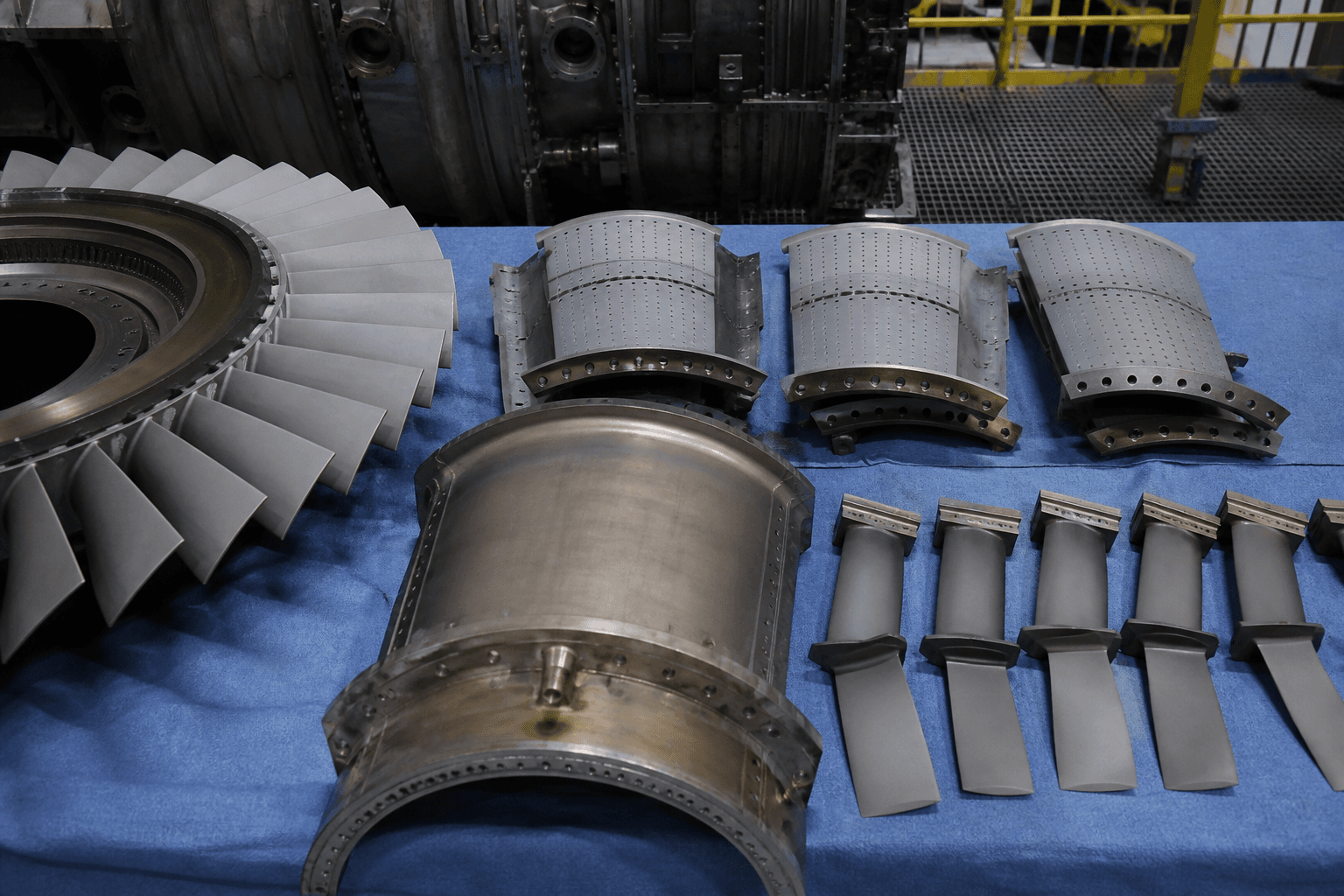
A beautiful airfoil that does not enter the disc slot is scrap on arrival. The fir-tree is the serrated root that slides into a matching slot; the blade is usually vacuum-cast and the disc is usually a forging — two products, two shops, two inspection stories. Wear on a used disc means a “nominal” new blade can pinch or slop. Euroturbine measures the fir-tree against the OEM stack-up and asks whether your disc is still nominal. Below are the results — drop-in on a serviceable slot, pinch on a worn slot, slop after a blend, wires and dampers, disc as a separate job — each with a plant-style case, then a filled request a buyer can copy.
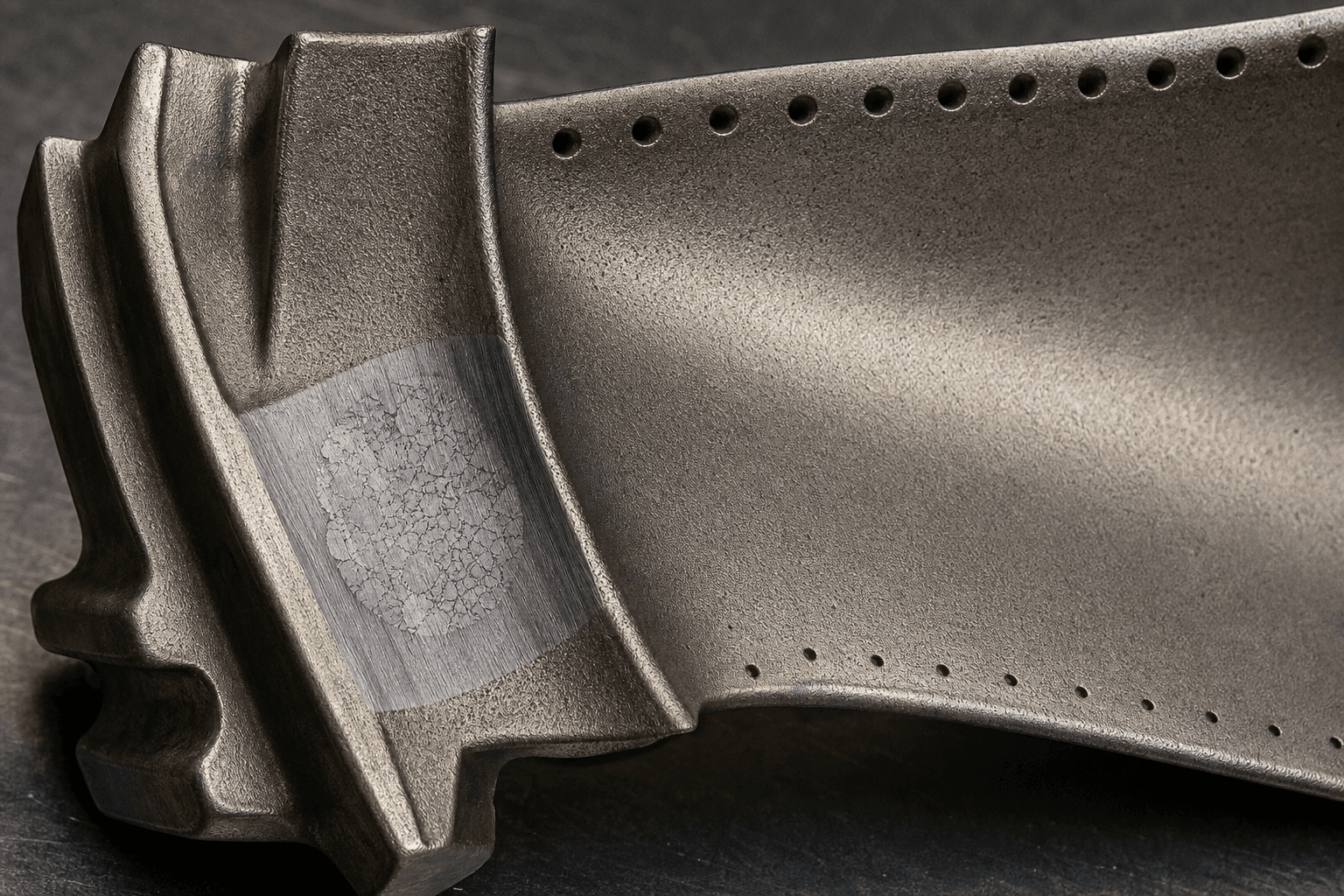
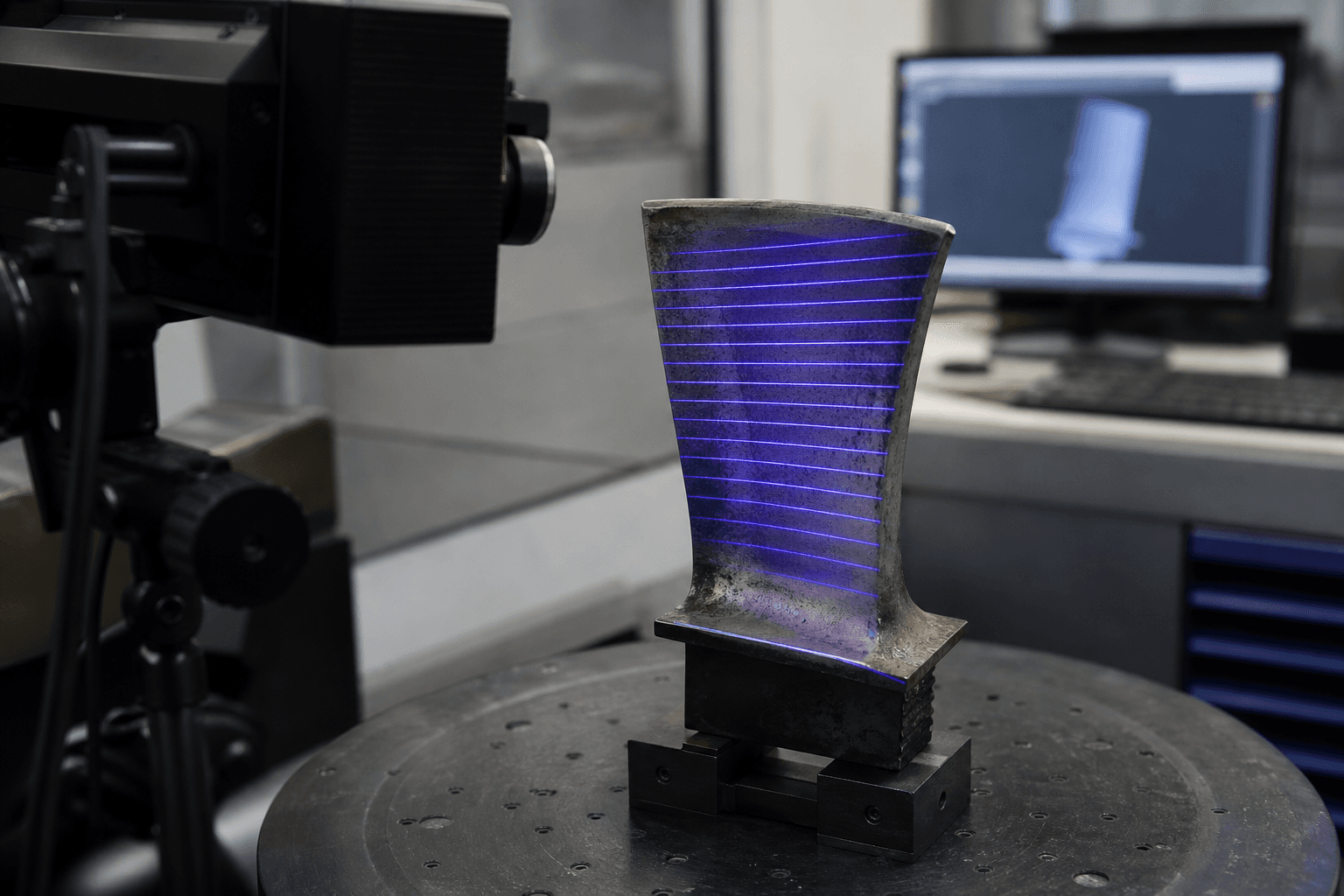
Turbine discs are usually forged nickel. Some compressor discs are alloy steel. The slots are broached or milled into that forging. The blade starts as a casting; the fir-tree is then machined so the serrations match the slot. OEM is the original equipment manufacturer; the blade number and the disc number are two lines. CMM is a coordinate-measuring machine; here it is the programme that proves the root matches unused OEM stack-up. Mixing a disc RFQ with a blade RFQ is how purchasing orders the wrong shop. Euroturbine’s standard product is the blade that fits a serviceable disc. Disc work is a separate engineering job.
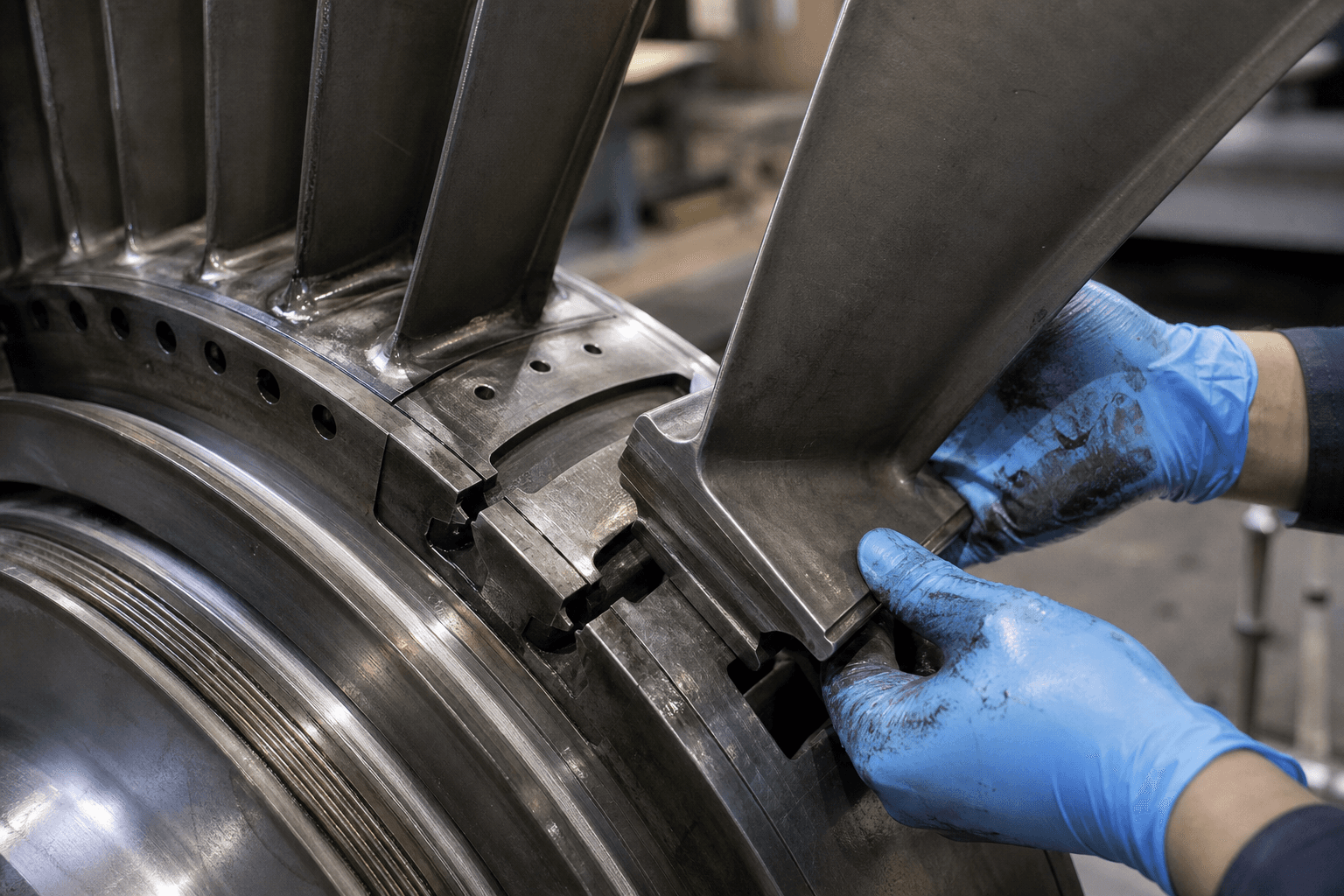
Result 1 — Blade is cast, disc is forged; name which you are buying
The disc carries the centrifugal load of the whole row. Forging gives it the grain flow and the toughness that a casting is not asked to provide. The blade is vacuum-cast so the airfoil, cooling and alloy can be made in one pour, then the root is cut to fit. A shop that only mills compressor airfoils from bar is not automatically a disc shop, and a blade foundry is not automatically a disc forge. If the request says “روتور” without blade or disc, stop and name the part. Photographs of a root next to an empty slot settle the argument in one message.
Case A. Combined-cycle Frame 9E RFQ titled “روتور مرحله اول”. Photographs show blades on a table and a disc still in the unit. Euroturbine quotes the blades: vacuum cast, fir-tree CMM to OEM stack-up, coat, inspect. The disc stays a question: send slot photographs and any disc inspection report. We do not mill the disc because the email said rotor. Two products, two processes.
Result 2 — Call it drop-in only when the disc slot is still inside the OEM limit
Nominal here means the slot is still inside the OEM limit: not oval beyond stack-up, not blended past the envelope, not fretted into a new shape. Then a new blade cut to unused OEM fir-tree numbers should enter and sit. Euroturbine CMM’s the fir-tree against that stack-up and asks you to say the disc is still inside limit. “Drop-in” is that pair of facts, not a marketing word on a crate.
Case B. Frame 9E combined-cycle, disc inspection last outage: slots inside limit, no blend. New-make IN738LC buckets, CMM of the fir-tree closed. Euroturbine writes drop-in on the disc you have. The crate ships with the CMM pack. Hope is not the document; the two measurements are.
Result 3 — A worn slot pinches a new nominal blade
Slots wear, fret and pick up blend. Material piles or the opening closes locally. A new blade cut to unused OEM numbers can then pinch on entry. Forcing it is how a serration is damaged on the outage floor. That is why “nominal blade” is not a promise until someone says the disc is still inside limit. Tell us if the rotor is original or already blended. A used-slot photograph and any disc inspection report belong with the blade list. If the disc is out of limit, a perfect aftermarket blade will not save the assembly. Euroturbine will say so before the crate leaves.
Case C. SGT-600 station, new blades on the cart, disc slots visibly lipped. Fit-up pinches on the first serration. Euroturbine does not recut the fir-tree down to the wear — that copies a bad disc onto every new blade. We hold the blade at OEM stack-up and write the disc as a separate engineering line: inspect, blend only inside a map, or repair/replace the disc. Shipping hope would have been a crate of blades that do not go in.
Result 4 — A blended slot sits loose and frets
The other failure is slop. A previous outage blended the slot to get a blade in. Clearance is now above the fret limit. A new nominal blade enters easily and then moves in service — fretting, not a proud fit. Euroturbine still cuts the blade to unused OEM numbers. We will not cut an oversized root to fill a blended slot unless that is a signed, serial-specific engineering job. Say if the rotor has already been blended. The assembly is still wrong if the disc is oval and the blade is perfect.
Case D. Combined-cycle V94.2, disc already blended two outages ago, no report in the file. New blades slop in the slot on trial fit. Euroturbine keeps the fir-tree at OEM CMM and flags the disc: remaining-life / repair of the attachment, not a fatter blade. Mixing hope about the disc into the blade quote is how a plant discovers the problem on the outage floor.
List lacing wires and dampers on their own lines, not inside the blade price
If the stage uses lacing wires or under-platform dampers, they are their own OEM lines on the RFQ. They are not hidden inside the blade price. Name the stage and send a photograph if you are unsure whether the row has them. A cheap blade quote that “includes hardware” without numbers is how a plant opens the crate and finds airfoils without the wires the disc expects. Euroturbine lists them. The standard product remains the blade that fits a serviceable slot; the wire is a second sentence.
A later E-class row often needs the wire or the damper before the rotor can be closed. Those parts have their own OEM numbers, quantities and inspection. If the stage has none, write none so the crate is not assumed short. Euroturbine will ask rather than hide a hardware line inside the blade price. Silence on the RFQ is not the same as none on the floor.
Case E. Frame 9E later-stage row with lacing wire. Blade RFQ only. Euroturbine adds a question: wire OEM number, quantity, photographs. We will not assume wire inside the blade line. If the stage has no wire, we write none. Silence is not none.
A new disc is a separate engineering request
If you need a new disc, say so as a separate engineering request. Disc work is not buried under a blade quote. The standard Euroturbine product remains the blade that fits a serviceable slot. We do not machine your disc unless that is a separate, written job. A cheap blade with a wrong root will not assemble, or it will fret. That is why dimensional inspection is not optional on this interface, and why disc hope does not travel inside the blade price.
Case F. Combined-cycle Frame 9E, disc out of limit on ovality. Plant wants “blades that fit this disc”. Euroturbine writes two documents: blade new-make to OEM fir-tree CMM, and a disc engineering request. We will not recut every fir-tree to a worn forging. That refusal is the service. A crate of custom-fat roots is not.
A filled attachment request a buyer can copy
Copy this block. Frame: MS9001E or V94.2 or SGT-600. Stage: [number], rotating. OEM blade number: [number]. Quantity: one row. Disc: original / already blended / inspection report attached. Slot photographs: yes, at least one empty slot and one root beside it. Fir-tree: CMM against OEM stack-up; do not recut to wear. Lacing wire / damper: OEM number [or none], own line. Disc new-make or disc repair: separate request, not inside blade price. Hours, starts, outage date. Without the slot photograph we can only say send the picture; we cannot promise drop-in.
Euroturbine returns drop-in, pinch, or slop — after CMM of the fir-tree and a look at the slot — plus wire/damper lines if the stage has them. A shine photograph of the airfoil is not this pack. If the disc is out of limit, the blade stays at OEM stack-up and the disc becomes its own request.
Measure the root and look at the slot before you ship hope. A perfect airfoil in a worn disc is still a wrong assembly.
Frequently asked questions
Do you supply new discs?
Disc work is a separate engineering job. The standard product is the blade that fits a serviceable disc. If you need disc repair or a new forging discussed, write that as its own request so it is not buried under a blade quote.
What about lacing wires and dampers?
If the stage uses them, they are their own lines on the RFQ. They are not assumed inside the blade price. Name the stage and send a photograph if you are unsure whether the row has them.
What happens if the root on a cheap blade is wrong?
It will not assemble, or it will fret in the slot and start the next forced outage. That is why CMM of the fir-tree is not optional, and why a used disc still has to be looked at before anyone calls the blade drop-in.
Related Euroturbine pages
Send a slot photograph with the blade list
Euroturbine will say whether the aftermarket root is drop-in on the disc you have.
Request a quoteMore articles

Last updated: August 29, 2026