Not a thicker V94.2
If the plant runs a V94.3A, do not send a V94.2 shopping list. Cooling density and coating systems move. Film cooling on the hottest rows is part of the life of the part, not a decoration. A thermal barrier coating, written TBC in every shop, sits on a metallic bond coat. Aftermarket on this frame is case by case. Below are one plant-style case and three results — later-stage aftermarket, hottest-row recoat or no, single-crystal stop — then a filled request from the 3A plate. We would rather decline a row than ship a decorative copy.
Ask for an airflow test on every cooled row. Ask for the thermal-barrier and MCrAlY stack by name, not by the word coated. Ask for dimensional inspection of the hole pattern as well as the airfoil. A pretty ceramic on a wrong cooling map is a short life. Confirm 3A on the nameplate. A store that bins every Siemens 94-class machine together will hand you a V94.2 vane with a confident smile. That vane will not run the 3A duty.
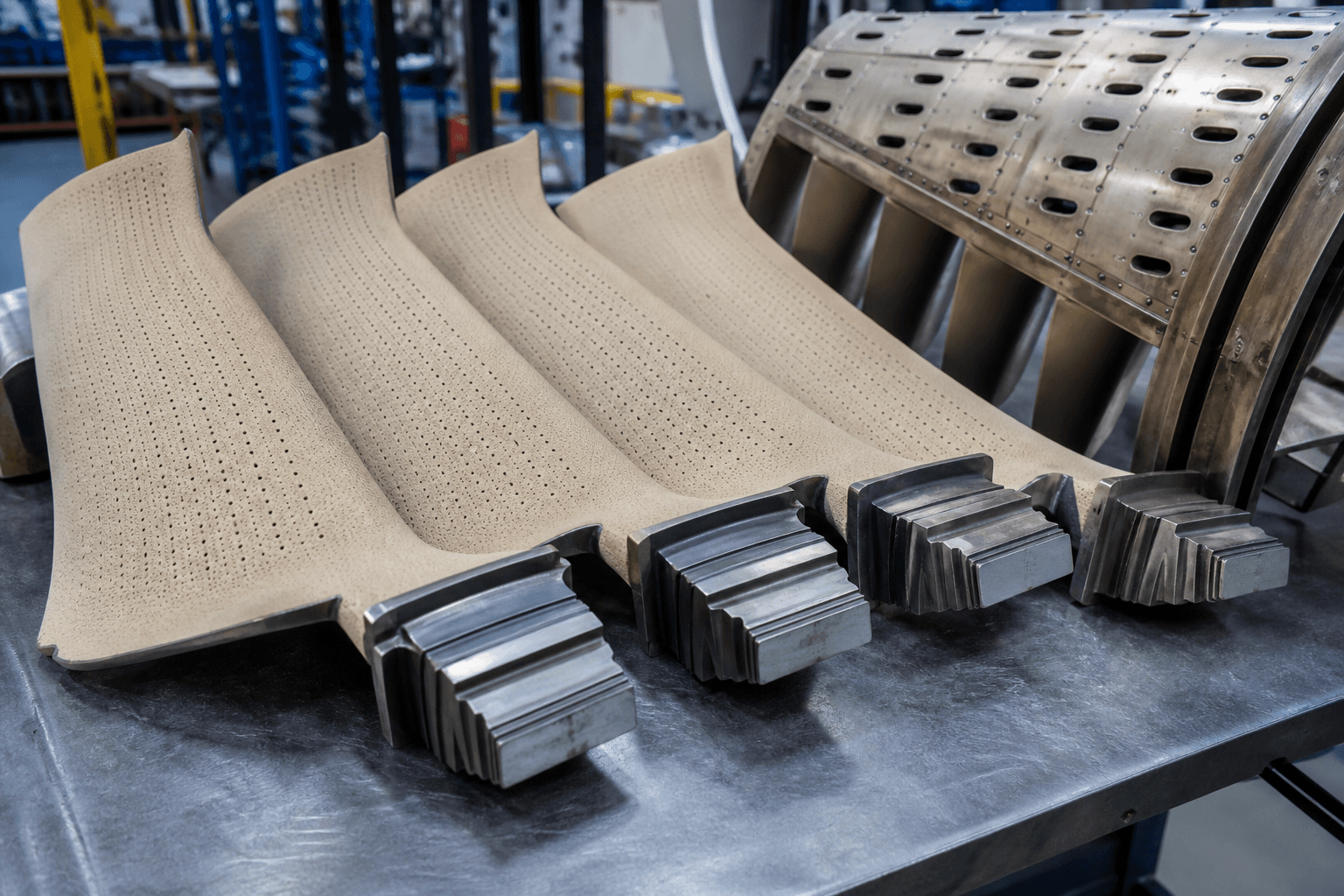
Case 1 — Combined-cycle 3A, the store sent a V94.2 list
V94.2 is the E-class frame where non-original aftermarket is already routine in Iran. V94.3A runs hotter and carries denser film cooling. It is not a thicker V94.2 and it does not share a shopping list. Some late rows may be single crystal, written SX in metallurgy notes. That is a separate conversation from an equiaxed IN738-class pour. If the plate says 3A, write 3A. If someone says it is close enough to 94.2, ask them to show the cooling map.
A combined-cycle unit on V94.3A opens a hot-gas-path outage. Purchasing copies last year’s V94.2 sister-unit list. Euroturbine sends it back. We ask for the 3A plate photograph, the 3A OEM numbers, and either cooling drawings or a scrap airfoil so the hole map can be recovered. A confident V94.2 vane from the store does not run this duty.
Result 1 — Later stage or stationary: aftermarket can be defended
Some later stages and some stationary parts can be defended with a full data pack: drop-in stack-up, alloy pedigree, coating specification, NDT, airflow if the row is cooled, and a CMM programme that includes hole position. TBC thickness is a band, not a photograph of a white surface. The metallic bond coat has a name. Case: a V94.3A later-stage vane, equiaxed, cooling map recoverable from a scrap airfoil. Euroturbine writes aftermarket new-make with that pack. A catalogue that lists every Siemens model in one sentence is the opposite of that pack.
Result 2 — Hottest rotating row: strip and recoat, or a written no
The hottest rotating rows often come back as strip and recoat, or as a polite no. Strip and recoat on a remaining wall is more common than a full copy on those rows. Remaining wall and open cooling holes decide. A blocked hole on the sample is dirt and oxide until proven to be the design. Euroturbine will not copy a blocked map into a new blade. Case: first-stage 3A bucket, TBC gone, holes still open, wall inside limit. We write strip, recoat, airflow, NDT. If the wall is gone, we say so and stop.
Result 3 — Single crystal or unknown cooling: do not price a pour yet
If the last shop recorded SX, that is a separate metallurgy conversation from an equiaxed pour. We will not quietly substitute an equiaxed blade. If the cooling map cannot be recovered — no drawing, sample too blocked, no sister — we decline the new-make in writing. Honesty is the service. A decorative copy that misses the hole pattern is worse than a written decline.
The V94.3A combined-cycle unit sends a first-stage bucket tagged SX, no cooling drawing, holes blocked. Euroturbine writes stop on aftermarket new-make. Strip and recoat is still on the table only if remaining wall and open holes can be proven after a clean. If they cannot, the path is OEM or a specialist upgrade shop — said in writing, on this page, not as a pointer to another article.
What a complete V94.3A request looks like
Nameplate photograph confirming 3A — not a 94.2 habit. Per line: stage, rotating or stationary, OEM number, quantity, hours and starts. Job: aftermarket new-make, strip and recoat, or a request to hear a written no. Cooling drawings if you have them, or a scrap airfoil including the root so the hole map can be recovered. Coating stack by name: TBC band and MCrAlY family, not the word coated. Ask for airflow on every cooled row and a CMM programme that includes hole position. Write SX if the last shop recorded it. Euroturbine will answer aftermarket, repair-only, or original-equipment path, in writing, after we have seen the plate and one airfoil photograph.
A V94.3A first-stage blade is bought as a cooling system with an airfoil around it. Treat the holes as the specification, not as decoration.
Frequently asked questions
Can you always new-make a V94.3A first-stage blade?
Not always. We say after we see the cooling map and the alloy. Honesty is the service. A decorative copy that misses the hole pattern is worse than a written decline.
Is repair more common than new-make on the hottest rows?
Strip, recoat and careful blending are more common than a full copy on the hottest rotating rows. Remaining wall and open cooling holes decide. If the wall is gone, we say so and stop.
What if the row is single crystal?
That is a separate metallurgy conversation from an equiaxed pour. Write SX on the request if the last shop recorded it, and send the sample. We will not quietly substitute an equiaxed blade.
Related Euroturbine pages
For a V94.3A row, ask for a written quote or a written decline
Send the nameplate and one airfoil photograph. Euroturbine will say aftermarket, repair-only or original-equipment path, after we have seen the cooling, not after a catalogue sentence.
Request a quoteMore articles
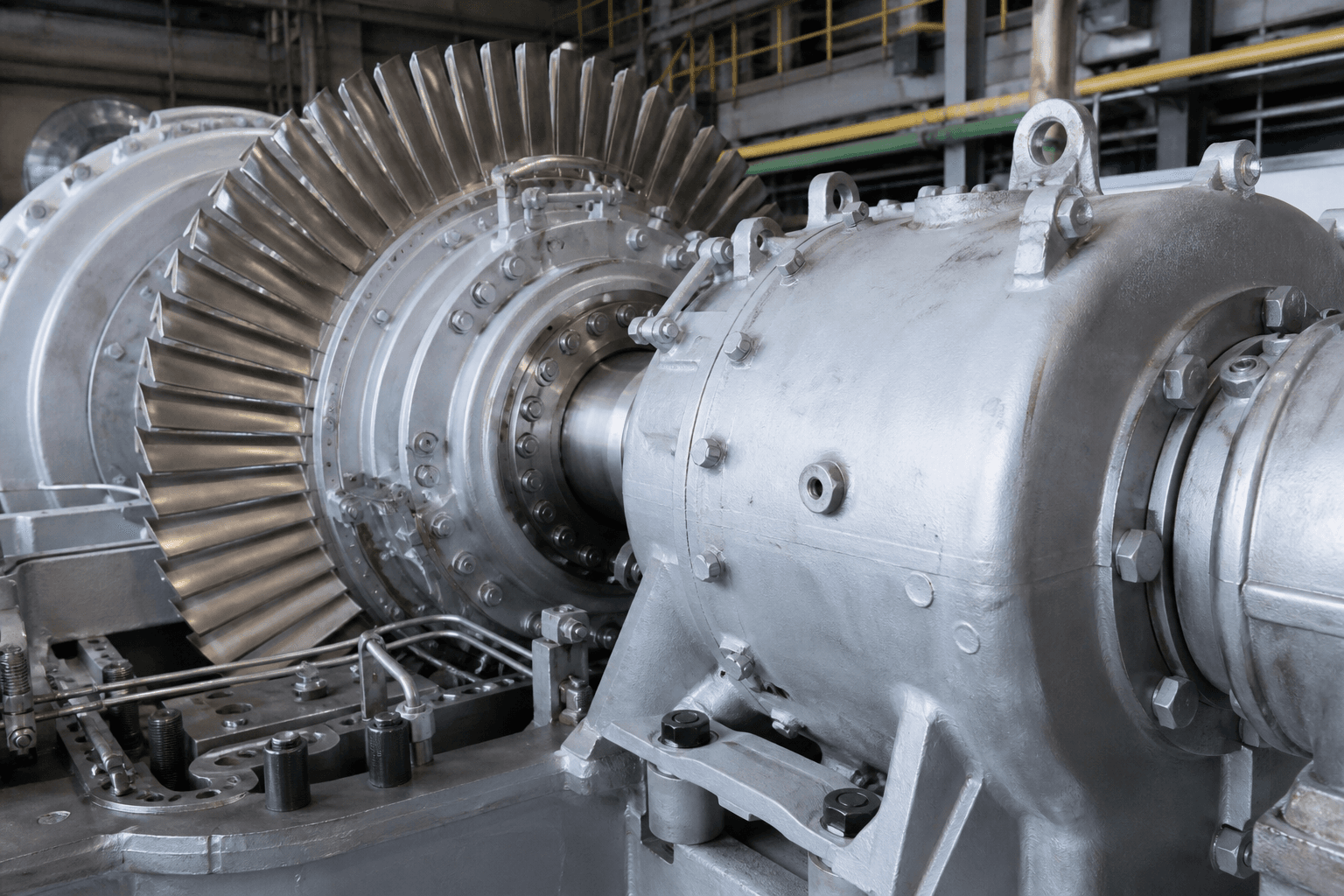
Hot-Gas-Path Parts for the GE MS5002 Mechanical-Drive Turbine
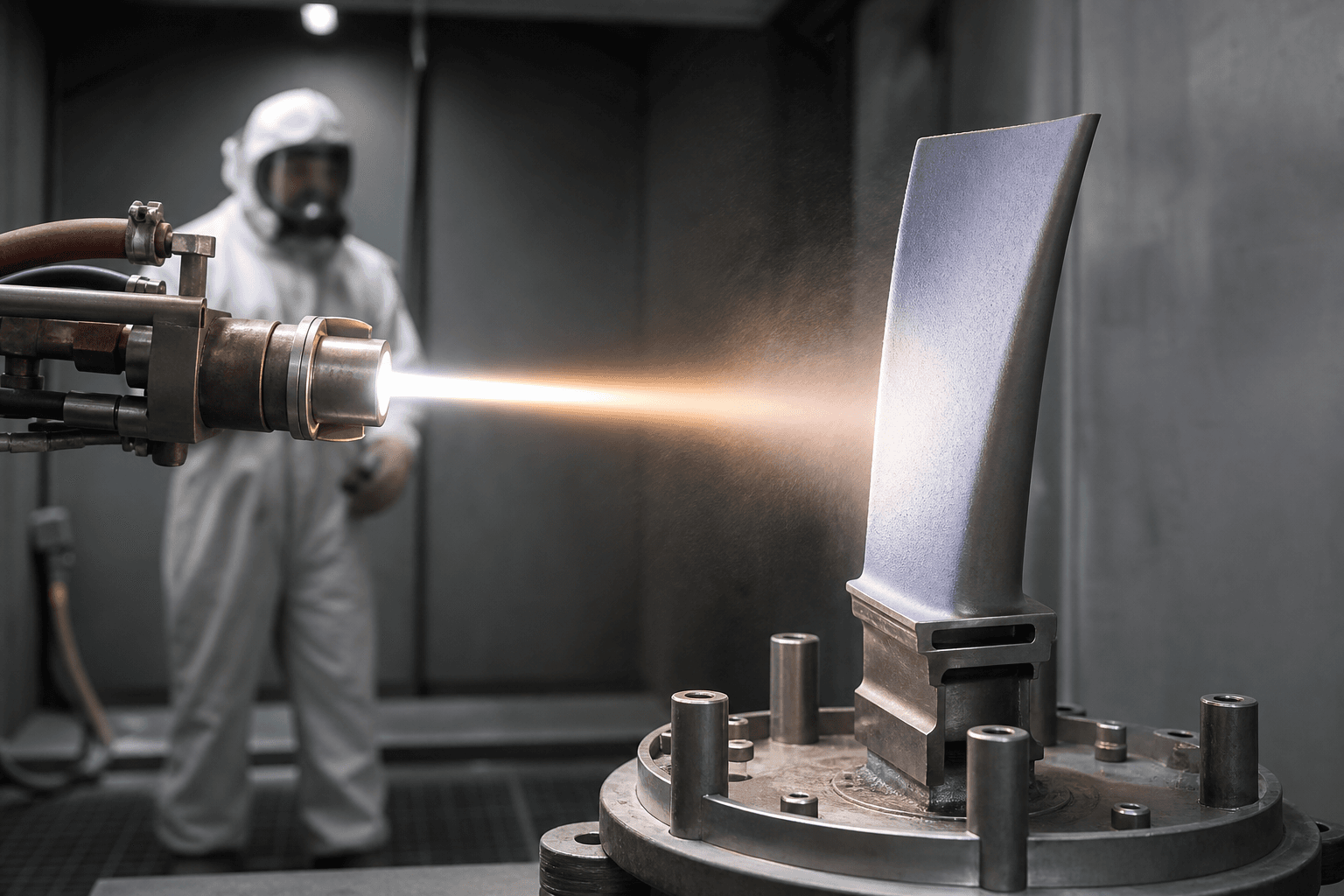
APS, LVPS, CVD, HVOF and Pack Cementation: Name the Coating Process
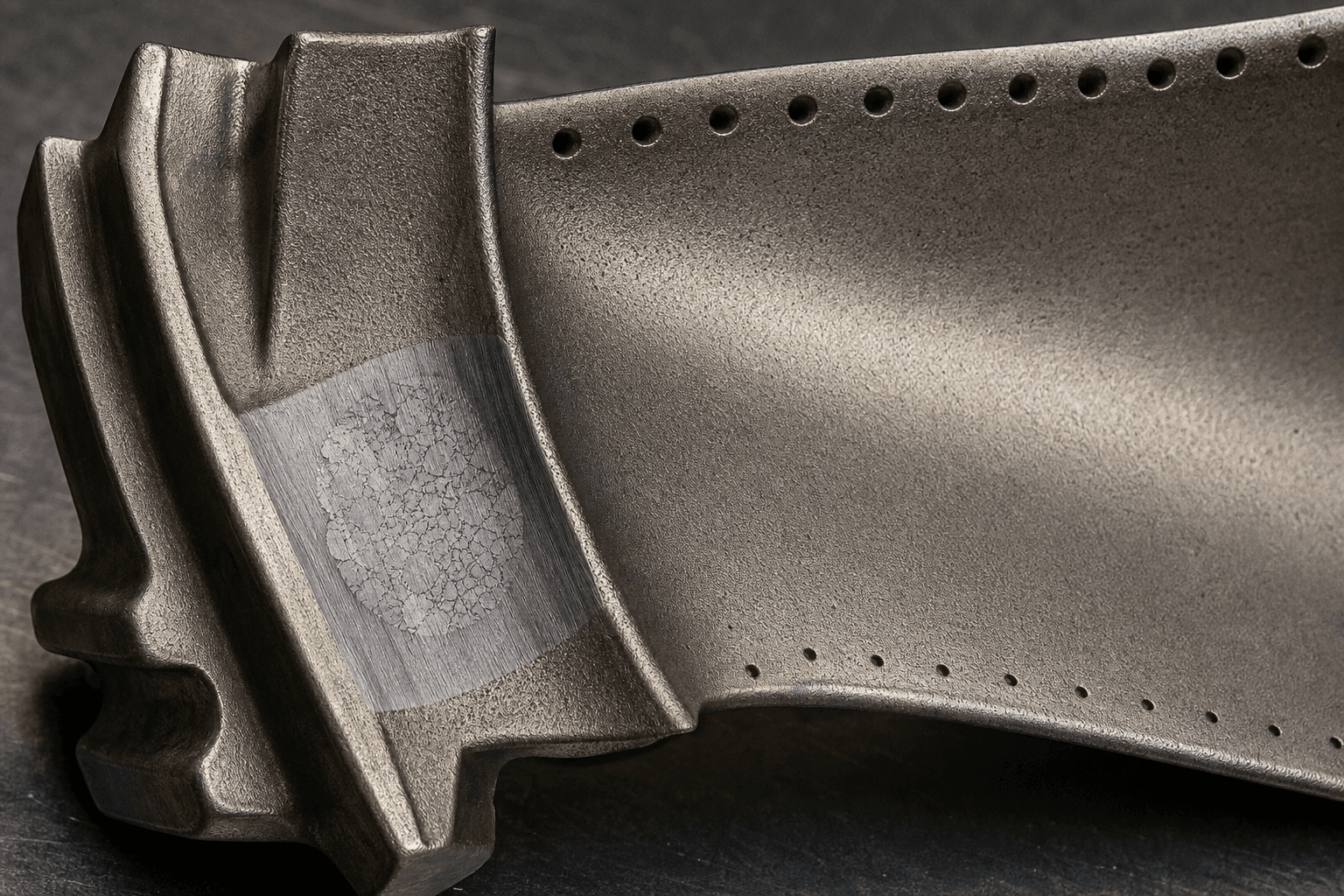
IN738, IN738LC and IN939 Turbine Blades: What the Alloy Grade Specifies
Emergency Hot-Gas-Path Parts When the Unit Is Already Down

Oxidation and Hot Corrosion on Blades: Two Different Damages, Two Shop Jobs
Last updated: August 29, 2026