Engineering
Legacy frames fail on parts availability, not on thermodynamics. Operators still run GE MS5001 and MS5002, Siemens V93, ABB GT13D and Zorya UGT-25000 because the machines earn their keep. What fails first is the spare.
When the OEM — the original equipment manufacturer — has deprioritised a row, Euroturbine reverse-engineers from the part in your store or off the rotor. The loop is scan, alloy, a manufacturable drawing pack, then investment casting in the original grade. That is how a planned outage stays planned. The loop is not one heading. The steps below are separate jobs, each with a worn V93 or Zorya case. The last heading is when we will not pour.
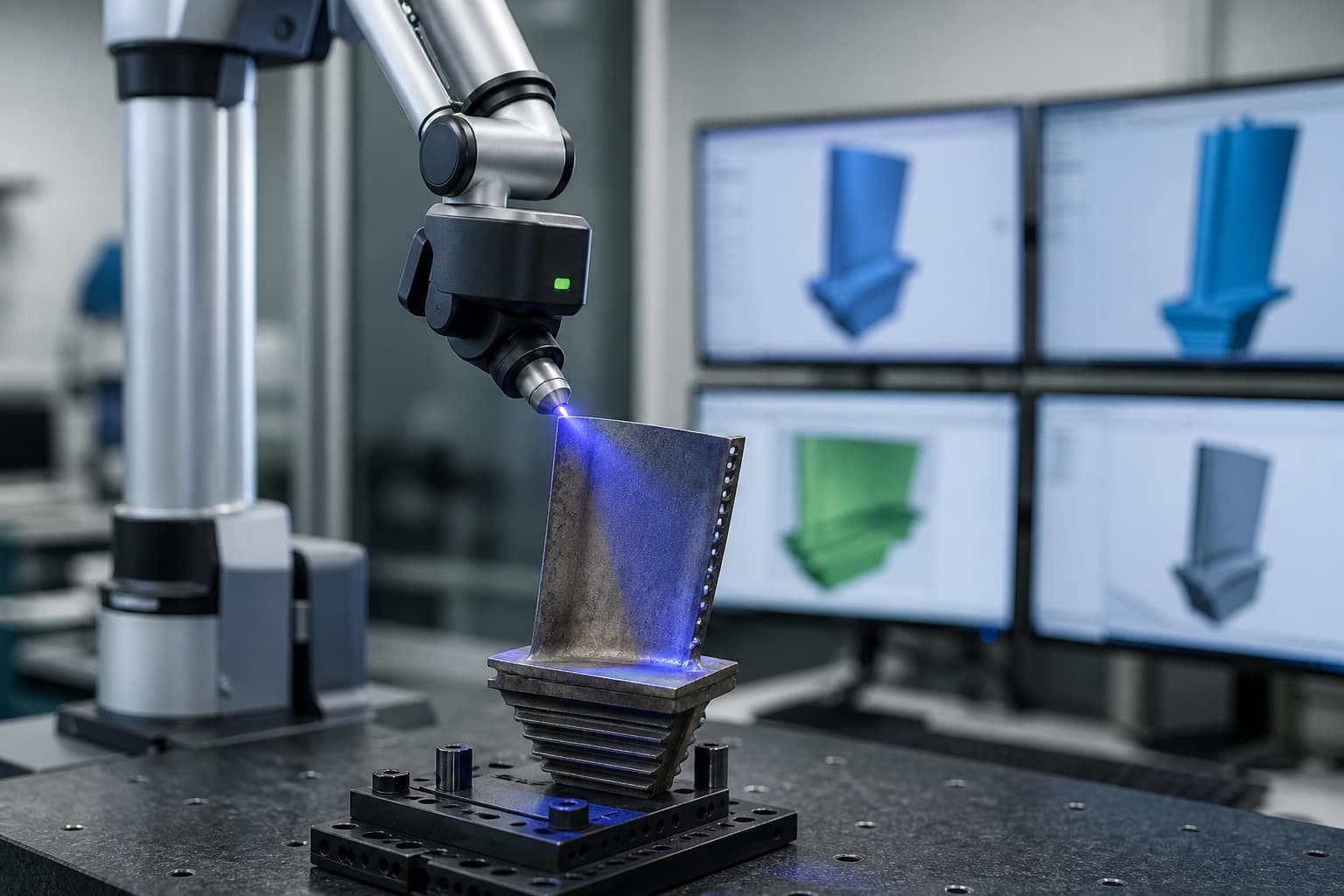
Scan and CMM first — a pretty mesh is not a drawing
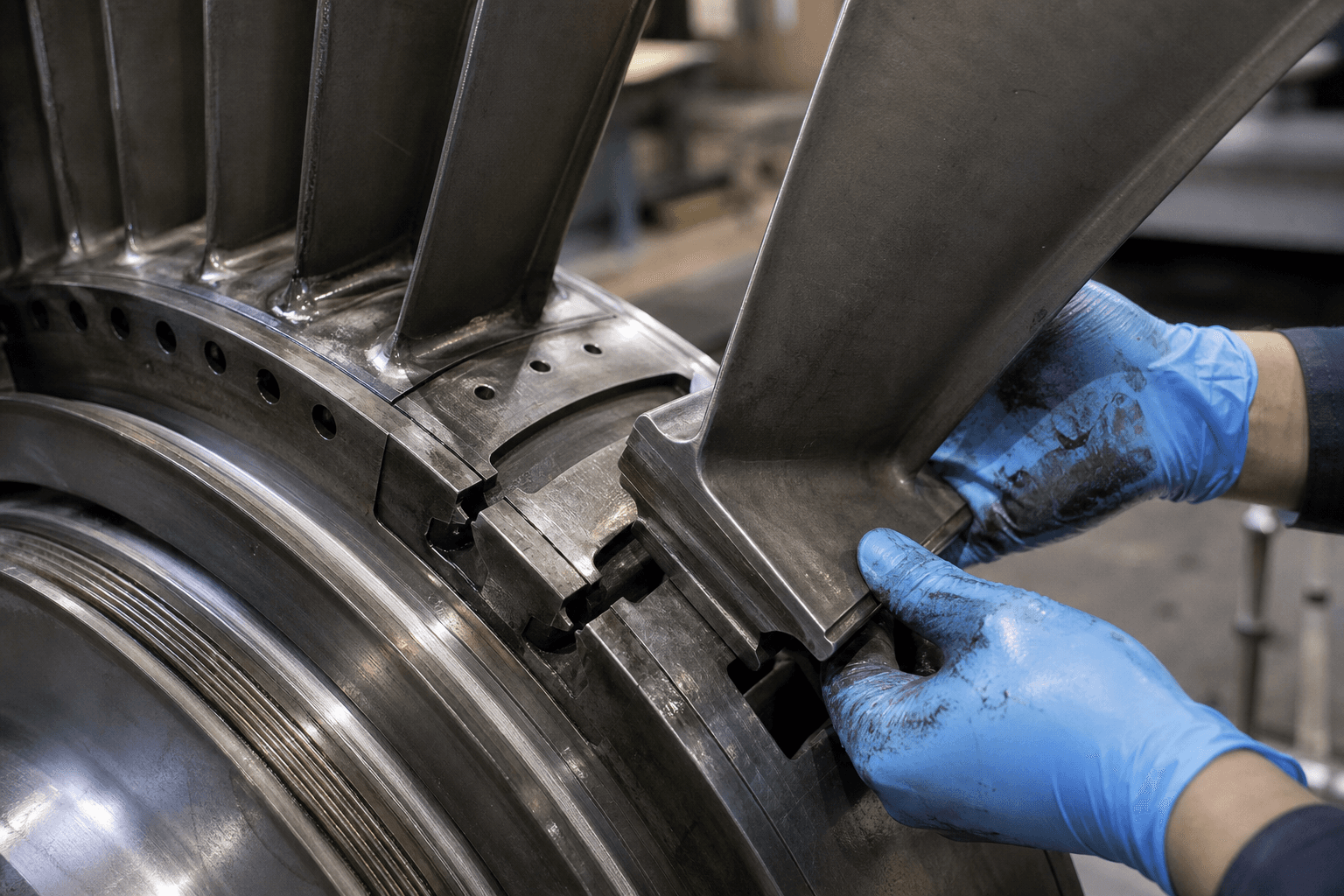
A 3D scan plus CMM — a coordinate measuring machine — captures airfoil, root, cooling holes and the features that have to stack in the machine. Wear has to be read, not copied. A thinned wall on a service-run vane is not the as-new thickness. Euroturbine reconstructs the design intent from the remaining metal, from a sister sample if you have one, and from any print still in the file. A colourful mesh in an email is not a manufacturing pack.
Case. A worn Zorya UGT-25000 first-stage vane comes off a mechanical-drive package. The OEM row is obsolete. The plant sends a photograph and asks for a pour next month. Euroturbine asks for the sample. Scan and CMM come first. The trailing edge is burned back. Copying that edge would pour a scrap vane. The reconstruction adds the missing metal on paper before anyone cuts wax.
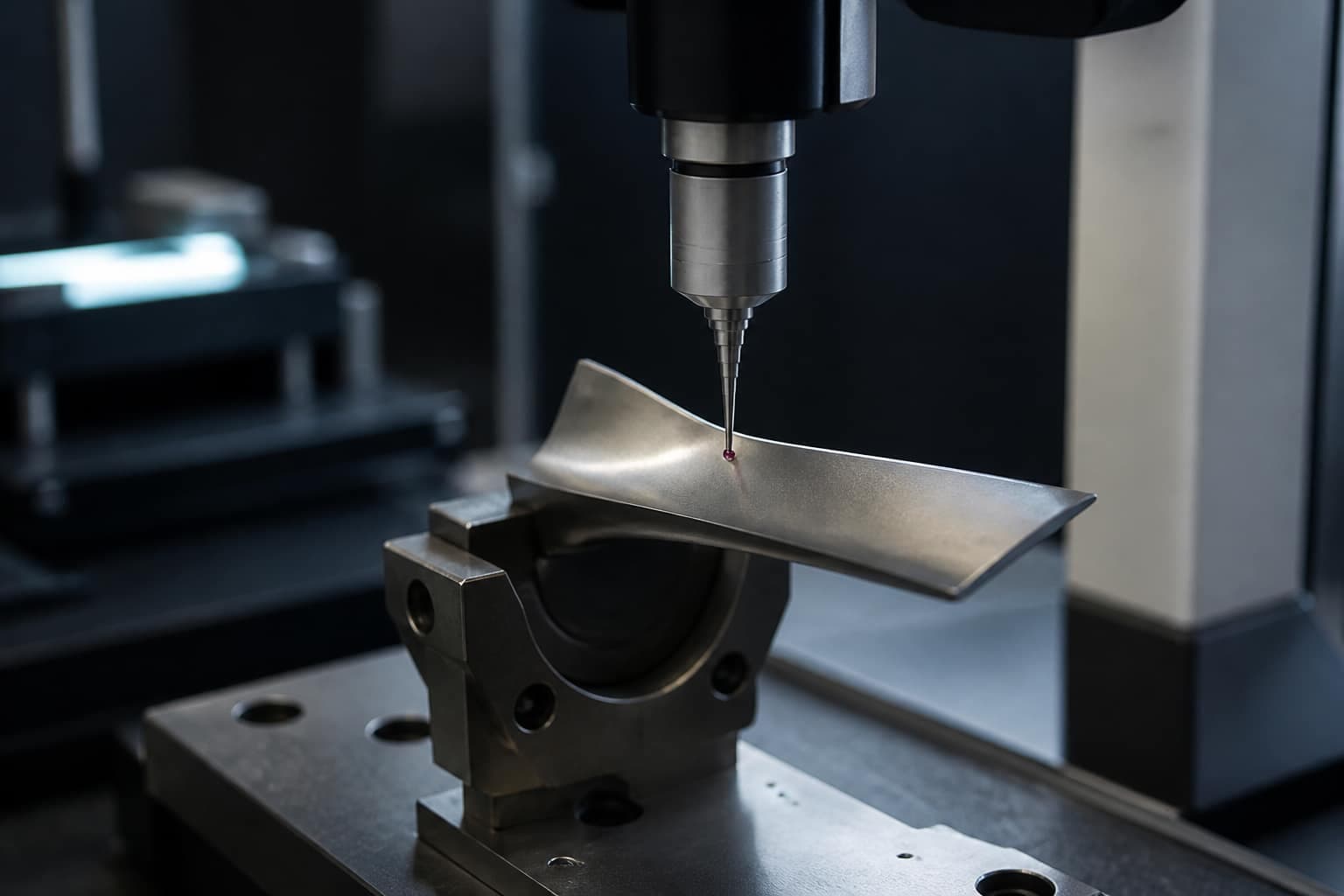
Cut a coupon and name the alloy before anyone pours
Metallurgy confirms alloy grade, coating remnant and grain structure. A V93 vane that “looks like IN738” is not a melt ticket. The coupon says what was poured, whether the coating was TBC or MCrAlY — thermal barrier or metallic bond — and whether the grain is equiax or something the foundry cannot repeat. Pouring a cousin alloy without writing it is silent substitution. Euroturbine will not do that.
Case. A Siemens V93.01 row the OEM no longer supports. The plant has a worn blade and a handwritten note “نیکل”. The coupon comes back IN738LC, coating remnant is MCrAlY, grain is equiax. That is the pour. If the coupon had been a different grade, the honest job is stop and rewrite the pack — not heat a ladle on a guess so the outage date looks safe.
The CAD pack has to be manufacturable
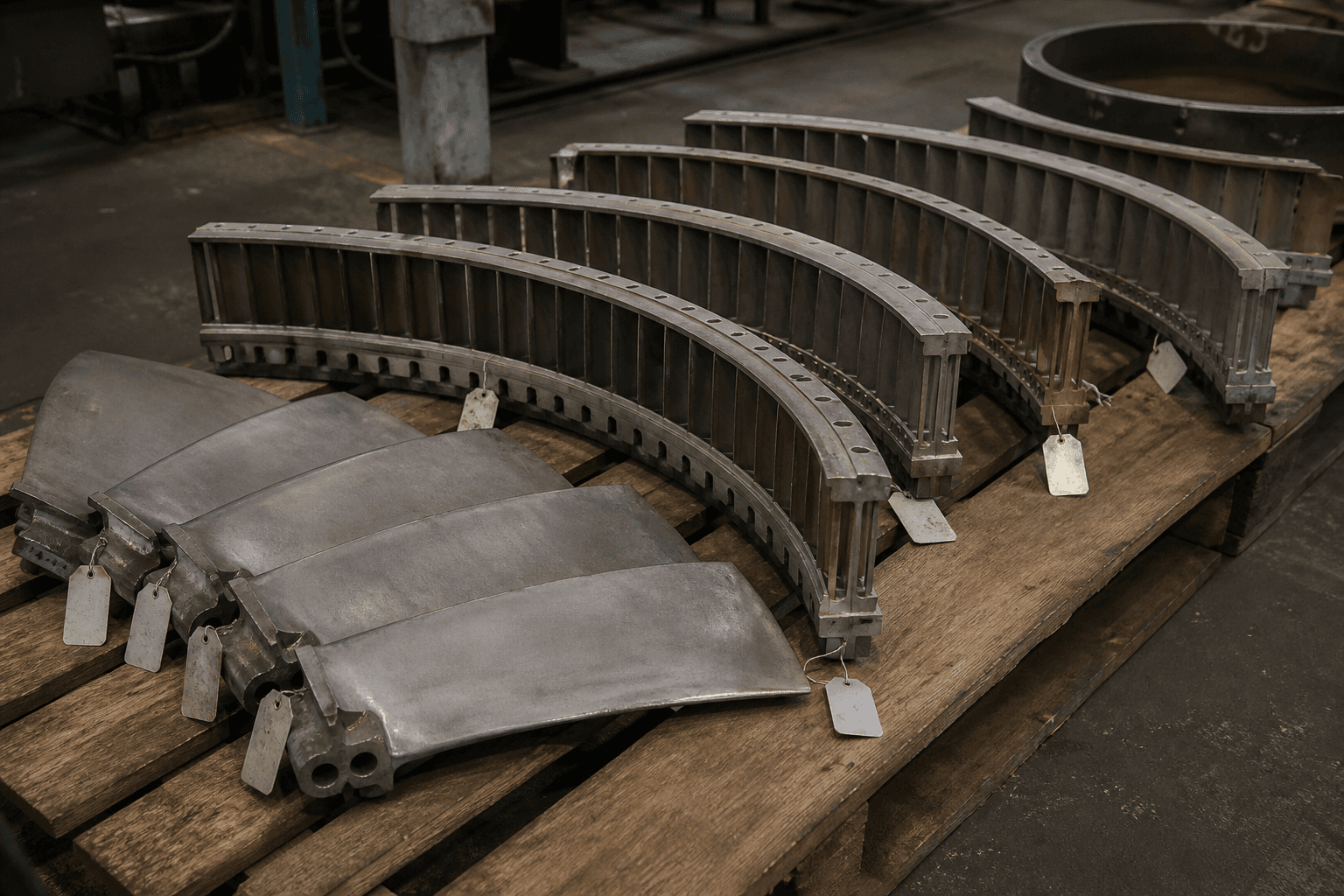
The CAD pack is tooling, machining stock, cooling-hole positions and stack datums — a model a foundry can pour and a machine shop can cut. A pretty mesh is not that. Cooling holes that were blocked or drifted on the worn sample have to be recut to the design, not to the last blocked pattern. After cast and coat, NDT — non-destructive testing — plus CMM meet the same release bar as a catalogue aftermarket part.
Where we find a manufacturing or life improvement that does not change the envelope, we document it. That is re-engineering, not silent deviation. The plant sees the note. The interchangeability line still says the part will stack in the machine you run.
When we will not pour
We will not pour from a photograph alone. We will not copy a burned trailing edge and call it the drawing. We will not pour a cousin melt because the coupon was never cut and the outage is close. We will not skip CMM or NDT so a crate can leave this week. We will not relabel a nearby OEM number to fill a Zorya or V93 gap. Those are the jobs that create the next forced outage.
Case. An ABB GT13D combustion piece with no sample, no print, and a request to “make something like the 9E liner”. Euroturbine writes no pour. A 9E liner is a different machine. Send the worn part or a drawing. Then the loop above starts. If the sample is too far gone to recover intent, we say so before wax is cut — not after a crate arrives that will not stack.
Reverse engineering is not a workaround for poor quality. It is the only honest supply path when the original drawing is locked and the plant cannot wait.
Photograph the part, send the OEM number, and tell us the outage week. Euroturbine will say scan-from-sample or draw-from-print. Re-engineering notes stay on the pack. The same loop can sit inside a long-term service agreement (LTSA) so obsolete numbers stay on a standing order instead of a panic email every outage.
Frequently asked questions
Do you need a drawing or is a worn sample enough?
A service-run sample is enough to start: 3D scan plus metallography. A drawing shortens the loop. Both are better than an OEM ‘obsolete’ notice with no delivery date.
Will the reverse-engineered part be identical?
It will be interchangeable in the machine. Where we find a manufacturing or life improvement that does not change the envelope, we document it — that is re-engineering, not silent deviation.
How long does a scan-to-cast loop take?
It depends on alloy, coating and whether cooling holes must be recut. Start with a photograph, OEM number and outage week so the casting slot sits on the critical path.
Related reading
Start a reverse-engineering pack
A worn sample is enough to begin. Same foundry and NDT bar as catalogue GE and Siemens parts.
Contact re-engineeringMore articles

Oxidation and Hot Corrosion on Blades: Two Different Damages, Two Shop Jobs
How a Compressor Blade Differs from a Hot-Gas-Path Blade
How to Buy Aftermarket Gas Turbine Blades Before the Outage
Fir-Tree Blade Roots and Turbine Discs: The Blade Is Cast, the Disc Is Forged
Aftermarket Supply for a Legacy Siemens V93
Last updated: August 29, 2026