How you buy
A purchase order buys one row for one outage. A long-term service agreement — LTSA — buys a rule that repeats: which frames, which rows are new-make or repair or HIP, how many days before the outage you must tell us, and what papers travel with the part. If you only have one planned hot-gas-path opening in the next two years, stay on a purchase order. If you have two or more, and you are tired of arguing “is this aftermarket good enough” every spring, the conversation is a contract. The clauses below are the document. They are not a pointer to another page.
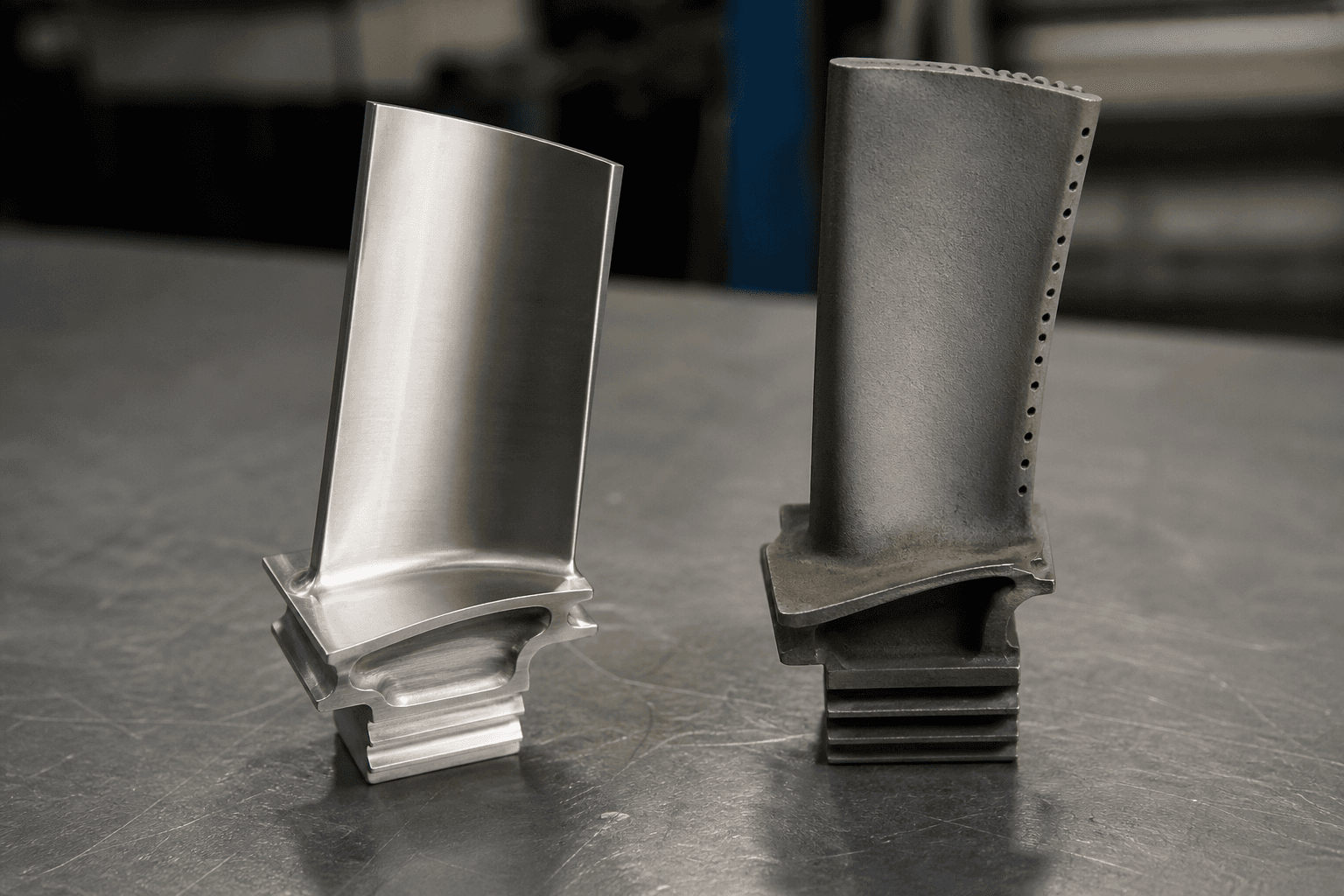
LTSA is the English abbreviation plants use for a long-term service agreement. HIP is hot isostatic pressing — a furnace under pressure used to close internal porosity in a cast blade. OEM is the original equipment manufacturer. Aftermarket here means a part Euroturbine makes or repairs to a written equivalent of that OEM number, not a box with no certificate. The rest of this page is two plant-style cases, then the clauses that actually go in the paper.
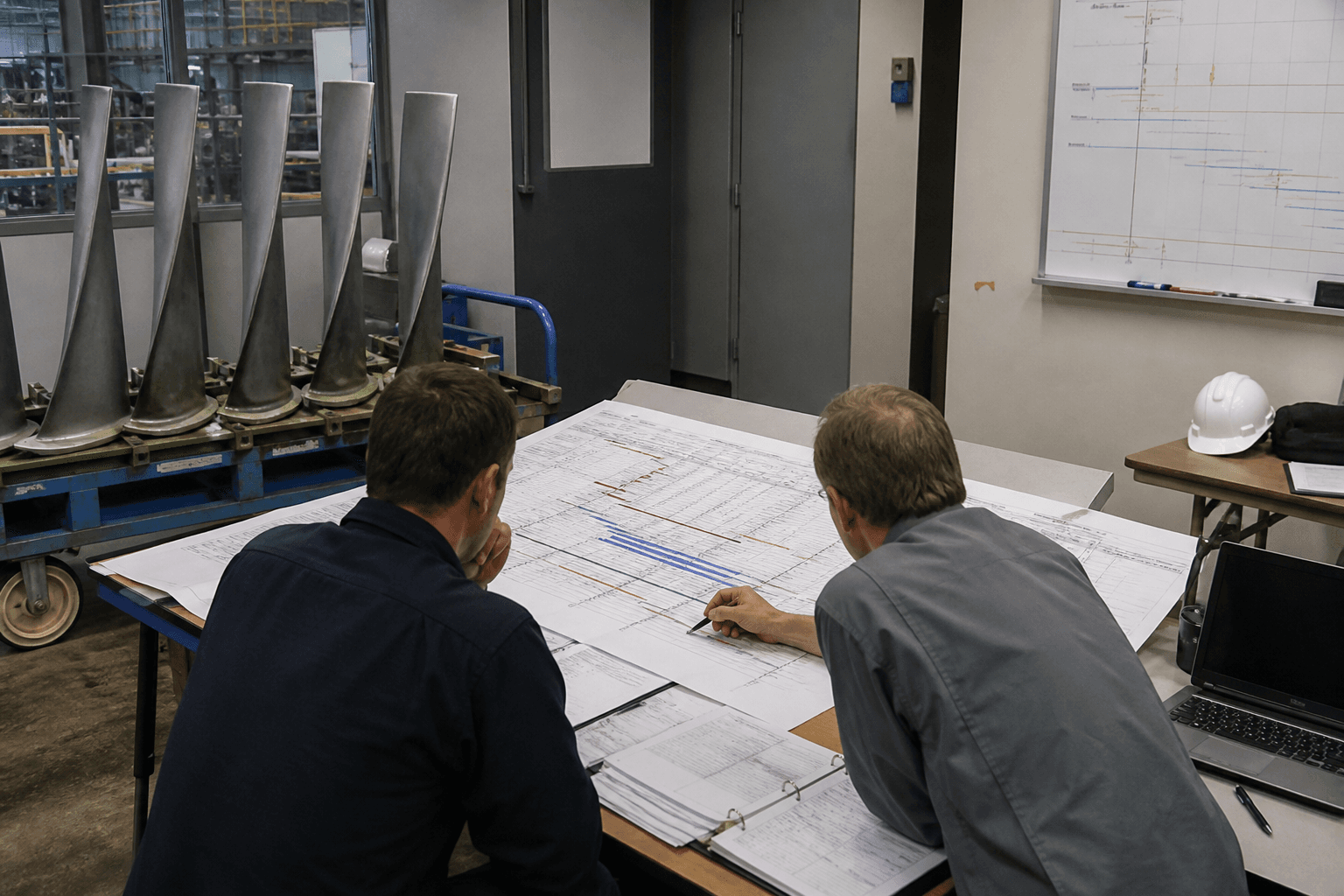
Case 1 — Stay on a purchase order
A single Frame 9E combined-cycle unit. The next hot-gas-path outage is in fourteen months. After that the machine may run on a different interval, or the owner is deciding whether to keep it. The shopping list is one row of first-stage vanes and a liner kit. There is no second opening on the calendar. Euroturbine writes a normal RFQ: OEM numbers, quantity, outage date, new-make or repair. You pay for that crate. You do not pay for a five-year envelope. A contract here is extra meetings for one delivery.
The same door stays open for a true emergency — one missing serial discovered when the case opens — and for a one-time reverse-engineering job on an orphan number. Those are still purchase orders. They do not become an LTSA because the email was marked urgent.
Case 2 — Talk contract, because two things are already true
A plant with two V94.2 units and one 9E. On the wall: a hot-gas-path opening next spring, and another on the sister unit the year after. That is “more than one planned HGP outage in the next two years”. If you stay on spot buying, you will freeze a bill of materials twice, fight a foundry slot twice, and twice explain to a new purchasing committee why a non-OEM blade is allowed. The second year you pay the same argument again. The contract is there so the argument happens once, on paper, and then the calendar runs.
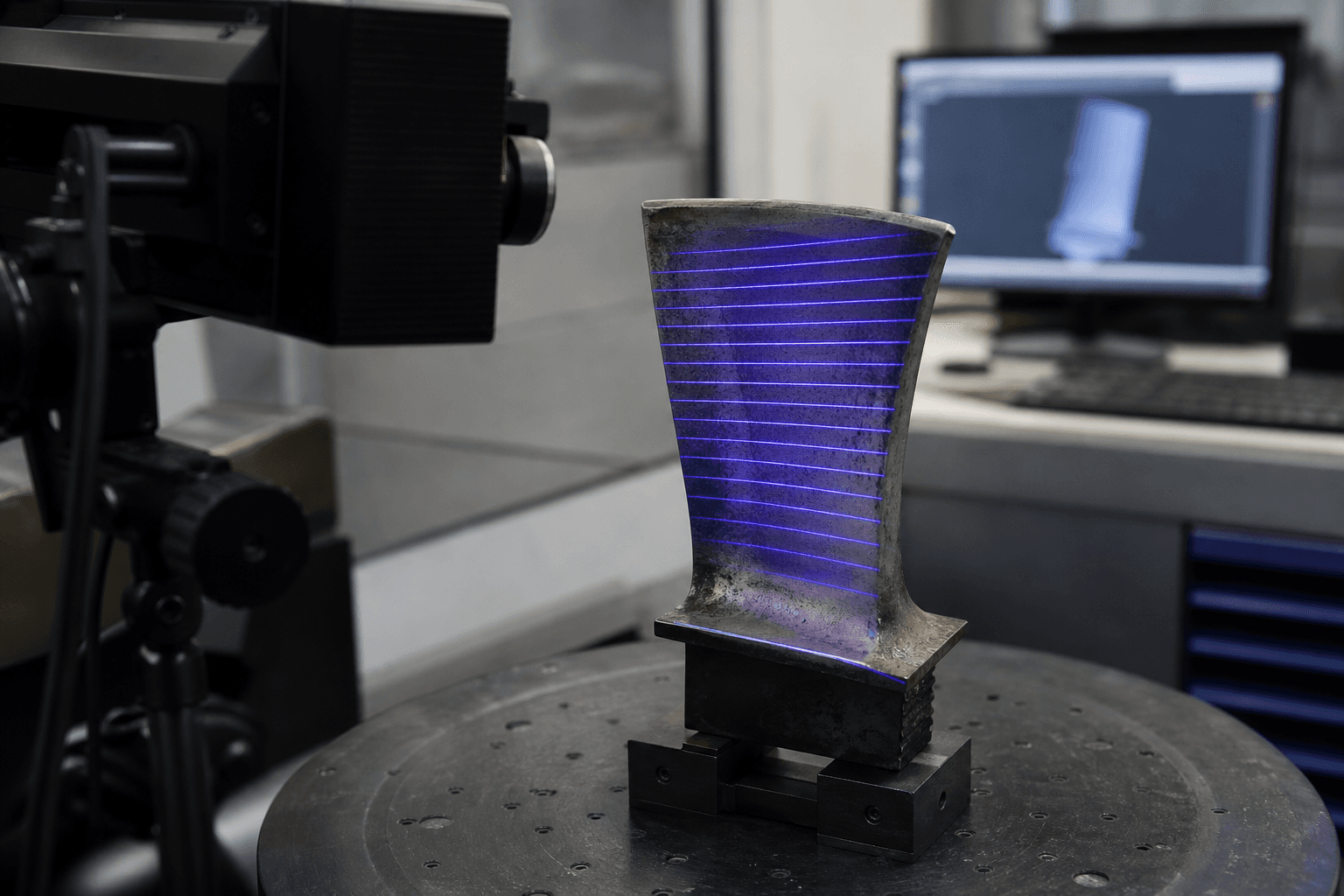
The second condition is the quality fight. Every RFQ, someone asks whether aftermarket is “real”, which lab released the alloy, whether HIP is allowed on stage 1, whether a repaired vane may sit next to a new one. That is “you do not want to re-argue aftermarket quality on every request”. The LTSA writes the qualification path once: CMM, NDT, alloy certificate, coating stack, mixed-row rule. The next RFQ inside the contract is a call-off against that appendix, not a new theology of blades.
Which frames the paper names
The first schedule is a table of machines, not a slogan about “ناوگان”. Each line is a nameplate: MS9001E, V94.2, SGT-600, GT13E2, or whatever you actually run. A unit that will retire next year stays off the table or sits in a short annex. A Frame 5 in another city is not covered because the 9E is. If a new unit arrives mid-contract, it is added by amendment with its own OEM list. Euroturbine will not write “all Siemens frames” and then argue later whether that included V94.3A.
Which rows are new-make, which are repair, which are HIP
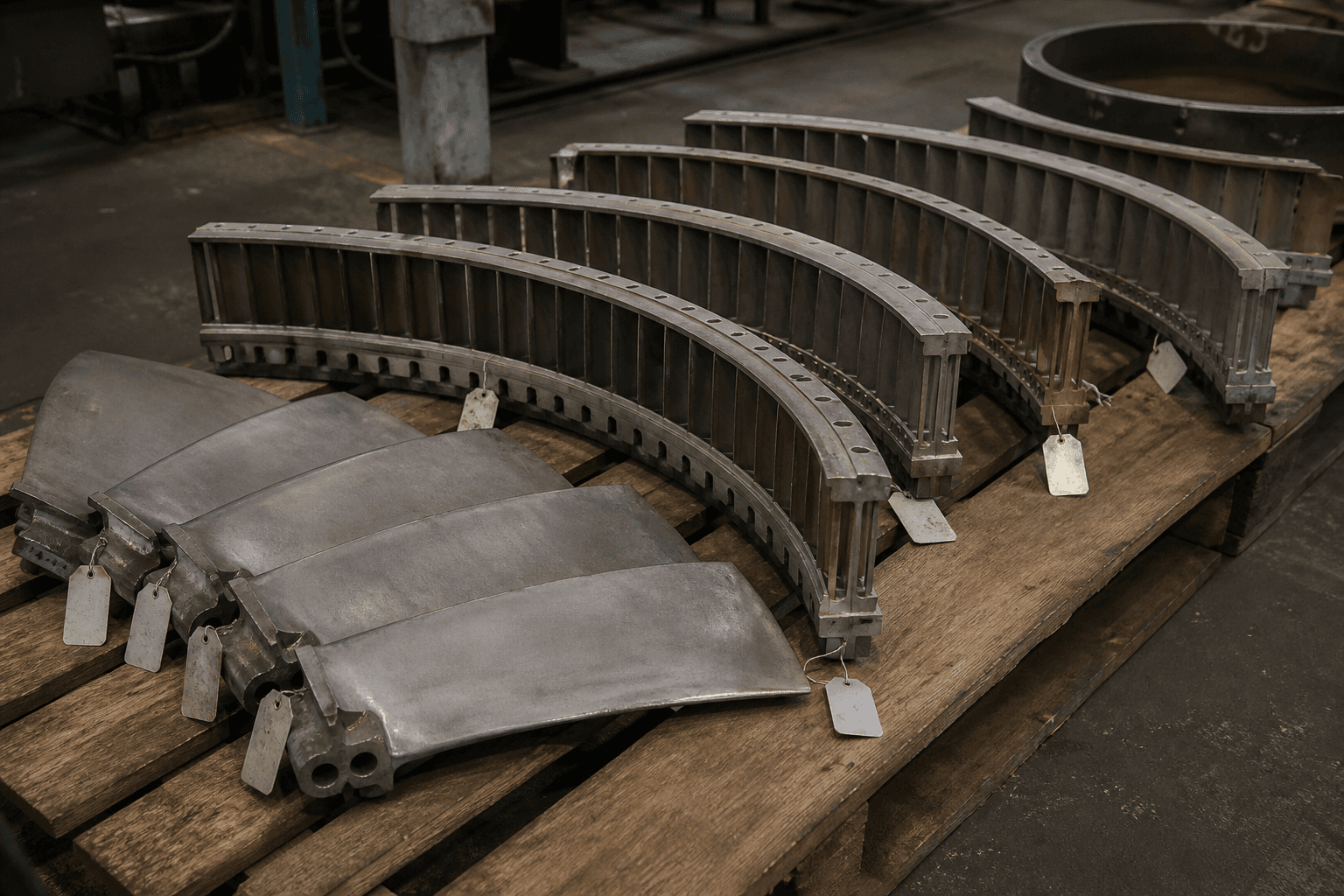
The second schedule is a decision tree per row, not a discount list. Example language we actually use: first-stage 9E buckets — new-make unless remaining wall and coating allow a written repair; HIP only when porosity is in the accepted envelope and the alloy recipe exists. First-stage vanes — strip and recoat if the throat is still in limit; replace if the throat is gone. Inner casings — repair, remaining-life assessment, or replace as in the casing article, never “کیسینگ” as one line. The appendix names the scrap gate. Without that tree, every spring is a new commercial fight about HIP versus pour.
How many days before the outage you must tell us
The notice clause is a number of calendar days, counted back from the planned case-open date, not from the day purchasing woke up. On heavy-duty HGP we typically write ninety days for a frozen bill of materials on rows that may need a foundry slot, and thirty days for a change that only moves a repair already in the shop. AOG — the unit already down — sits in a separate paragraph: it does not empty the rest of the contract, and it does not turn a first-stage hollow blade into a ten-day pour. If you notify late, the contract still runs; lead time simply follows the foundry, and the availability KPI for that outage is paused or adjusted as the appendix says.
What a complete data pack looks like
For each call-off the plant sends: nameplate and OEM numbers, quantity, outage date, hours and starts, whether the row is new-make / repair / HIP as the tree already chose or a request to change that tree, photographs of a sample if reverse engineering or life assessment is in play, and the last coating and NDT report if the parts are returning to the shop. Euroturbine returns: a workscope line per OEM number, the inspections that will release the part (CMM, penetrant, radiography or airflow as applicable), the certificate list, and the ship date. That pack is what operations files next to the outage report. An email that only says “قطعات مسیر داغ، فوری” is not a data pack.
What else has to sit in the same paper
Response time to site when the unit is already down, in hours, not “as soon as possible”. How consigned stock is owned and how it is wound down if you exit. The yearly numbers you will actually review — starting reliability, equivalent forced outage rate, outage duration — not a dashboard nobody reads. Reverse engineering only as a named extra with a trigger (obsolete number, no OEM drawing), not as a promise to copy anything. Price without these clauses is a framework agreement with a nicer title. The longer LTSA page on this site is the same story for readers who arrived searching that abbreviation; it does not replace this decision page.
Same clauses, LTSA search page · LTSA service · Service contracts
Frequently asked questions
Is an LTSA only something the OEM sells?
No. Independent aftermarket agreements are common on E-class and older frames.
Can reverse engineering sit inside a contract?
Yes as a defined extra with its own trigger, not as an open promise to copy anything.
Can we buy this outage as a spot order and talk contract later?
Yes. Run this outage on a purchase order. Keep the data pack — nameplate, OEM lines, hours, NDT, coating report. That pack is the template for the appendix if you later sign. Do not wait for a five-year paper before you order the row that is already short.
Related Euroturbine pages
Show the outage calendar for the next two years
Euroturbine will say whether this should stay a purchase order or become a contract with clauses — not a discount sticker.
Request a quoteMore articles
Last updated: August 29, 2026