Process name on the certificate
Writing “TBC” on an RFQ is like writing “Inconel”. A thermal barrier coating is ceramic; MCrAlY is a metallic bond coat under it, or sometimes a standalone overlay. How those layers were applied is a different sentence: atmospheric plasma spray, low-pressure plasma spray, high-velocity oxy-fuel, chemical vapour deposition, or pack cementation. Mixing those words in one slogan is how a certificate becomes fiction. Euroturbine wants the stack — bond-coat process, ceramic process, thickness band, and post-coat heat treatment. Below each layer and each process is its own result with a plant-style case, then a filled certificate a buyer can copy.
Start with what sits on the metal, then name how it got there. OEM is the original equipment manufacturer; copy the last stack from that paper or from the last shop certificate. TBC is a thermal barrier coating: the ceramic layer that drops metal temperature. APS is atmospheric plasma spray — powder melted in a plasma jet in air. LVPS is low-vacuum or low-pressure plasma spray, a chamber process often used for a denser metallic bond coat. CVD is chemical vapour deposition: a gas-phase route for some diffusion aluminides. A certificate that lists five of those words because a capability slide did is not a record of what ran. The booth does not lie if the paper names the one process that actually ran.
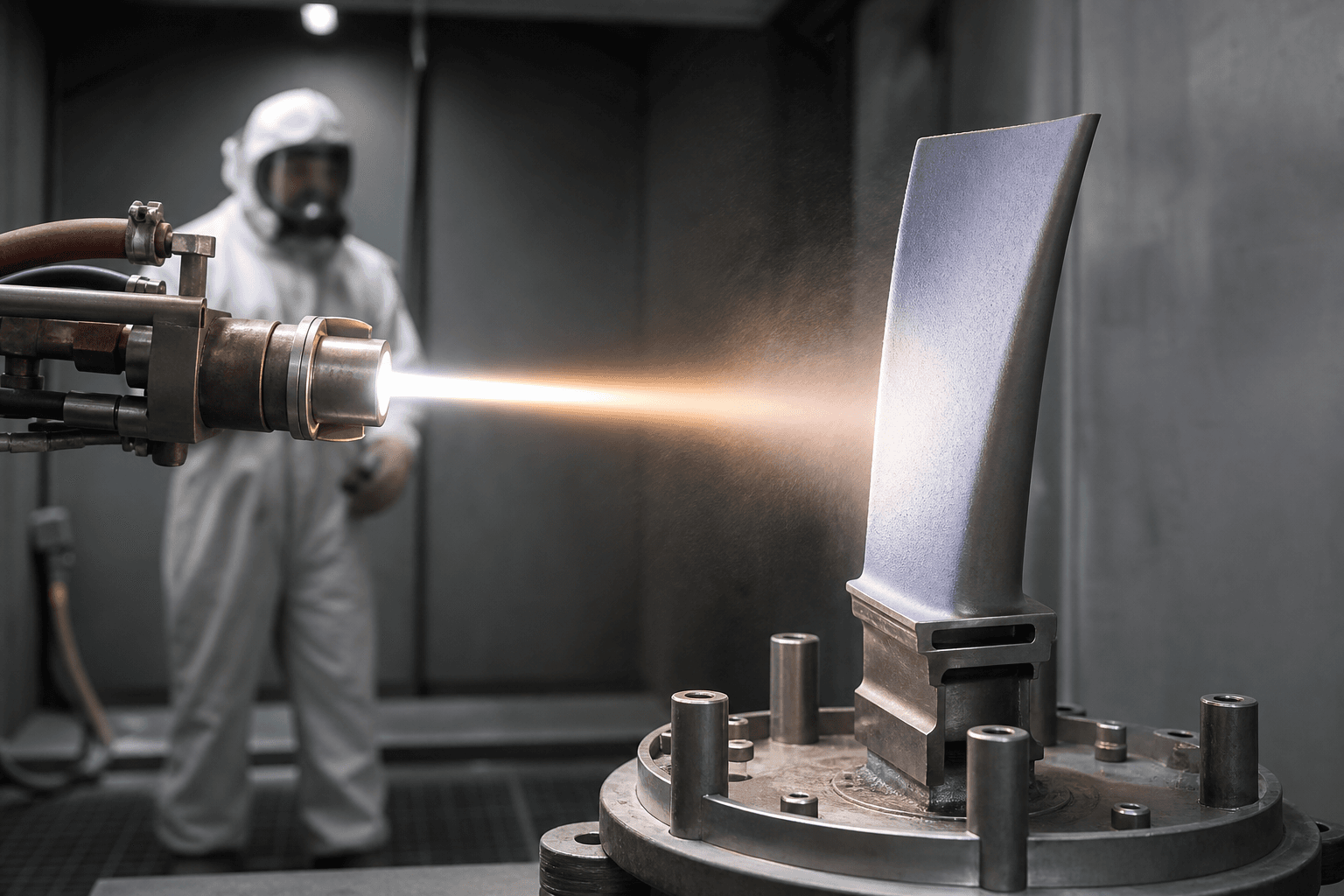
Result 1 — Write MCrAlY as the metallic bond coat; it is not the ceramic TBC
MCrAlY is a metallic overlay: nickel or cobalt with chromium, aluminium and yttrium. It bonds to the alloy and grows a protective oxide. Sometimes it is the only coat; often it is the bond coat under a ceramic. You pick MCrAlY when the specification wants that oxide-forming overlay — oxidation and hot-corrosion defence on the metal — not because the word sounds complete. Thickness is a band in micrometres, plus the spray process that applied it. “MCrAlY” without a process is still an incomplete line.
Case A. Combined-cycle Frame 9E first-stage buckets. Last certificate: MCrAlY bond coat, then ceramic. Euroturbine writes MCrAlY as the metallic line with its process and thickness band, then the ceramic as a second line. We do not print only TBC and hope the bond coat is implied. If the last shop used MCrAlY alone on a later row, we do not add ceramic to look thorough.
Result 2 — Order ceramic TBC only when the row was designed for that temperature drop
TBC — thermal barrier coating — is ceramic, usually yttria-stabilised zirconia on hot-gas-path parts. It sits on a bond coat. You pick TBC when the row was designed with that thermal drop; you do not pick it as a white paint on a vane that last wore only aluminide. Structure of the ceramic depends on how it was applied. Thickness band and process name both belong on the certificate. A white face after a spray is not a TBC specification.
Case B. Frame 9E stage-1 rotating. Last stack: MCrAlY plus TBC. Remaining wall still allows strip and recoat. Euroturbine strips, reapplies MCrAlY by the process the last paper named, then ceramic TBC by atmospheric plasma spray if that is what ran, with both thickness bands. We do not skip the bond coat because the ceramic photographs better.
Result 3 — Aluminide is a diffusion coat; do not treat it as a white ceramic
Aluminide changes the surface chemistry of the substrate by diffusion. It is not a sprayed ceramic and it is not MCrAlY. You pick aluminide when the last shop or the OEM note wrote pack cementation or CVD aluminide — common on many stationary vanes. A vane that last wore pack aluminide does not automatically want a thick APS ceramic. Writing “CVD” on a TBC box because the word sounded thorough is fiction. Euroturbine prints aluminide only when that is the job that ran.
Case C. Combined-cycle V94.2 first-stage nozzle segments. Last shop: pack aluminide, no ceramic. Euroturbine writes pack cementation aluminide, diffusion heat treatment, NDT. Purchasing asked for “TBC like the buckets”. We refuse. Thick ceramic on that vane would change the throat and is not the coat the row wore. The buckets keep their own MCrAlY-plus-TBC line.
If the booth ran APS, write APS on the certificate
APS is atmospheric plasma spray: powder melted in a plasma jet in air. It is common for ceramic TBC and for some bond coats. The certificate should say APS, the powder family, and the thickness band. APS ceramic is not the same structure as electron-beam physical vapour deposition ceramic. If the booth ran APS, the paper says APS. Euroturbine will not print a fancier process name on an APS job.
Case D. Frame 9E stage-1 TBC recoat. Last certificate: APS ceramic, thickness band [x–y] µm. Euroturbine runs APS, measures the band, files NDT. A vendor slide that also named LVPS and CVD stays in marketing. The part gets APS, because that is what ran.
If the last shop wrote LVPS or LPPS on the bond coat, copy that word; do not upgrade APS
LVPS — low-vacuum or low-pressure plasma spray — and LPPS, the low-pressure cousin, are plasma spray inside a chamber at reduced pressure. They are often chosen for denser MCrAlY than an air APS bond coat. They are not a synonym for TBC. If the last shop wrote LPPS or LVPS on the bond coat, copy that word. If they wrote APS on the bond coat, do not upgrade the letters to LVPS to look more expensive. Euroturbine prints the chamber process only when the chamber ran.
Case E. Last 9E bond-coat note: LVPS MCrAlY, then APS TBC. Euroturbine writes two processes on two lines. We do not call the whole stack LVPS, and we do not call it APS. Mixing the words in one slogan is how a certificate becomes fiction.
Do not write HVOF as a synonym for TBC on the RFQ
HVOF is high-velocity oxy-fuel: a spray process, often for metallic bond coats or other dense metal layers. It is not a thermal barrier. Using HVOF as a synonym for TBC on the RFQ is how a plant receives a metallic coat when it wanted ceramic, or the other way around. If the last shop wrote HVOF on the bond coat, write HVOF on that line and still name the ceramic process separately if a ceramic sits on top.
A metallic HVOF layer does not drop metal temperature the way a ceramic TBC does. It can be the right bond coat, or the only coat on a later row, and still not be TBC. Write HVOF on the metallic line if that is what ran, then write APS — or whatever ceramic process ran — on the ceramic line. One slogan that glues the two words together is how the certificate becomes fiction and the trailing-edge thickness band is never checked.
Case F. RFQ from a Frame 9E station: “HVOF TBC”. Euroturbine splits the sentence. If they meant metallic HVOF bond coat plus APS ceramic, we write those two. If they meant only HVOF metal and no ceramic, we write that. We will not stamp TBC on an HVOF metallic job.
Write CVD only when a diffusion coat was grown by chemical vapour deposition
CVD is chemical vapour deposition: a gas-phase process used for some aluminides and other diffusion systems. It is not a spray booth and it is not TBC. If the last shop wrote CVD aluminide, copy CVD. Do not add CVD to an APS ceramic line because the acronym list looked complete. Euroturbine prints CVD when the retort ran CVD.
Case G. Stationary vane, last note CVD aluminide. Purchasing writes “CVD TBC APS” on one line. Euroturbine quotes CVD aluminide only. The extra acronyms are deleted from the certificate. A list of processes is not a coat.
Write pack cementation when the part sat in a powder pack; that is not APS ceramic
Pack cementation buries the part in a powder pack and grows an aluminide by diffusion. It is common on stationary parts. Write it if the last shop wrote it. It is not APS, not HVOF, not a white ceramic. Post-coat heat treatment belongs on the same certificate. Euroturbine writes pack when the pack ran, with the diffusion specification the last paper named.
Case H. V94.2 nozzle segments, last shop pack aluminide. Euroturbine packs the segments, heat-treats, inspects. We do not spray APS ceramic on top to “modernise” the row unless engineering has accepted that stack for that throat. Pack plus silent APS is a throat change dressed as quality.
If the booth ran APS, do not write EB-PVD on the certificate; the ceramic structure is different
On the hottest OEM rows the ceramic is sometimes electron-beam physical vapour deposition — EB-PVD: a vapour process that grows a columnar ceramic, not a sprayed splat structure. That is not the same coating as APS. You must not claim EB-PVD if the booth ran APS. Euroturbine will say whether APS is an accepted alternative for that row. If it is not, we will not print EB-PVD on an APS job, and we will not silently swap. If it is accepted, the certificate says APS as alternative, with the engineering note attached — not EB-PVD as a lie.
Columnar EB-PVD ceramic and splat APS ceramic do not strain the same way in fire, and they do not leave the same thickness band on the trailing edge. Calling the APS job EB-PVD so the certificate matches an OEM note is how a plant files a lie next to a real heat number. If APS is an accepted alternative, the paper must say APS, attach the engineering acceptance, and keep the thickness band that belongs to the spray. If it is not accepted, the job is declined. A slide that names both processes is marketing, not that acceptance.
Case I. Combined-cycle Frame 9E inquiry claims the OEM row was EB-PVD; the local booth can only run APS. Euroturbine does not take the job as “EB-PVD equivalent”. If engineering for that 9E or V94.2 row has a written alternative, we coat APS and print APS. If not, we decline. A capability slide that names both processes is not that alternative.
A filled coating certificate a buyer can copy
Copy this block after strip and recoat, or onto a new-make. Frame: MS9001E, stage 1 rotating. OEM number: [number]. Bond coat: MCrAlY, process APS or LVPS or HVOF as last paper, thickness band [x–y] µm. Ceramic TBC: APS (or EB-PVD only if that actually ran), thickness band [x–y] µm. Or, if stationary pack: aluminide by pack cementation / CVD, no ceramic unless written. Post-coat heat treatment: [cycle]. NDT after coat: [penetrant / other]. Cooling holes: open, airflow if cooled. “پوشش شد” is not a line. If OEM was EB-PVD and shop ran APS, attach the engineering acceptance or do not claim EB-PVD.
Euroturbine prints only the process that ran, with a thickness band per layer. A capability slide that names five processes stays in marketing. If the OEM ceramic was EB-PVD and the booth ran APS, the paper says APS as alternative with the engineering note, or the job is declined — it does not say EB-PVD as a lie.
Put one process name and a thickness band on the certificate. A list of acronyms is not a coat.
Frequently asked questions
Is HVOF a thermal barrier coating?
No. HVOF is a spray process, often used for metallic bond coats or other dense metal layers. TBC is the ceramic layer, usually applied by APS or, on some OEM rows, by EB-PVD. Do not use HVOF as a synonym for TBC on the RFQ.
Can an OEM EB-PVD ceramic be copied with APS?
Not as the same coating. The structure of the ceramic is different. Euroturbine will say whether APS is an accepted alternative for that row. If it is not, we will not print EB-PVD on an APS job.
Is pack cementation used on vanes?
It is common for aluminides on stationary parts. Write it if the last shop wrote it. Do not add pack, CVD and APS on the same line unless that stack is what actually ran.
Related Euroturbine pages
Put the process and the thickness on the certificate
Euroturbine will not ship “TBC” without a process name and a thickness band. Send the last coating note with the OEM number.
Request a quoteMore articles
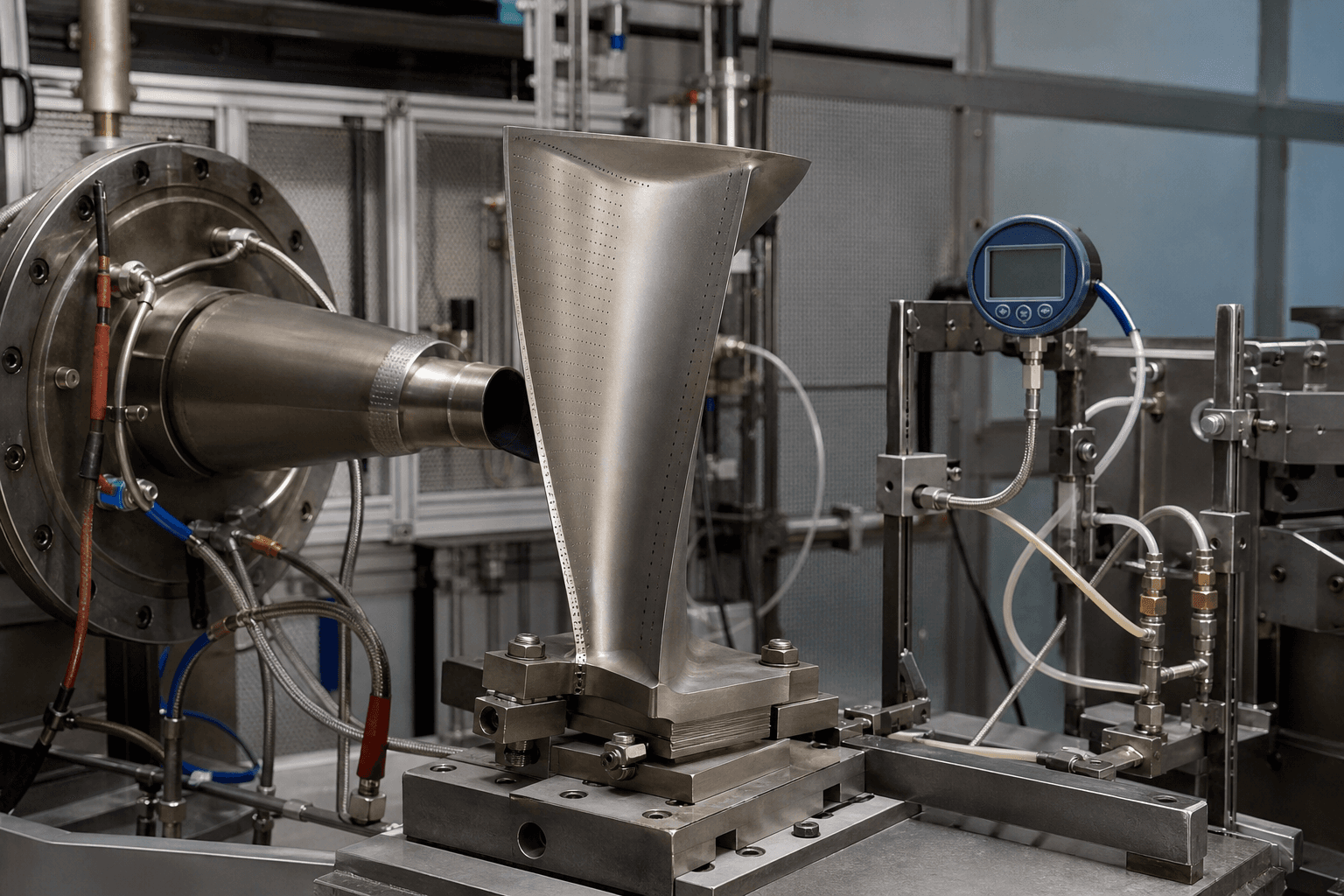
Why Cooled Turbine Blades Need an Airflow Test Before They Ship

Vacuum Investment Casting of Turbine Blades: From Wax Pattern to Inspected Metal
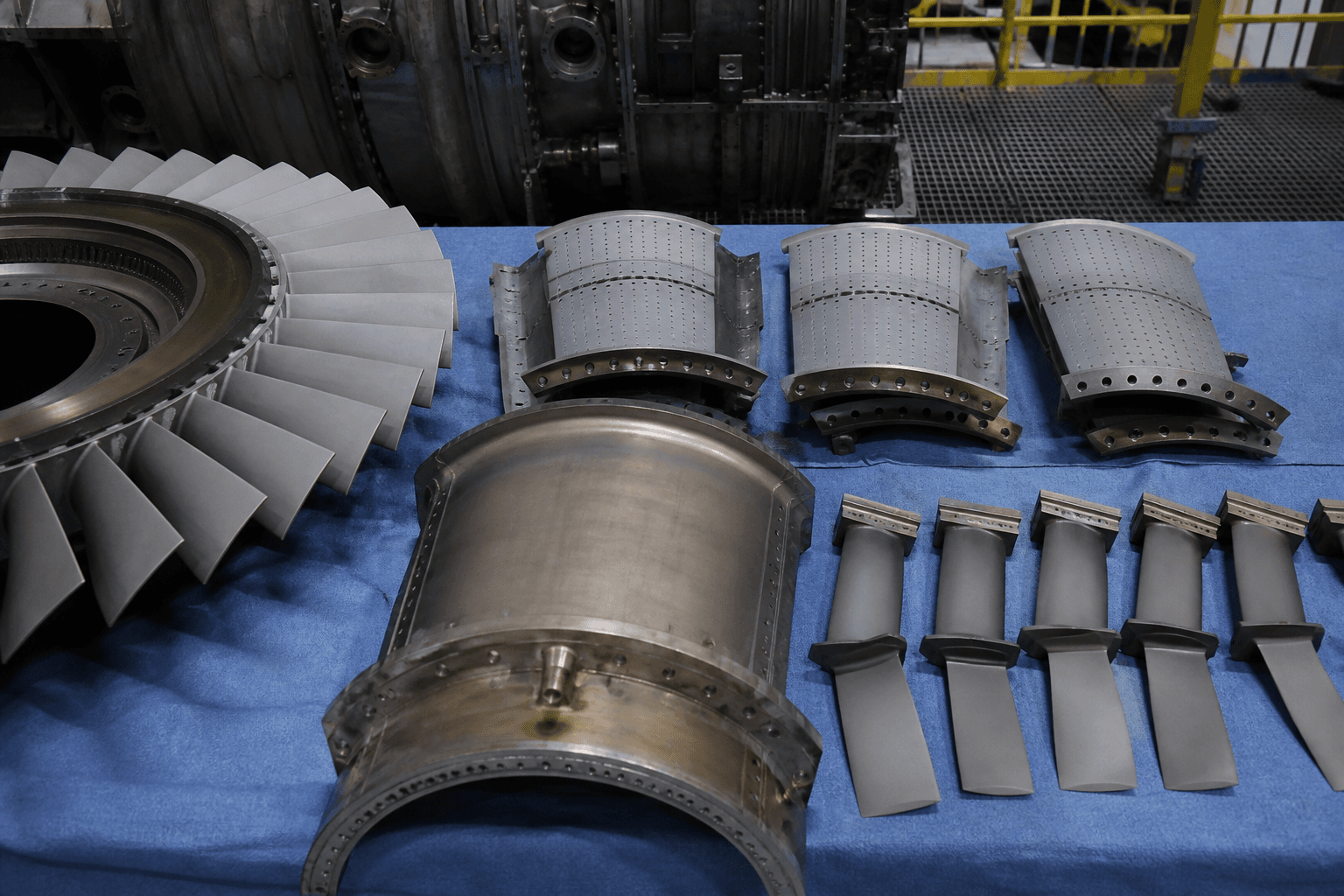
Buying Hot-Gas-Path Parts for the GE MS6001B Frame 6B
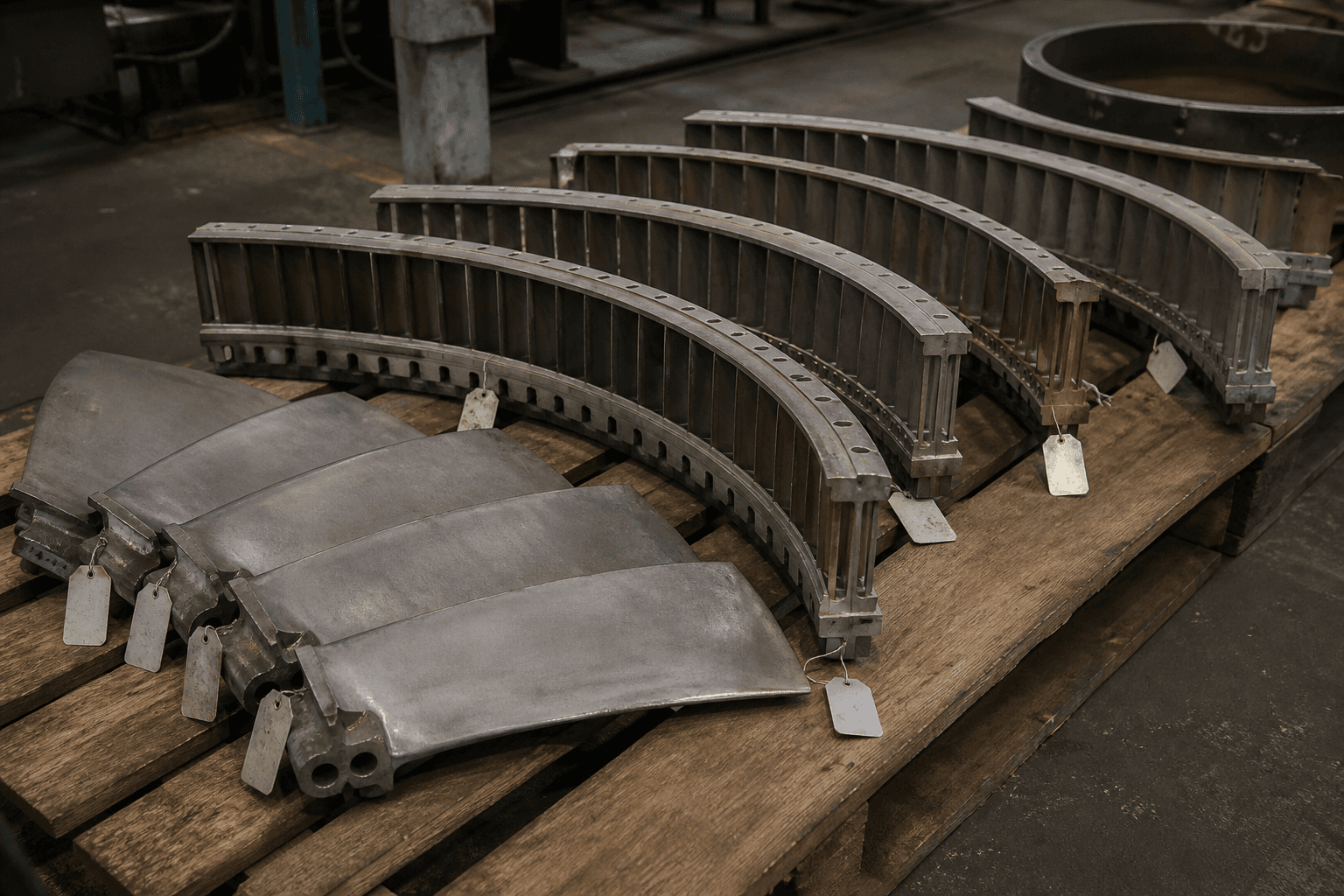
Aftermarket Supply for a Legacy Siemens V93
Fir-Tree Blade Roots and Turbine Discs: The Blade Is Cast, the Disc Is Forged
Last updated: August 29, 2026