The metal under the coating
On the bench you often see two first-stage blades. One is stripped to bare metal. The other is white again with a thermal barrier coating (TBC). The expensive question is not which one looks newer. It is whether the stripped blade still has hours left in the alloy. If the wall is thin or a crack has entered the metal, spraying a new ceramic only hides the next failure. Euroturbine answers that before the spray booth starts.
Recoating makes sense when the damage is mostly in the coating. New-make makes sense when the wall, a crack or the shape cannot be defended. HIP sits between the two if the problem is internal voids. Below are those three jobs as separate decisions, with a plant-style case for each.
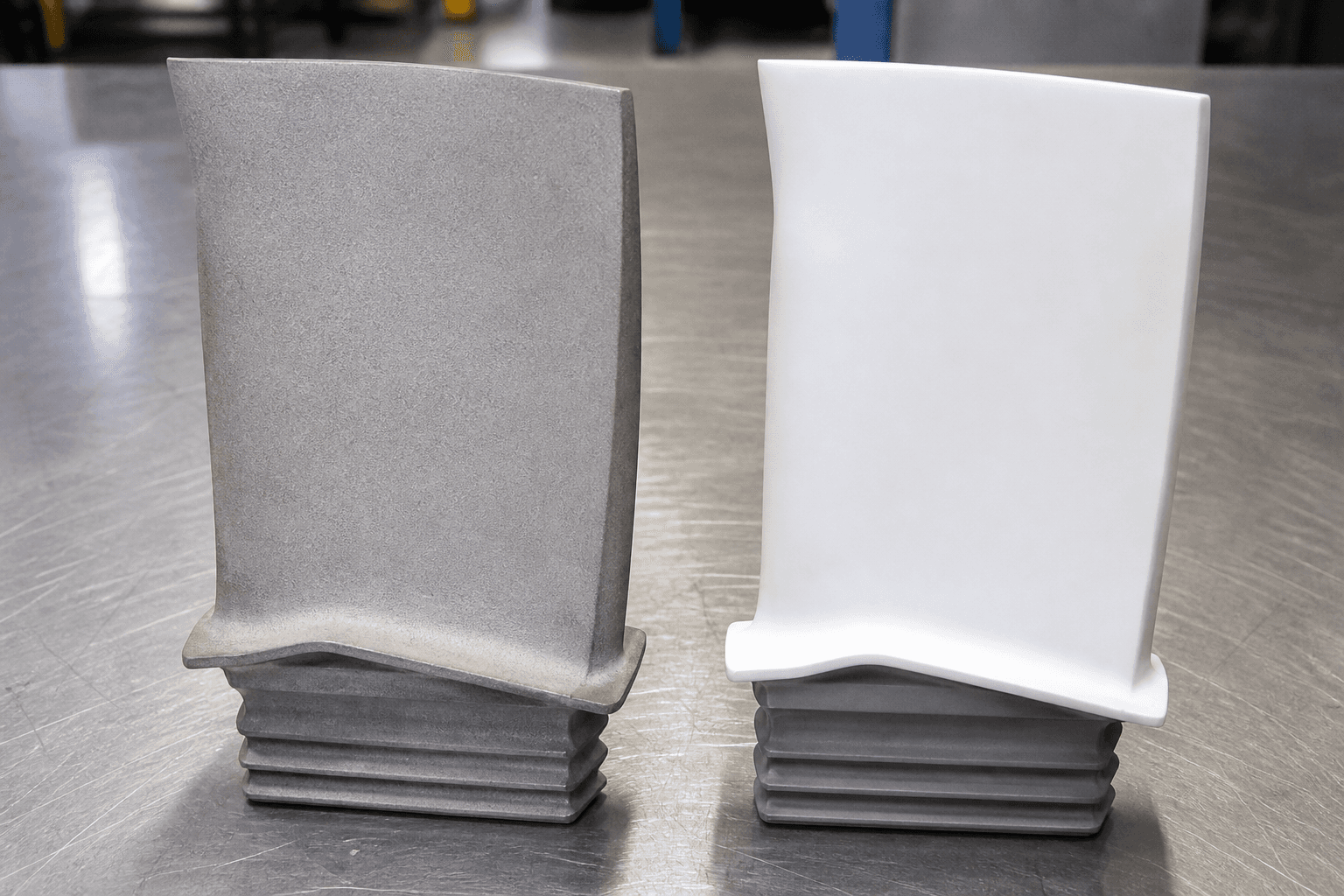
Result 1 — Strip and recoat
This is the job when the ceramic or MCrAlY has gone, the wall is still inside the repair minimum, cooling holes can be cleared, and airflow still matches the band. The shop strips by the specified method — chemical or controlled grit — maps remaining wall, coats, heat-treats, and airflow-tests if the blade is cooled. Case: a 9E first-stage bucket with TBC spall on the leading edge, metal still thick, holes open. Euroturbine writes strip and recoat, not new-make. Spraying ceramic onto a thin wall is not this result; that is hiding result 3.
Result 2 — HIP, then recoat
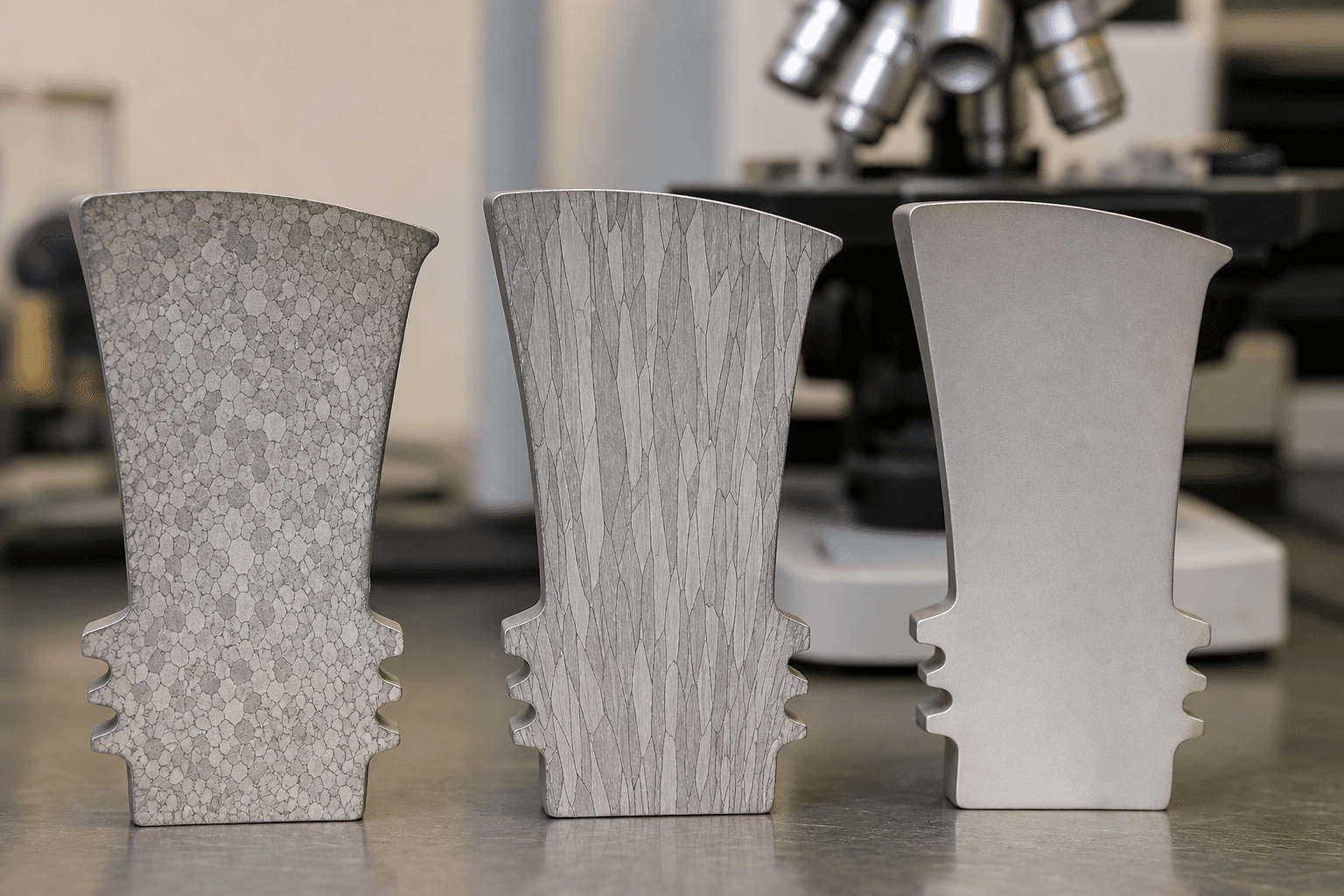
This is the job when NDT or metallography shows internal voids, remaining wall is still enough, and the alloy is a HIP candidate — typically equiax or DS nickel such as IN738, GTD111, MM247. HIP is hot isostatic pressing: a furnace under pressure that closes porosity. After HIP the blade is still coated and inspected. Case: a V94.2 first-stage vane with sound wall and a porosity map inside the HIP envelope. Euroturbine writes HIP plus recoat. HIP is not a cheaper new blade. If the wall is already gone, HIP does not grow metal.
Result 3 — New-make
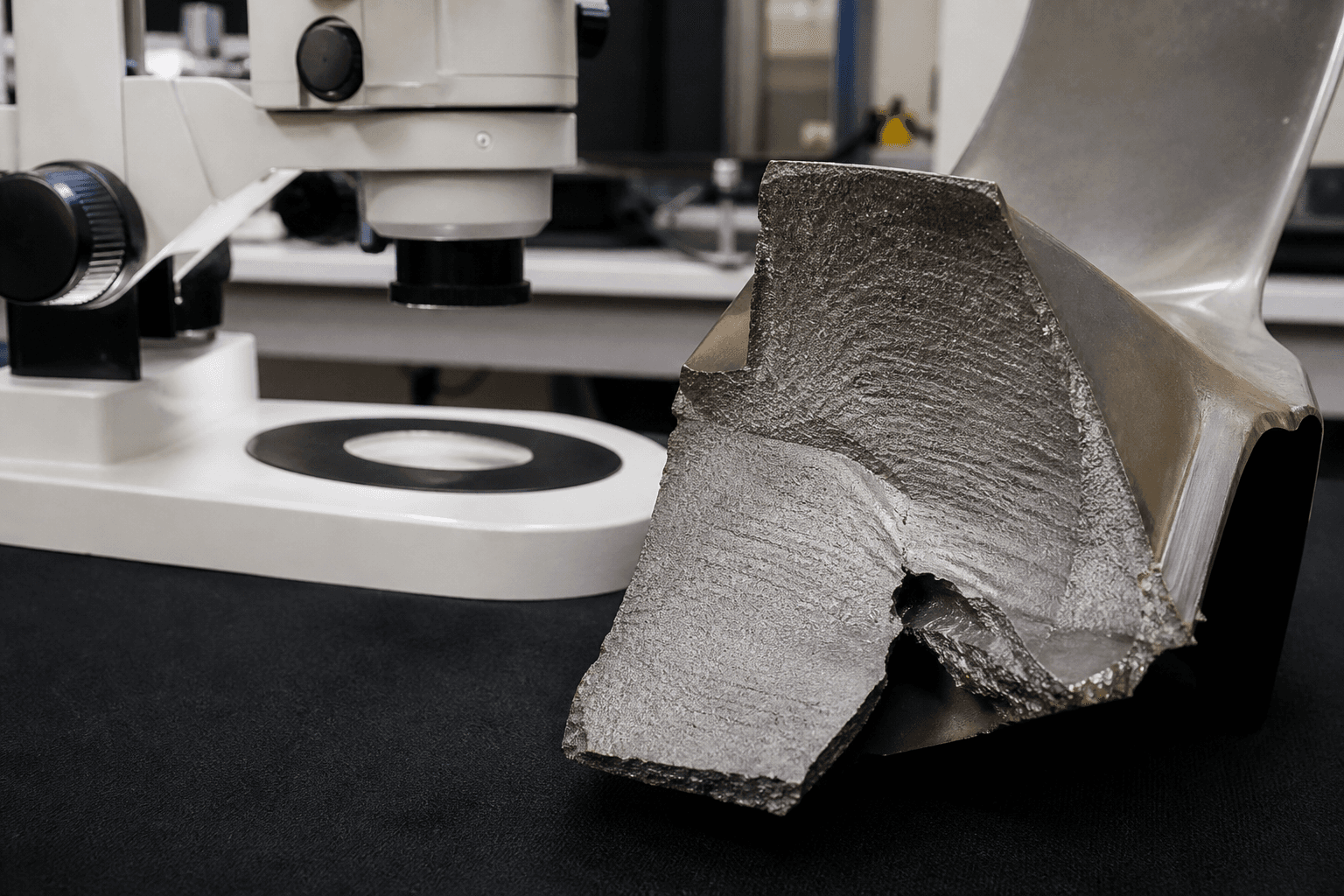
This is the job when remaining wall is below the minimum, a crack has entered the metal, the airfoil shape cannot be restored, or the coating process that row needs cannot be put back on that serial. Case: first-stage cooled blade with wall loss at the trailing edge and a blocked cooling hole that cannot be cleared to the airflow band. Euroturbine writes new-make for that OEM number. Mixing recoated and new blades in one rotating row is only allowed with a written note on mass and coating family.
Name the coating process on the certificate
Writing “پوشش شد” is not a certificate. The shop names the process: APS (air plasma spray) for most ceramic TBC, LVPS or similar for some bond coats, CVD or pack cementation for certain diffusion coats, then the thickness band in millimetres or micrometres, and the heat treatment after coating. A recoated blade without those lines is as weak as a blade with no heat number. Euroturbine prints those lines on the same paper as the serial.
Coating process names · When HIP sits in the middle · Repair and recoat
Frequently asked questions
If the coating has gone, must we replace the blade?
No. That is the most expensive default in the shop. Check the substrate first.
How is the old coating removed?
By the method in the specification — chemical strip or controlled grit — so the alloy is not eaten. We write the method on the workscope.
Can recoated and new blades share one rotating row?
Only with a written note on mass and coating family. Stage 1 is the row where mixing goes wrong first.
Related Euroturbine pages
Ask which job it is before the coating is stripped
Send hours and photographs of the coating. Euroturbine will say recoat, HIP or new-make.
Request a quoteMore articles

Last updated: August 29, 2026