Materials
Alloy grade gets the attention on the RFQ. Coating is what the flame actually sees. Euroturbine will not release a first-stage set if the coating stack is guessed from a brochure photo.
Alloy grade gets the attention on the RFQ. The flame sees the coating. Euroturbine will not release a first-stage set if the coating stack is guessed from a brochure photo. The four headings below say what TBC is, what MCrAlY is, what belongs on the certificate, and what happens when a 9E crate only says “پوشش شد”.
What TBC actually is on the gas-path face
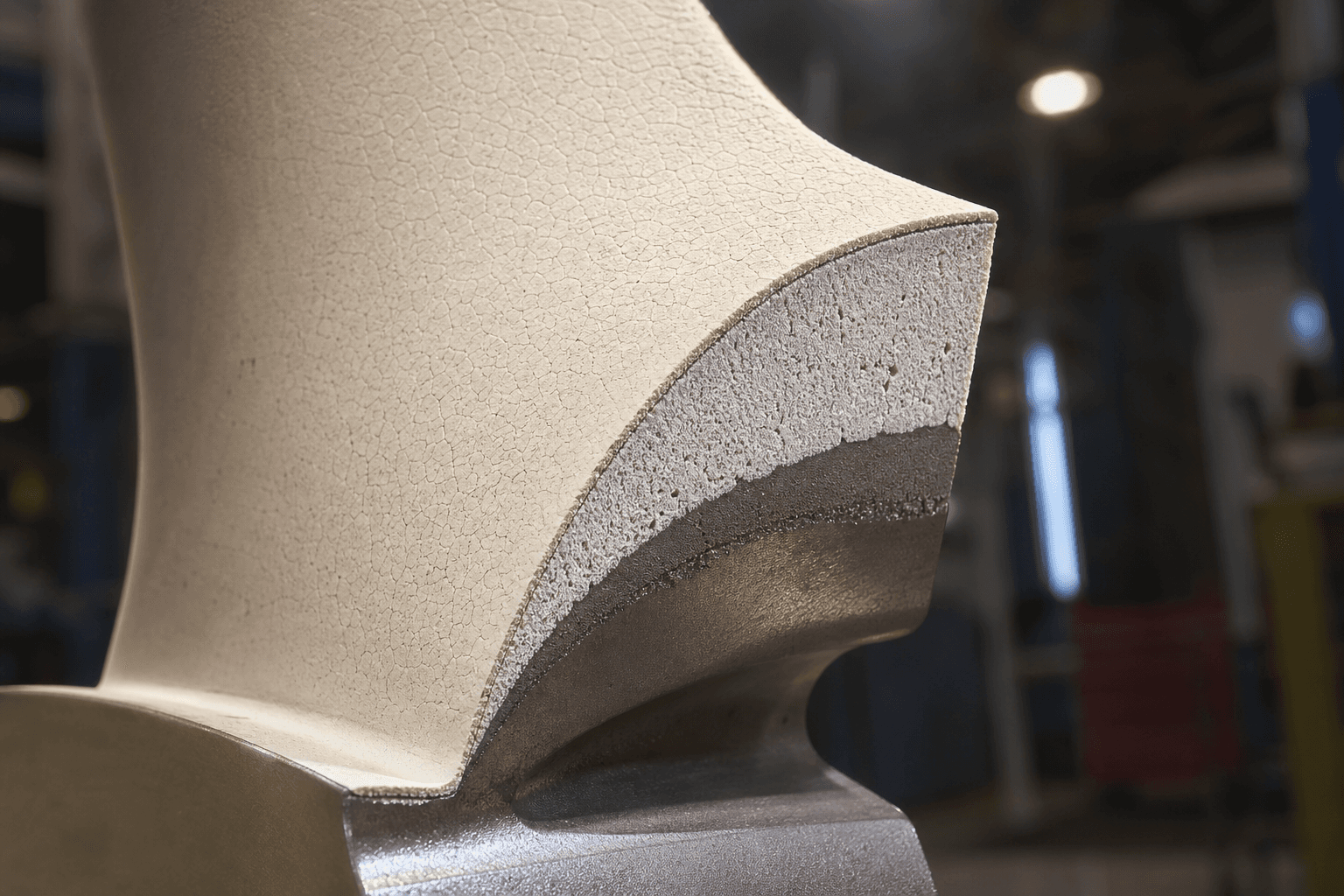
TBC is a thermal barrier coating: a ceramic layer on the face that sees hot gas. It drops the metal temperature of the airfoil or the liner wall. It is not a paint and it is not a synonym for “any white coating”. Thickness sits in a band. Too thin and the metal runs hot. Too thick and the ceramic spalls or closes cooling holes. First-stage 9E buckets and many V94.2 vanes take TBC because firing temperature demands it. A cooler row may not.
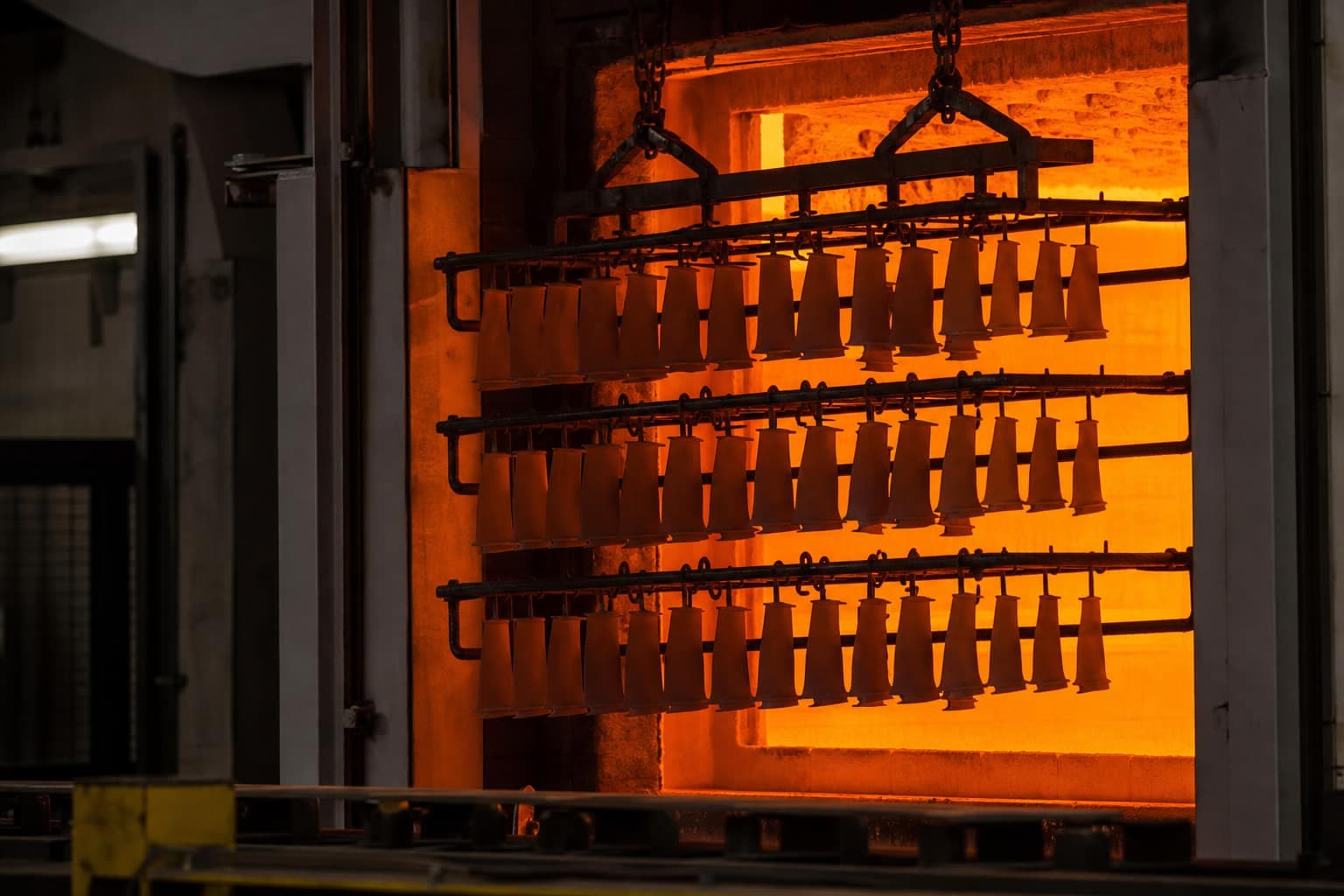
After HIP or weld restore the old ceramic is gone. HIP is hot isostatic pressing; it closes internal voids. It does not put TBC back. Recoat is a separate booth. Copying last outage’s TBC without checking firing temperature or fuel is how you put the wrong ceramic on a hotter campaign. Euroturbine reviews the stack before copying the last shop sheet.
What MCrAlY is, and when it sits without ceramic
MCrAlY is a metallic coating: a bond layer and an environmental layer. Under TBC it is the glue and the oxidation barrier between ceramic and nickel. On rows that never take ceramic it is the coating. Some vanes and internals still take aluminide instead. The mix follows the OEM row — the original equipment manufacturer specification — and the firing temperature. It does not follow whichever powder the shop had on the shelf that week.
Case. An SGT-600 power-turbine blade. The request says “TBC مثل ۹E”. That row on this machine is not a 9E first-stage bucket. Euroturbine writes the MCrAlY or aluminide the row actually takes, or TBC if that serial is specified for ceramic. Relabeling a 9E TBC recipe onto an SGT-600 row is not interchangeability. It is a coating that will not last the interval.
What belongs on the coating certificate
A useful certificate names the process (TBC, MCrAlY, aluminide or the stack), the target thickness band, the bond-coat type if used, and the OEM part number the piece is interchangeable with. The inspector or booth sign-off sits next to the heat number. NDT — non-destructive testing — stays on a sister sheet in the same pack. A sales PDF is not a certificate. The word “پوشش شد” is not a thickness.
After HIP or weld the old coating is gone. The new stack must match the duty, not the leftover of the last shop visit. Euroturbine puts the coating sheet next to the NDT certificate, tied to the same heat number and the same serial. If firing temperature or fuel changed since the last visit, that change is written on the request so the stack can be reviewed before the booth starts.
A 9E crate that said “coated” with no thickness
Case. A combined-cycle MS9001E. First-stage buckets come back from an aftermarket shop. The crate stamp is “پوشش شد”. No process name. No thickness band. No bond-coat line. The plant files the stamp and closes the case. Six months later TBC spalls on the leading edge. Remaining wall is still sound. The failure was the missing number on the certificate, not the alloy. Euroturbine would have held that crate at incoming inspection.
The honest pack for that 9E row names TBC over MCrAlY, a thickness band in millimetres or thou, and the OEM number. Incoming FPI and a thickness check belong before the blades go back in the machine. A cheaper booth that ships a stamp is how you buy a mid-interval outage. Euroturbine quotes the recoat with the hardware, on the same ticket, so “پوشش شد” never arrives as a surprise extra without a number.
Send the OEM number, the stage and the last coating sheet if you have one. Euroturbine will say TBC, MCrAlY, aluminide or the combination that row actually takes — and will put thickness on the certificate. A crate without that number does not leave.
Frequently asked questions
Can we reuse last outage’s coating spec blindly?
Only if firing temperature, fuel and hours have not changed. If the unit ran hotter or on a dirtier fuel, Euroturbine reviews the stack before copying the last shop sheet.
Is HIP without a full recoat a complete repair?
No. HIP closes internal voids. The surface still needs the environmental and thermal barrier the row was designed with. Euroturbine treats recoat as part of rejuvenation, not an optional extra.
What belongs on the coating certificate?
Process (TBC, MCrAlY, aluminide), target thickness, bond-coat type if used, and the OEM part number the piece is interchangeable with. A sales PDF is not a certificate.
Put the coating spec on the same quote
Euroturbine writes TBC and MCrAlY into the same pack as alloy and NDT.
Request a quoteMore articles
Emergency Hot-Gas-Path Parts When the Unit Is Already Down
When a Cracked Turbine Blade Can Be Welded and When It Should Be Scrapped
Heat Shields and Shroud Segments: The Stationary Ring Around the Blade Row
How to Buy Aftermarket Gas Turbine Blades Before the Outage
How to RFQ a Burner Casing, Liner and Transition Piece
Last updated: August 29, 2026