Outage planning
Blade RFQs arrive first because blades are expensive and visible. Combustion liners and transition pieces fail the outage when they are ordered last. Euroturbine treats them as the same critical path.
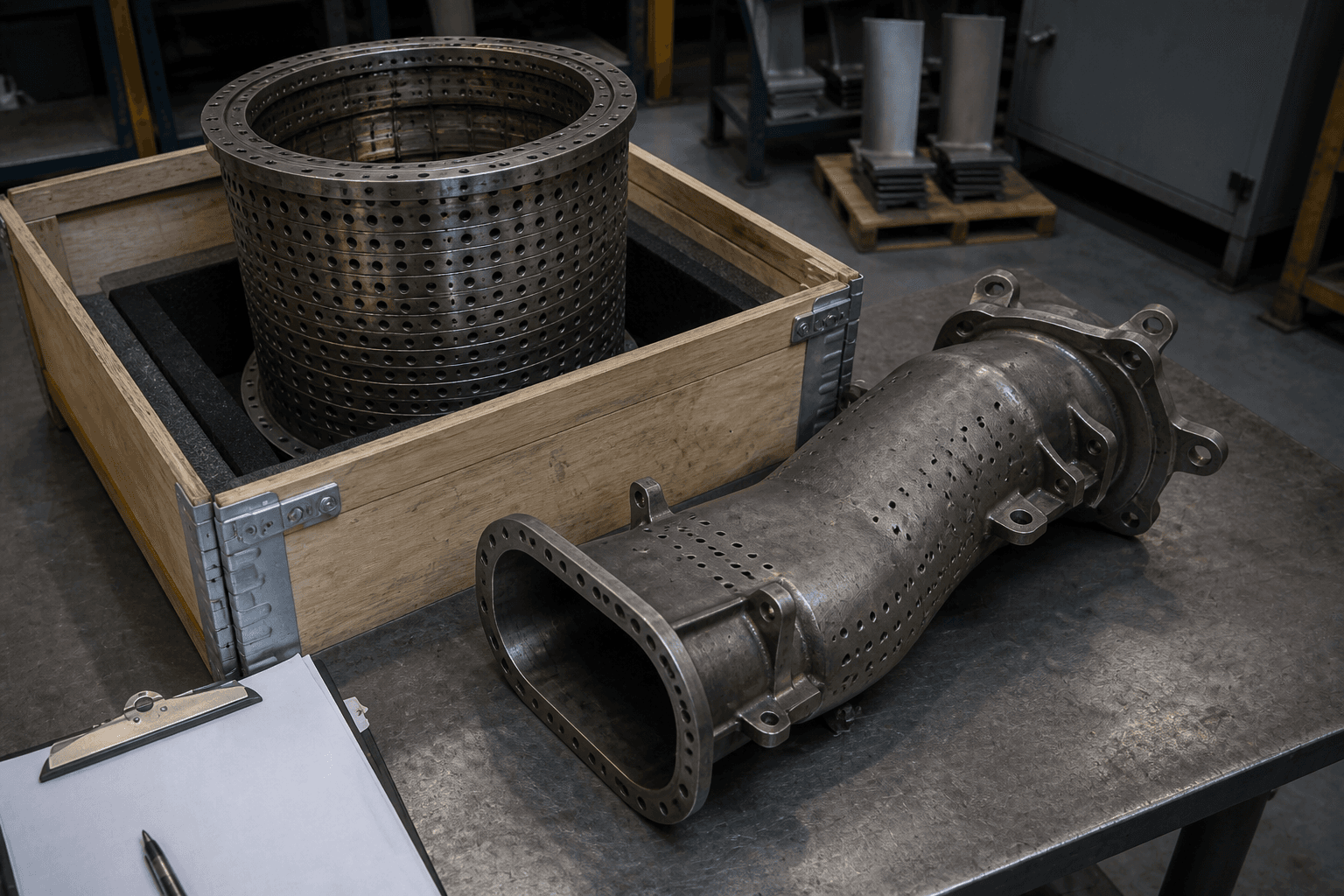
A combustion liner is the tube the flame sits in. It has cooling holes and a thermal barrier coating on the face that sees fire. Wear at the cross-fire tubes — the pipes that join one combustor to the next — and at the tile edges is not dirt you wipe off. The transition piece is the duct that takes that hot gas from the liner to the first-stage nozzles. On 9E and V94.2 it does not arrive as one casting. It arrives as the duct, the seals that sit on the lands, and the cooling sleeve. If the crate has only the duct, the case stays open.
If combustion is not on the blade RFQ, the outage will wait twice
Blade requests arrive first because blades are expensive and visible. The machine in the hall does not split “blade outage” from “combustion outage”. List the OEM numbers — original equipment manufacturer numbers — for liners, transition pieces and seals next to stage-1 blades on the same request. Say whether you will accept repair on liners. Euroturbine can mix new-make ducts with repaired liners in one shipment so the outage gate is one date, not two vendors guessing.
Case. A combined-cycle V94.2. Stage-1 vanes are on a filled RFQ. Combustion is “بعد از بلید”. The vanes arrive. The mixing chamber and flame-tube tiles are still on a second email. The case stays open. That is two waits on one Monday. Euroturbine writes combustion on the same page as the blades. The second wait is the one plants invent by splitting the request.
A liner fails at the cooling holes, the flame face and the cross-fire bosses
Cooling-hole blockage, TBC spall at the flame face, cracking at cross-fire bosses, and wall thinning are the failures that stop a start. TBC is the thermal barrier coating on the face that sees fire. A visual “it still looks round” is not an accept criterion. NDT — non-destructive testing — plus a remaining-thickness map decide repair versus new-make. Blocked holes that cannot be cleared to the airflow band are new-make, even if the tube still looks circular on the bench.
Case. A 9E liner set photographed in place. The plant says the liners “look fine” and orders only buckets. Opening week shows TBC gone at the flame face and two cross-fire bosses cracked. Wall next to one crack is below the repair minimum. That serial is new-make with no slot left. The other liners could have been repaired twelve weeks earlier. Euroturbine asks for the OEM number and a photograph of the flame face and the cross-fire bosses with the blade request, so that decision is on paper before the case opens.
If you only buy the duct, the case will not close
The cast shell is one OEM number. The seals on the inlet and exit lands are other numbers. The cooling sleeve is another. A shop that ships the shell and writes “ترنزیشنپیس” on the crate has not finished the job. You cannot bolt a bare duct to the liner and the first-stage nozzles and expect the machine to start. The missing seals show up on opening week, when nobody has a foundry slot and air freight cannot invent a gasket that has not been made.
Case. A combined-cycle 9E. First-stage blades and liners are on site. The transition ducts arrived two days before case-open. Seals and sleeves were “بعداً میرسد”. The outage lost a week waiting for those lines. Euroturbine writes the duct, the seals and the sleeve on the same RFQ line for MS9001E or V94.2. That is the order. Not a slogan about a kit.
Photograph the liner and send the OEM number with the blade RFQ. That is usually enough to quote a kit instead of a surprise mid-outage order.
Frequently asked questions
Can a liner be repaired instead of replaced?
Sometimes. Crack length, wall thickness and coating remaining life decide. Euroturbine will say repair, HIP-adjacent restore, or new-make before you open the case.
If we already have the transition duct, can we buy seals later?
You can, and that is how a planned outage becomes a wait. The duct does not seal or cool by itself. Write seals and the cooling sleeve on the same request as the duct.
Which frames?
GE MS9001E and MS6001B, Siemens V94.2 combustion hardware, ABB GT13 liners, and equivalent rows on Mitsubishi and Zorya when the sample exists.
Related reading
Add combustion hardware to the same quote
Euroturbine kits liners and transition pieces for GE, Siemens and ABB frames on the same lead-time conversation as blades.
Open Quick SupportMore articles
Hot-Gas-Path Parts for the GE MS5002 Mechanical-Drive Turbine
When a Cracked Turbine Blade Can Be Welded and When It Should Be Scrapped

Vacuum Investment Casting of Turbine Blades: From Wax Pattern to Inspected Metal
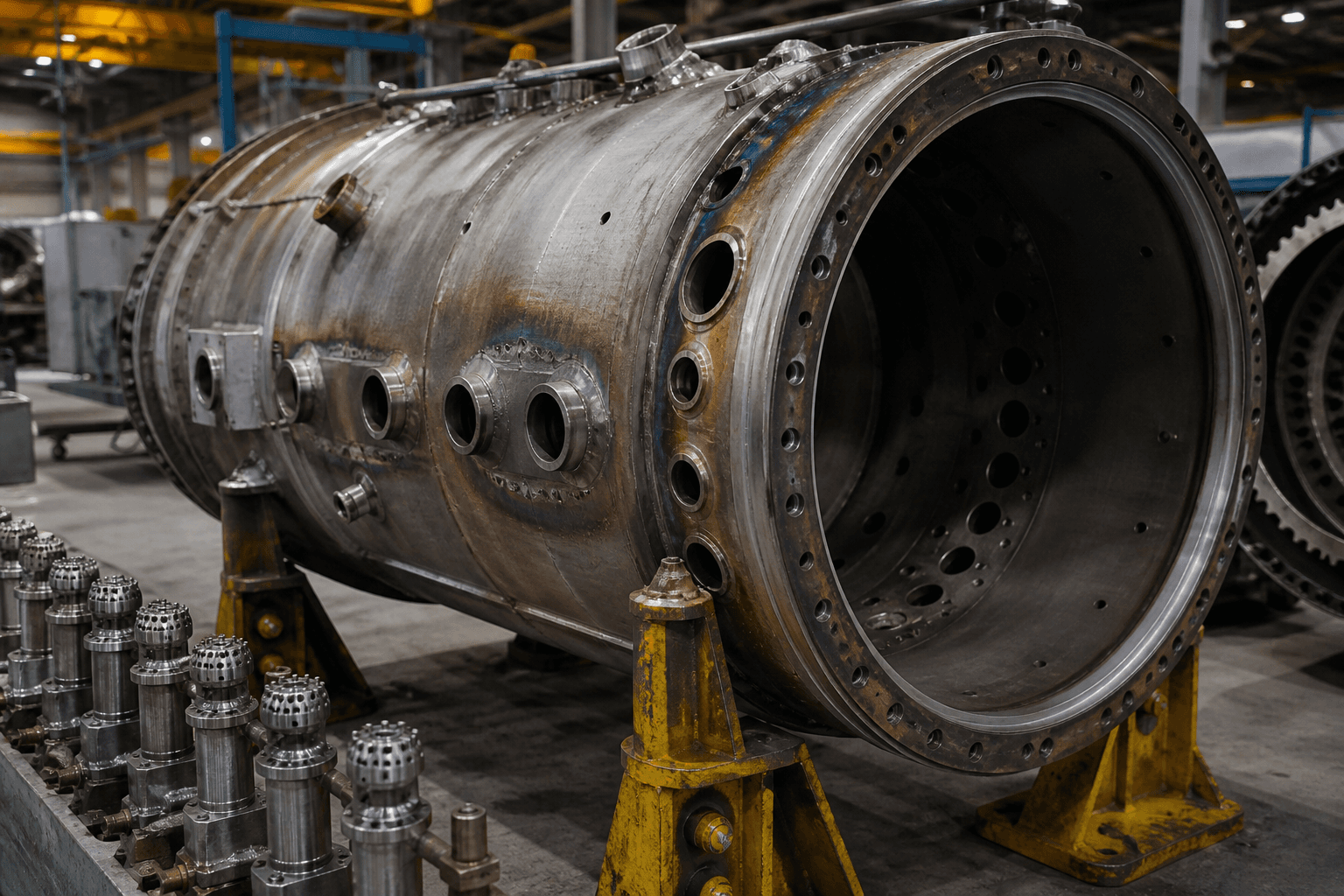
How to RFQ a Burner Casing, Liner and Transition Piece

Aftermarket Parts for a Siemens SGT-400 Oil-and-Gas Package
Last updated: August 29, 2026