Two shops, one Persian word
On Iranian enquiry forms the word پره often covers everything that looks like an airfoil. A compressor rotor blade, a stator vane and an inlet guide vane live in the cold and warm compressor. They are usually machined from a forging, a bar or a billet, and they do not carry a thermal barrier coating. A first-stage turbine blade is a different part: vacuum investment-cast, root-machined, then coated, and it sees combustion gas near a thousand degrees. Below are the two families as plant-style cases, then how each fails, then a filled request so the quote hits the right shop. If the photograph is only an airfoil from far away, Euroturbine will ask for the root before anyone prices metal.
If you walk the compressor of a heavy-duty machine you see rows of relatively stout airfoils. The metal is usually a high-strength stainless steel, a titanium alloy, or a nickel alloy chosen for strength and corrosion, not for a thousand-degree gas. Large compressor blades are often machined from a forged preform so the grain follows the airfoil. Smaller ones come from bar or billet. They do not receive a ceramic thermal barrier coating — TBC in every shop — because the gas there is not hot enough to need one. What they do see is sand, salt, wash water and the occasional foreign object. That is a different life from a first-stage bucket.
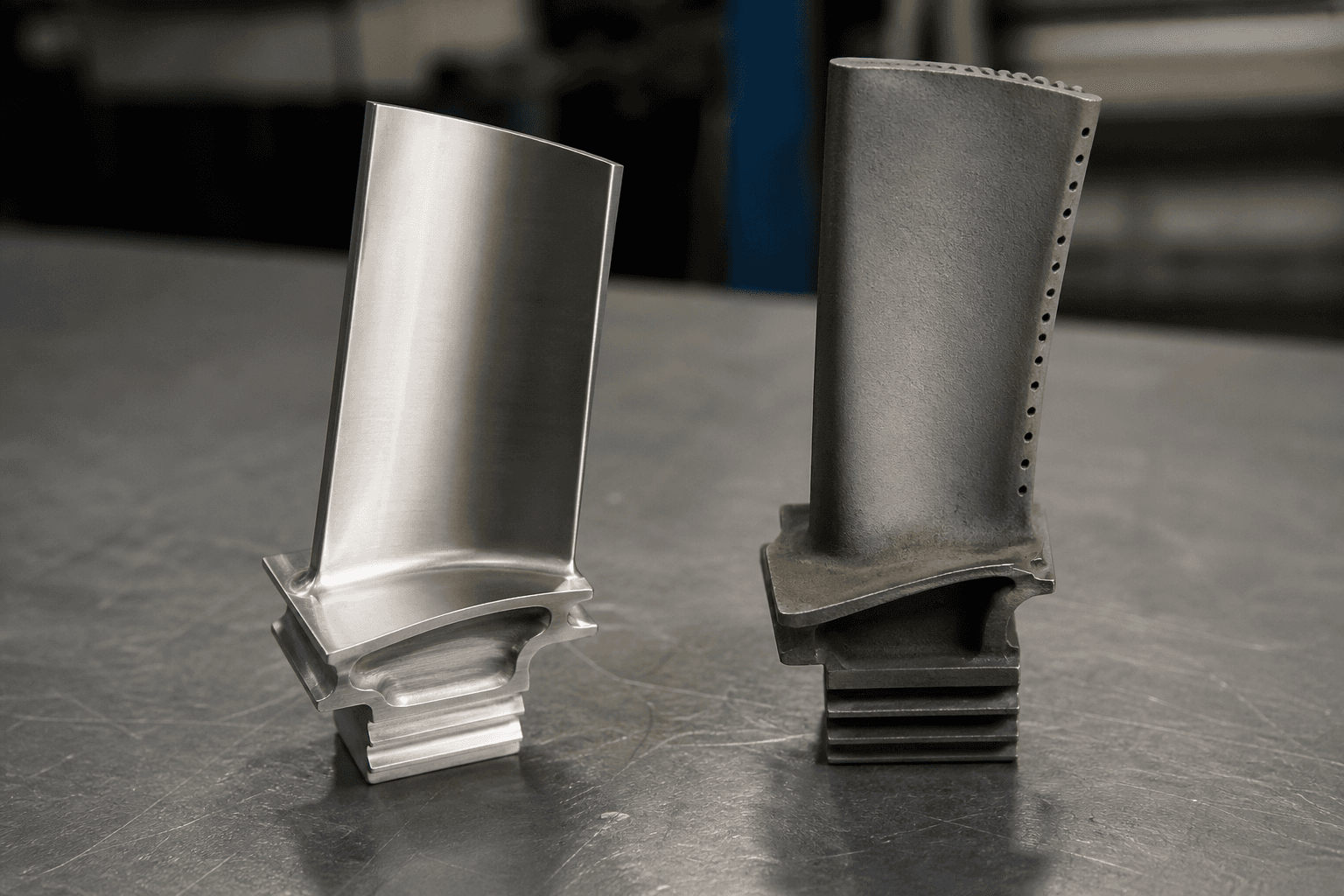
Result 1 — This is a compressor airfoil
This is the job when the part lives in the cold or warm compressor: an inlet guide vane — IGV in every Iranian shop — a variable or fixed stator, or a rotor blade. The useful request names that row, not only the word پره. The metal is a machining alloy. Failure is erosion, a nick from a foreign object, a rub after a stall, or corrosion under deposits. Creep at metal temperatures near 1000 °C is not the story. A shop that only mills stainless airfoils is real. It is not a substitute for a vacuum-cast, coated first-stage turbine blade.
Case A. An SGT-600 station on a gas line sends a photograph labelled پره توربین. The airfoil is stout, uncoated, and the root is a compressor dovetail, not a fir-tree into a hot disc. Euroturbine writes compressor rotor blade, not hot-gas-path. We will reverse-engineer that row if you send a sample and the original-equipment number — OEM in every store. We will not price it as a first-stage bucket.
Result 2 — This is a hot-gas-path blade
Hot gas path, often shortened to HGP, is the section after the combustor: first-stage nozzles, rotating blades, later stages, shrouds. A first-stage turbine blade is usually vacuum investment-cast from a nickel superalloy in the IN738, GTD111 or Rene 80 family. The root is then machined to the disc serration. Most rows take a metallic bond coat such as MCrAlY, and many take a ceramic TBC. The blade sees combustion gas, centrifugal load and oxidation. When a plant searches پره توربین گازی for an overhaul, this is usually the part they mean, unless they have written کمپرسور on the form.
Case B. A combined-cycle unit on Frame 9E opens a hot-gas-path outage. The shopping list is first-stage buckets, OEM numbers on the last outage report, quantity for a full row, hours and starts on that machine, and a note: new-make unless remaining wall allows a written repair. Euroturbine prices that as HGP. A compressor IGV from the same unit stays on a different line and a different shop conversation.
Result 3 — The two families do not fail the same way
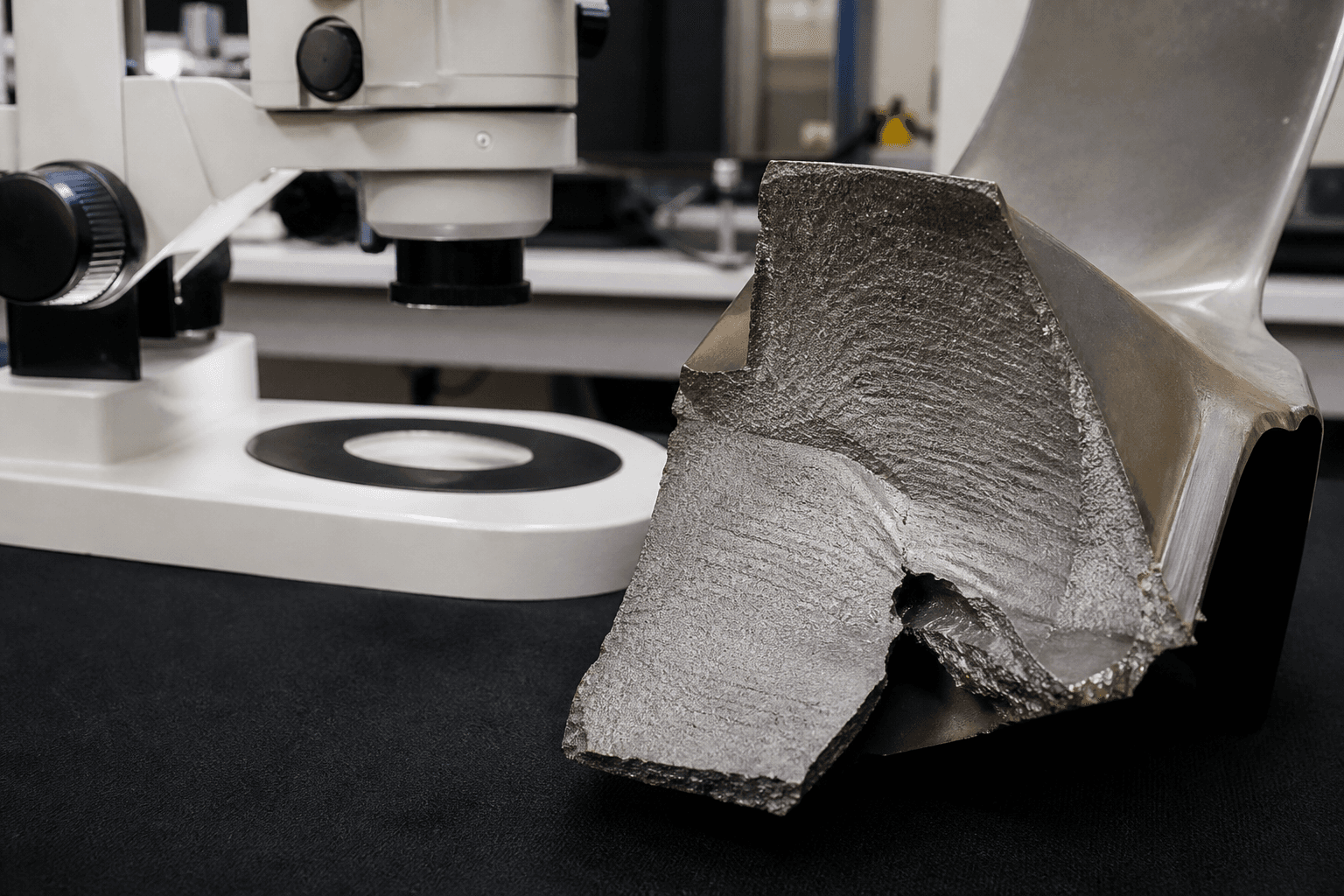
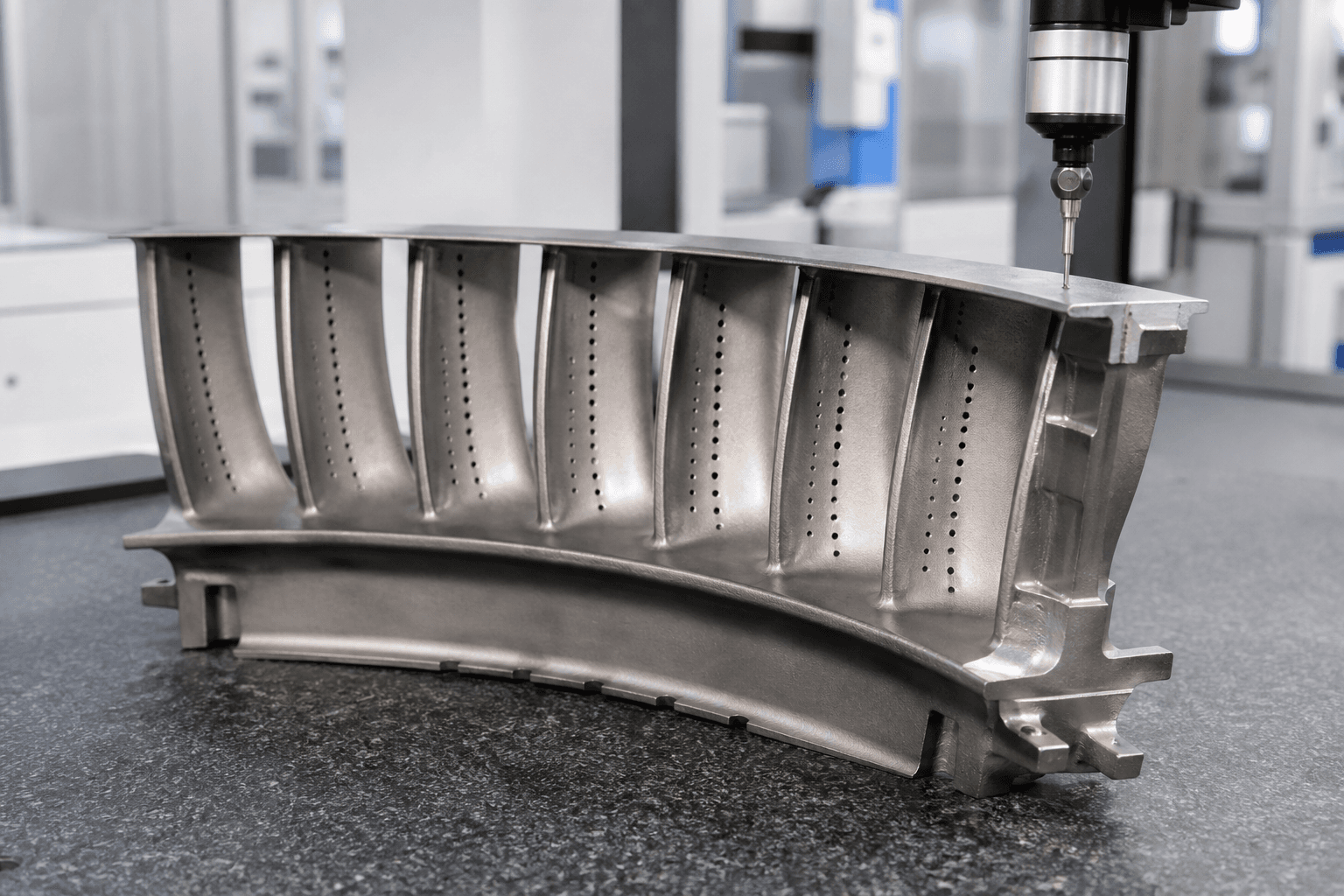
A compressor blade that has taken a stone looks ugly and may be blended or replaced. The metal underneath is still a machining alloy. A hot-gas-path blade that has lost coating, opened a cooling hole or grown by creep is a metallurgical case. You cannot judge it by the same eye you use on a compressor nick. Dimensional inspection on a coordinate measuring machine — CMM in every Iranian shop — uses different programmes for the two families. Root geometry, stacking and coating-thickness allowance are not interchangeable. Asking one programme to serve both is how a fitted blade still rubs.
Case C. The same V94.2 combined-cycle unit sends two photographs in one email. One is a compressor stator with a foreign-object nick; remaining wall is enough to blend. The other is a first-stage turbine vane with TBC gone and a cooling hole opened. Euroturbine writes blend-and-inspect on the compressor vane, and strip-recoat or replace on the HGP vane. One CMM programme is not used for both.
What a complete request looks like
A request Euroturbine can price without sending the list back looks like this. Nameplate: SGT-600 station, or Frame 9E combined-cycle — write the plate you have. Section: compressor or turbine. Row: IGV / stator / rotor, or HGP stage 1 rotating. OEM number from the last outage report, not a nickname. Quantity: one sample, or a full row. Hours and starts on that machine. Job: new-make, repair, or reverse-engineering if you are sending a compressor sample. Photographs: root and both sides of the airfoil, not an airfoil from ten metres. If the part has already run, attach the last coating record and the last non-destructive test — NDT in every shop.
Euroturbine manufactures and inspects hot-gas-path blades and vanes. A compressor airfoil is a separate request unless you send a sample and ask for reverse engineering. We will say the job is in scope, or we will point the enquiry. We will not price a compressor job as if it were a first-stage bucket.
Blade versus vane · Hot-gas-path parts by frame · Send photographs
The Persian word is one word. The alloy, the process and the failure mode are two specifications. Name the section of the machine before anyone quotes metal.
Frequently asked questions
Does Euroturbine make compressor inlet guide vanes?
The standard catalogue is the hot gas path. If you need a compressor airfoil reverse-engineered, send the sample and the original-equipment number. We will say the job is in scope, or we will point the request to the right shop.
Why do some Iranian sites list only compressor blades?
Because that is their machine shop: forging, bar stock and five-axis milling. Those parts are real and they keep compressors running. They are not a substitute for a vacuum-cast, coated first-stage turbine bucket.
Can one CMM programme inspect both families?
No. The root geometry, the stacking of the airfoil and the allowance for coating thickness belong to different families. A programme written for a bare compressor blade will pass a coated turbine blade that will not sit correctly in the disc.
Related Euroturbine pages
If you are not sure whether the airfoil is compressor or hot gas path, send one photograph
Photograph the root and both sides of the airfoil. Euroturbine will name the family in writing before anyone quotes a price.
Request a quoteMore articles

Last updated: August 29, 2026