An orphaned Siemens frame
If the storekeeper only has a V93 vane on a pallet and a faded tag, that is enough to start the conversation. It is not enough to pour metal. Nominal geometry must be rebuilt. Write V93.0 or V93.01 if the plate says so. Compare nothing to a V94.2 by eye. Below are two plant-style cases, then three results — repair, pour, or stop — then a filled pack. Euroturbine says repair, hot isostatic pressing or new-make after non-destructive testing, not after a telephone promise.
A faded tag tells you someone once thought the part was a V93 row. It does not tell you the nominal airfoil, the remaining wall, or whether the casing it came from was a V93.0 or a V93.01. Photograph the plate on the machine if the machine still has one. Photograph the tag and both sides of the airfoil. Send one sample per unique original-equipment number. If the last outage report still exists, send that too. Euroturbine will not invent a V94.2 substitute because the airfoil looks familiar from a later Siemens job.
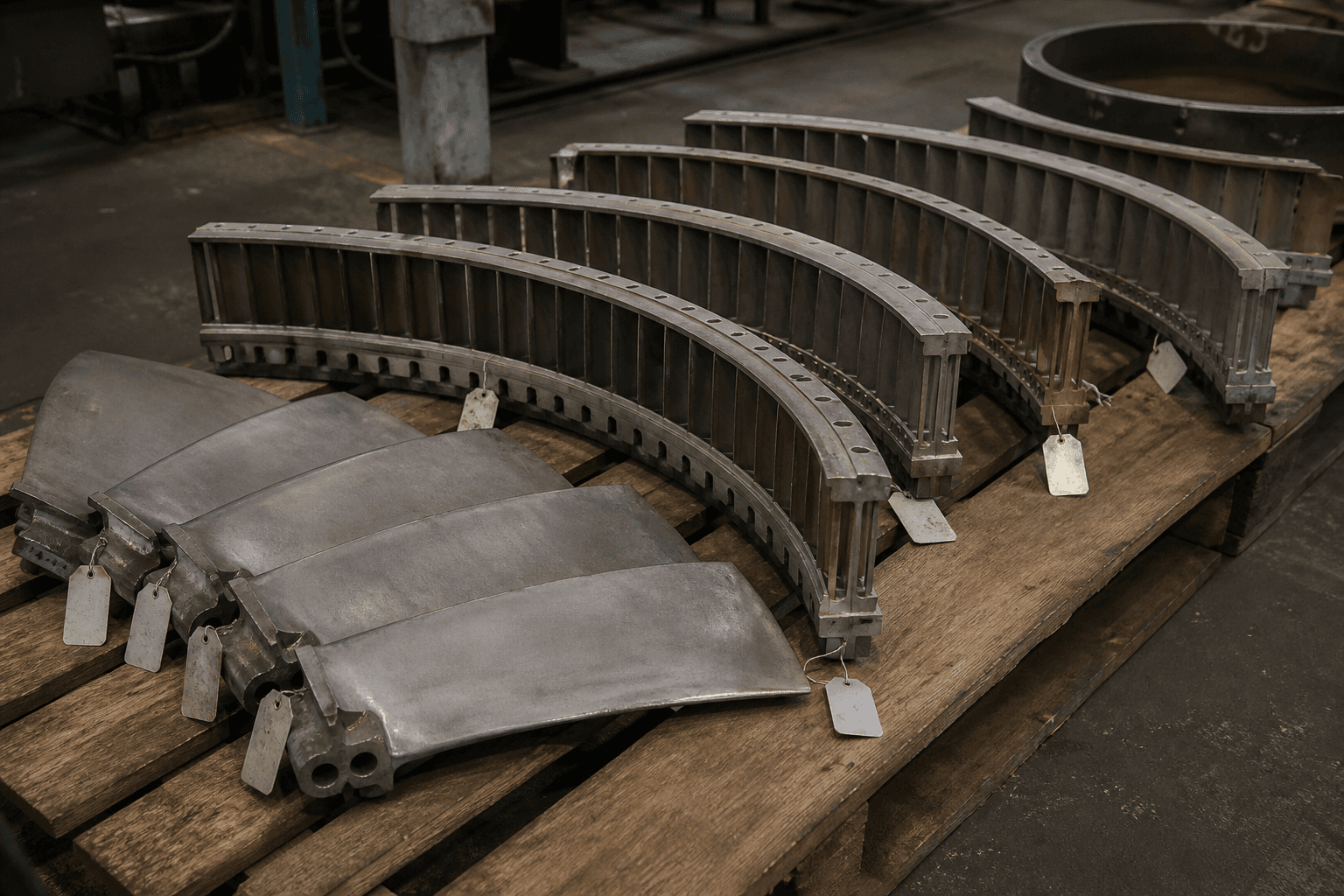
Case 1 — Pallet tagged V93, someone opened the V94.2 bin
V94.2 is the Siemens-derived E-class frame Iranian plants discuss every week. V93 is earlier and thinner in the aftermarket. The airfoils can look related to an untrained eye. The roots, the stages and the part numbers are not a shared shopping list. Interchanging the two lists is how a crate sits unused through the outage. If someone on site says it is almost a V94.2, ask for the plate photograph before anyone opens a V94.2 bin.
A combined-cycle site still running a V93.0 sends a vane on a pallet. The storekeeper has already pulled a V94.2 nozzle because the airfoil looked close. Euroturbine writes V93.0 from the plate photograph and leaves the V94.2 bin closed. The crate that would have sat unused through the outage never leaves the store.
Case 2 — A faded tag is not a manufacturing drawing
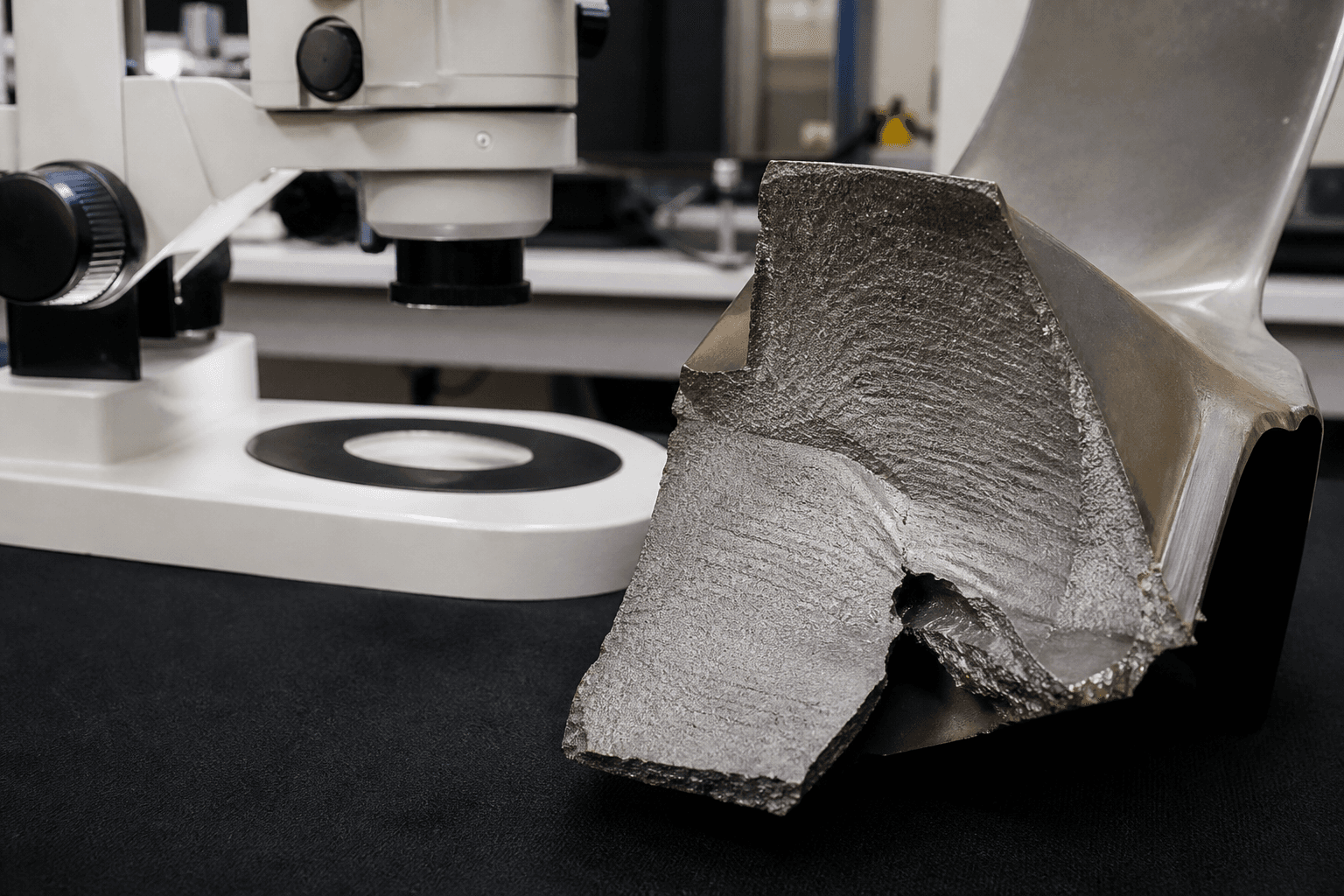
The usual path is scan the sample, rebuild nominal geometry, then decide repair or new-make. Many V93 rows arrive as new-make because the wall is already gone. Hot isostatic pressing — HIP — can sit in the middle when the alloy and remaining wall allow it. None of those decisions start from the tag text alone. Dimensional inspection on a CMM is what turns a pallet of mystery vanes into a contract. Euroturbine dates the foundry slot after we see the part.
The same pallet has a faded tag that says V93 and a number nobody can fully read. Euroturbine will not put a calendar date on that telephone description. We scan first. The tag is a clue. The CMM is the contract.
Result 1 — Repair and recoat
If remaining life allows, repair and recoat are cheaper than a full copy. NDT comes first — penetrant or radiography. Then blend or an allowed weld, heat treatment if the alloy needs it, coating if the row is coated, NDT again. Case: a V93.01 stationary vane with remaining wall inside limit, short cracks in an allowed zone. Euroturbine writes repair and recoat, not a foundry slot.
Result 2 — Pour new-make
If the wall is gone, new-make is the honest door. Reverse engineering is the fee you pay for an orphaned frame. That fee is still smaller than hoping an OEM warehouse still holds a V93 lot. Lead time is the scan plus the foundry slot. Case: first-stage V93 blade, trailing edge already at scrap thickness, no sister with unused wall. Euroturbine rebuilds nominal geometry from what can still be read, then pours. We will not copy the thin edge.
Result 3 — Stop
Stop if the sample is the wrong frame, if remaining wall cannot support a rebuild, or if anyone wants a date from a telephone description of a vane on a pallet. Honesty is the service. A slogan about domestic manufacture is not a workscope.
The pallet vane is tagged V93, but the root photograph is a V94.2 fir-tree. Euroturbine writes stop and asks for the plate. Pouring that geometry as V93 is how a crate sits unused through the outage.
What a complete V93 pack looks like
Photograph of the machine nameplate: V93.0 or V93.01 as the letters show — or a clear sentence that the plate is gone, plus any casing stamps that remain. One sample per unique OEM number on the pallet, complete airfoil and root. Photographs of the faded tag, both sides of the airfoil, the root. Last outage report if anyone still has a copy. Hours if they exist. Job requested: scan then repair, or scan then pour. Euroturbine will answer scan or repair, with a reason, after we have seen the part.
A faded tag is a starting clue. It is not a manufacturing drawing, and it is not permission to copy a V94.2 row.
Frequently asked questions
Is V93 hardware the same as V94.2 hardware?
No. Do not interchange the lists. The airfoils can look related. The roots, stages and part numbers are not a shared shopping list. Send the plate photograph before anyone opens a V94.2 bin.
Can you repair a V93 row without making a new one?
If remaining life allows, yes. Many V93 rows come in as new-make because the wall is already gone. Non-destructive testing decides that, not a hope that repair is always cheaper.
When do you put a delivery date on a V93 job?
After we see the sample and know whether the path is scan-and-cast or repair. A telephone description of a vane on a pallet is not enough to book a foundry slot.
Related Euroturbine pages
If a V93 sample is already on a pallet, send the photographs and the tag text
Euroturbine will say whether the next step is a scan or a repair, after we have seen the part, not after a slogan about stock.
Request a quoteMore articles

Last updated: August 29, 2026