The ring is a part
A perfect blade in a worn shroud rubs; a perfect shroud with a bad hook leaks. These tiles are the stationary ring around the rotating row, not decoration, and blade-only requests leave them off until the outage waits on a thin ring or a missing coat. Tip clearance sits in that ring and shows up in exhaust temperature and rub risk. Euroturbine writes shrouds and heat shields as their own OEM lines. Below are the two hardware families plants confuse — interlocking shrouds on the rotating blade, and stator tiles in the case — then repair versus replace, the coating on the ring, and a filled bill of materials a buyer can copy.
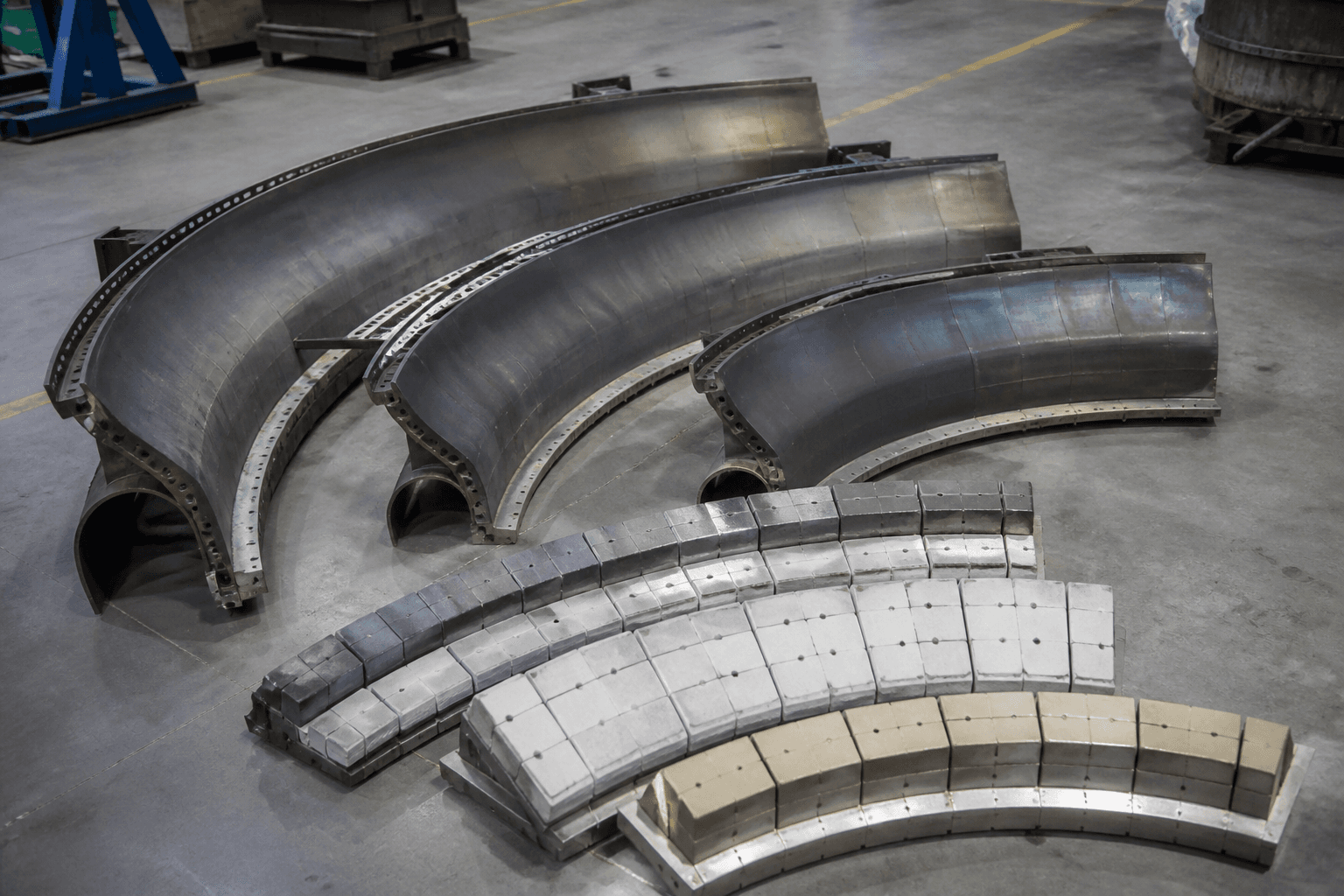
The stationary shroud or heat shield sits opposite the blade tip and closes the gas path. Wear on the gas-side face opens clearance. Wear on the hook or rail lets the tile move or leak. TBC is a thermal barrier coating: a ceramic layer that drops metal temperature; on this face it is often a related system to the blade coating, not automatically the same stack. OEM is the original equipment manufacturer; write that number for the tile, not only for the bucket. CMM is a coordinate-measuring machine; here it checks the gas-side contour and the hook. Do not assume the blade-set price includes the ring.
Result 1 — Buy the stator ring with the blades; it holds tip clearance after the case closes
Tip clearance is a performance and a hardware problem. Too open and exhaust temperature and heat rate move the wrong way. Too tight and the blade rubs the ring on a transient. The stator tiles — shroud segments or heat shields hooked or bolted into the case — are how that clearance is held after the case is closed. CMM of the gas-side contour belongs with the quote, the same way a blade fir-tree belongs with the blade quote. If the last outage only measured blades, the ring can still be the reason the unit comes back hot.
Case A. Combined-cycle Frame 9E. New first-stage buckets are on the cart. The shroud ring was left off the RFQ. After close-up the unit runs hot; tip clearance opened because the gas-side faces were worn and the TBC was gone. Euroturbine would have written the ring as its own OEM line: quantity to complete the circle, hook photographs, last coating, CMM of the gas-side contour. A complete bucket set in a worn circle is still an incomplete outage.
Result 2 — Do not treat SGT-600 interlocking blade shrouds as case heat-shield tiles
On some power-turbine rows the shrouds lock blade to blade on the rotating airfoil itself. SGT-600 is the example Iranian buyers ask about most: the interlocking shroud is part of the rotating blade, not a tile in the case. You buy it with the blade OEM number, with the lock geometry, not as “a few shields”. Mixing this name with stator heat shields on one RFQ is how a plant receives case tiles when it needed rotating hardware, or the other way around. Write “blade interlocking shroud” in plain words when that is what the row has.
Case B. An SGT-600 station RFQ says “شراود” next to the power-turbine blade list. Photographs show interlocking Z-shrouds on the rotating airfoils, and also a stationary ring in the case. Euroturbine splits the paper: interlocking shroud as part of the rotating blade line (geometry, lock faces, CMM with the fir-tree); stator heat-shield / shroud segments as a second OEM line (hook, gas-side TBC, ring count). One word شراود would have shipped only one of those families.
Result 3 — Order stator shroud segments and heat shields as case tiles, with the ring count
This is the ring around the row: tiles that bolt or hook into the case, opposite the blade tip. Write “stator shroud segment” or “heat shield” and the OEM number on the tile. Quantity is the count that completes the circle, not “a few shields”. Photographs of the hooks tell more than a sentence about how many. Euroturbine quotes them as a line, with CMM of the gas-side contour. They are not decoration in the blade price.
Case C. Combined-cycle V94.2. Blade list is complete. Heat-shield OEM numbers were never copied off the tiles. Euroturbine asks for a photograph of one tile in the case and the count around the ring, then writes that OEM line. If the plant cannot find the number, a rubbing tile still has a casting number on the back. We will not hide the ring inside the bucket quote so that purchasing thinks the circle is free.
Recoat the tile only when the hook and remaining wall can still be defended
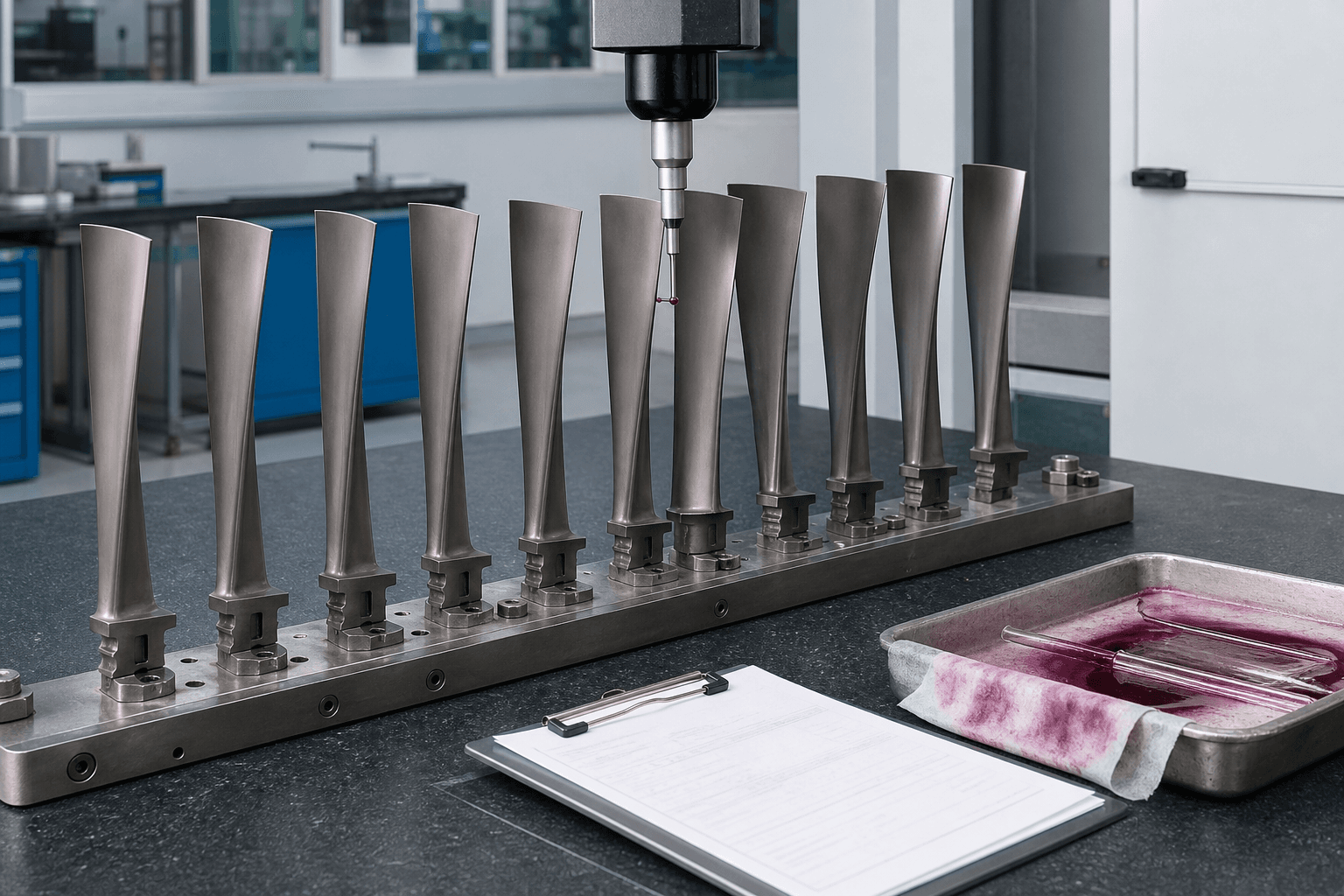
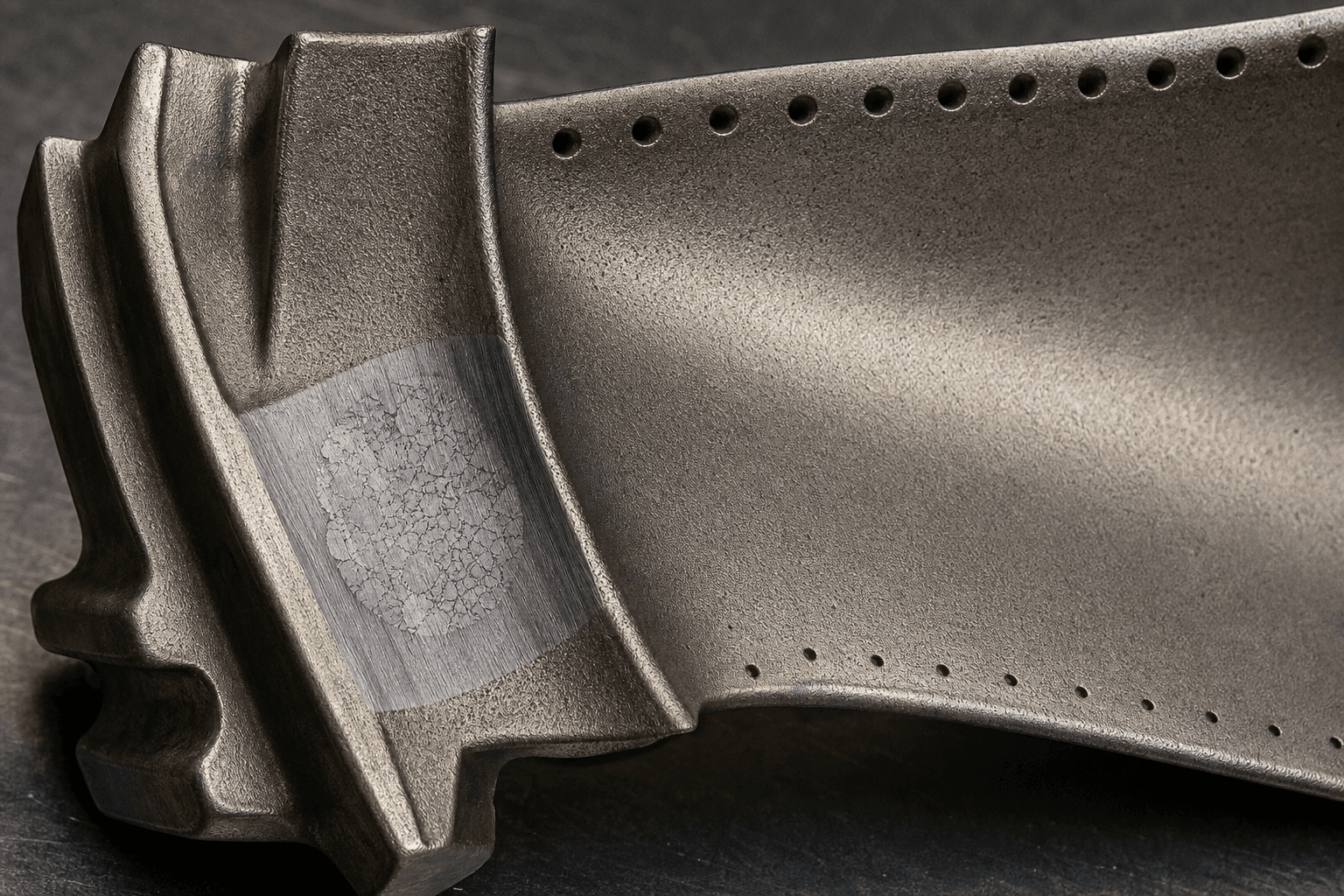
Recoat and blend are the job when the hook or rail is still there, remaining thickness is above the written limit, and the gas-side face has lost ceramic or overlay but not the parent metal. Strip the old coat, inspect the rail, apply the specified stack, CMM the contour, NDT the surface. “Looks white after a spray” is not a release. Euroturbine writes the measured rail and the thickness band on the certificate. A tile that only photographed well still leaks if the hook is oval.
Case D. Frame 9E combined-cycle, first-stage shroud tiles. TBC is gone; hooks still have wall; rail CMM is inside limit. Euroturbine writes strip and recoat, not replace. The blade row on the same outage is a separate line. Recoating the ring does not repair a rubbed bucket, and a new bucket does not restore a worn tile.
Replace the tile when the hook is gone or the wall cannot be defended
Replace when the hook is worn through, remaining wall is below the written minimum, the tile is cracked through a load path, or a previous recoat already used the cycles the specification allows. Sending that tile through a spray booth only postpones a leak or a rub. Euroturbine writes new-make for that OEM number, with CMM of hooks and gas-side contour, and the coating the last paper named — not “same as blade” by default.
Case E. V94.2 heat-shield tile, hook horn thinned below limit, crack into the bolt boss. Euroturbine writes replace. Recoat is off the table. Quantity is still the ring: if six tiles are scrap and the rest are recoat, the RFQ has two results on two groups of serials, not one sentence “شیلدها درست میشوند”.
Do not copy the blade TBC stack onto the ring unless the last paper says so
A thermal barrier coating on the gas-side face of a shroud is often a cousin of the blade ceramic, not the same thickness band and not always the same process. MCrAlY — a metallic bond coat under the ceramic, or sometimes a standalone overlay — may also differ. Write the last specification from the shop or the OEM note. Euroturbine will not copy the blade stack onto the ring unless that is what the paper says. Thickness without a process name is still an incomplete certificate on a tile.
Putting the blade ceramic thickness on the ring is how tip clearance changes after the spray. The tile sits opposite the blade tip; extra ceramic there closes the gap the same way wear opens it. Write two coating lines: process and thickness band for the bucket, process and thickness band for the tile. “Same as blade” is not a specification. If the last paper is missing, say so and Euroturbine will not invent a stack from the bucket certificate.
Case F. Frame 9E buckets last wore MCrAlY plus atmospheric-plasma-spray ceramic at one thickness band. Shroud tiles last wore a thinner ceramic on a different bond coat. Euroturbine prints two coating lines. Calling both “TBC” would have put the blade stack on the ring and changed clearance after the spray.
A filled ring bill of materials a buyer can copy
Copy this block onto the same gate as stage-1 blades. Frame: MS9001E or V94.2 or SGT-600 — the nameplate. Stage: [number]. Part family: stator shroud segment / heat shield (case tiles), and separately blade interlocking shroud if the row has locks on the airfoil. OEM number of the tile: [number]. Quantity to complete the circle: [count], not “a few shields”. Hook / rail: photographs, plus say if already blended. Last coating: process and thickness band, not “same as blade”. Repair or replace: recoat if hook and wall defend; replace if hook is gone. CMM of gas-side contour on the quote. Hours, starts, outage date. Planning this list before the case opens is cheaper than discovering a missing ring on day two.
Euroturbine returns two families if both exist: interlocking shroud on the rotating blade line, and stator tiles as their own OEM line with ring count and gas-side CMM. “چند شیلد” is not a bill of materials. Recoat versus replace is decided after the hook photographs, not after a wish that the ring be cheap.
Add the ring to the blade list before the case opens. A complete bucket set in a worn circle is still an incomplete outage.
Frequently asked questions
Are shrouds repairable?
Often yes: recoat and blend when the hook and remaining thickness can be defended. Replace when the hook is gone or the wall is below the written limit. Photographs of the rail decide faster than a telephone description.
Are interlocking blade shrouds the same as stator shroud segments?
No. They are different parts. On SGT-600 the interlocking shrouds live on the rotating blade. Stator shroud segments and heat shields are the tiles in the case that set tip clearance. Write which one you mean or the crate will be wrong.
Is the TBC the same as on the blade?
Often a related system, not automatically identical. Write the last specification from the shop or the OEM note. Euroturbine will not copy the blade stack onto the ring unless that is what the paper says.
Related Euroturbine pages
Add the ring OEM numbers to the blade list
Send shroud and heat-shield numbers with the bucket list. Euroturbine will price the circle as its own line.
Request a quoteMore articles

Last updated: August 29, 2026