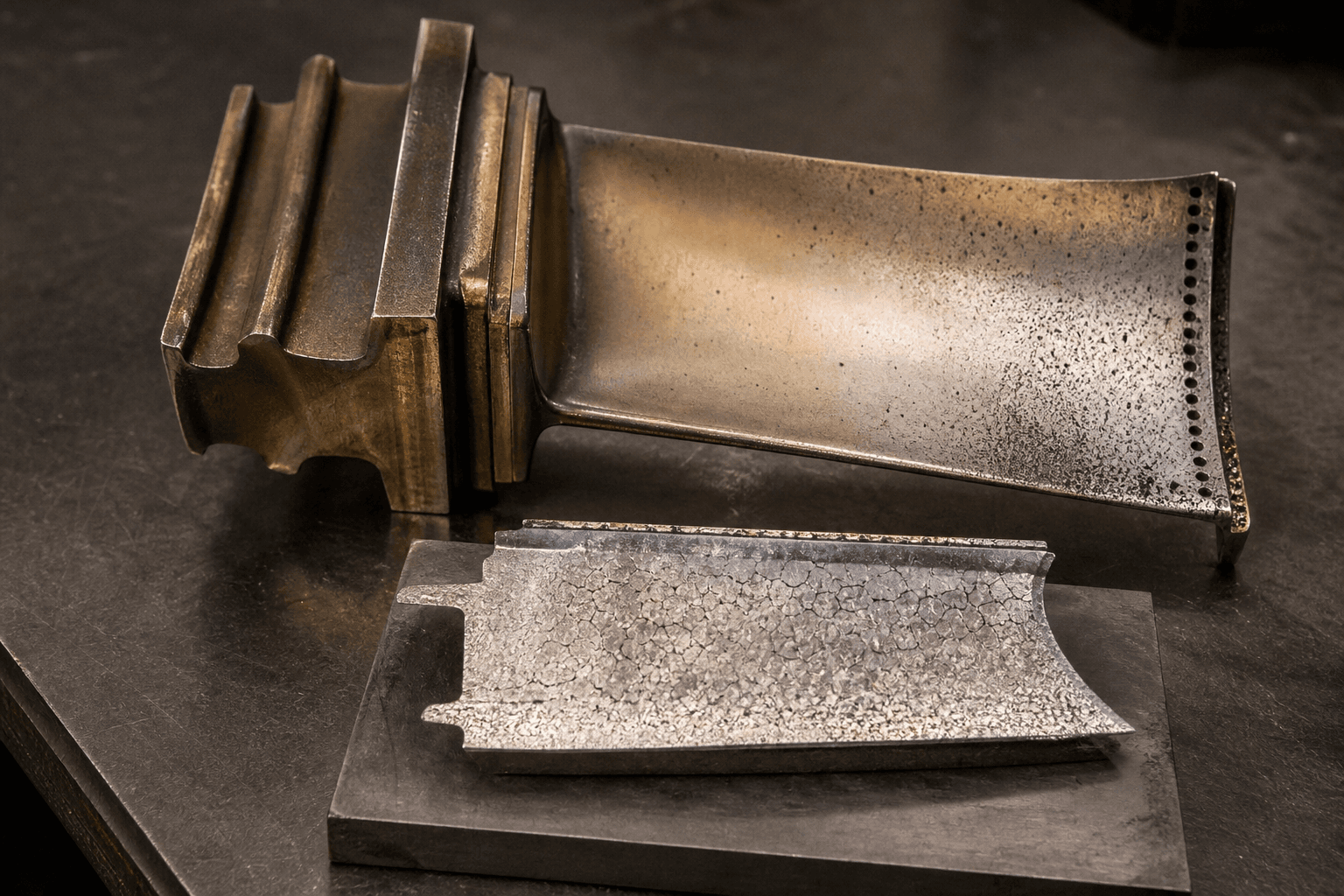
Life extension
HIP is expensive enough to justify; replacement is more expensive when it was not needed. Remaining life assessment is how Euroturbine chooses, on paper, before the vessel or the foundry slot is booked.
Remaining-life assessment — RLTA — is not a slogan. Remaining wall, FPI map, previous weld or HIP cycles, coating condition and equivalent operating hours decide whether the alloy still has a case. HIP is hot isostatic pressing: a furnace under pressure that closes internal voids. NDT means non-destructive testing. Single-crystal rows need a separate review. Equiax and directionally solidified nickel superalloys — MM247, GTD111, Rene 80, IN738 class — are the usual HIP candidates when limits allow. The three results below are the only tickets we write.
Result 1 — HIP plus recoat
Remaining wall is inside the written minimum, NDT shows internal voids, the alloy is a HIP candidate, and the coating is tired. Euroturbine writes HIP, then a new coating stack — TBC or MCrAlY as the row takes — then NDT again. TBC is a thermal barrier coating. HIP without a full recoat is not a complete rejuvenation. Single-crystal rows need a separate review. Do not paste an equiax HIP recipe onto SX.
Case. A combined-cycle 9E first-stage bucket. X-ray shows porosity. Remaining wall is sound. Cooling holes are open. Coating on the leading edge is gone. Euroturbine writes HIP plus recoat, not new-make by default. The commercial is a fraction of a new bucket. The engineering is the wall map and a known recipe. If the next bucket in the crate is below the wall minimum, that serial goes to result 3. The assessment is per piece.
Result 2 — Blend or allowed weld, no HIP
The indication is local, remaining wall is enough, and there are no internal voids that need a vessel. A tip rub, a blendable leading-edge nick, a short crack inside the allowed weld zone. Euroturbine writes blend or an allowed weld, heat treatment, then recoat if the row is coated. HIP is not a cheaper weld. Booking the vessel because remaining-life assessment “sounds more complete” is how you spend money on a sound casting.
Case. A V94.2 first-stage vane with a local tip rub and a clean X-ray. Wall map is inside limit. No porosity cluster. Hours are high but the alloy has not used a HIP cycle. Euroturbine writes blend, heat treat, recoat. The remaining-life note says the serial can run another interval without a vessel. If a sister vane in the same crate shows internal voids, that sister is result 1. One crate, two tickets. Adjectives such as “قابل تعمیر” are not a ticket.
Result 3 — Scrap and new-make
Wall is below the minimum, a crack sits in the root, cooling will not pass airflow, or the alloy has used up HIP and weld cycles. HIP does not grow metal. A geometry or cooling upgrade the frame now needs cannot be restored from a worn serial. Euroturbine writes scrap for that serial and new-make for the OEM number — the original equipment manufacturer number. If the set is mixed, this is per stage, not one sentence for the crate.
Case. An SGT-600 power-turbine blade with trailing-edge burn-through and wall below the repair minimum. The station asks whether RLTA can “save” it because a sister set is already booked for HIP. Euroturbine writes scrap and new-make. Putting that serial through remaining-life language and then into a vessel would hide a hole under ceramic. The written limit is millimetres, not hope.
What to send before we say HIP
Hours and starts, last NDT — FPI, X-ray or wall map, whichever you have — any previous repair or HIP report, and photographs of the airfoil if the set is still on site. Write the OEM numbers and whether the set is mixed. If the case is already open, say so. The critical path changes: incoming inspection may have to happen on the shop floor, not on a planned sample shipment.
Euroturbine returns a written limit: result 1, 2 or 3, per stage if the set is mixed, with scrap gates in millimetres. Do not book the HIP vessel on a photograph. Book it on remaining wall and that written limit. A long-term service agreement (LTSA) can keep the same tree in the appendix so the plant is not renegotiating metallurgy every outage. A one-off heavy HGP still starts with the hours and the last inspection — not with a verbal “ظاهراً خوب است”.
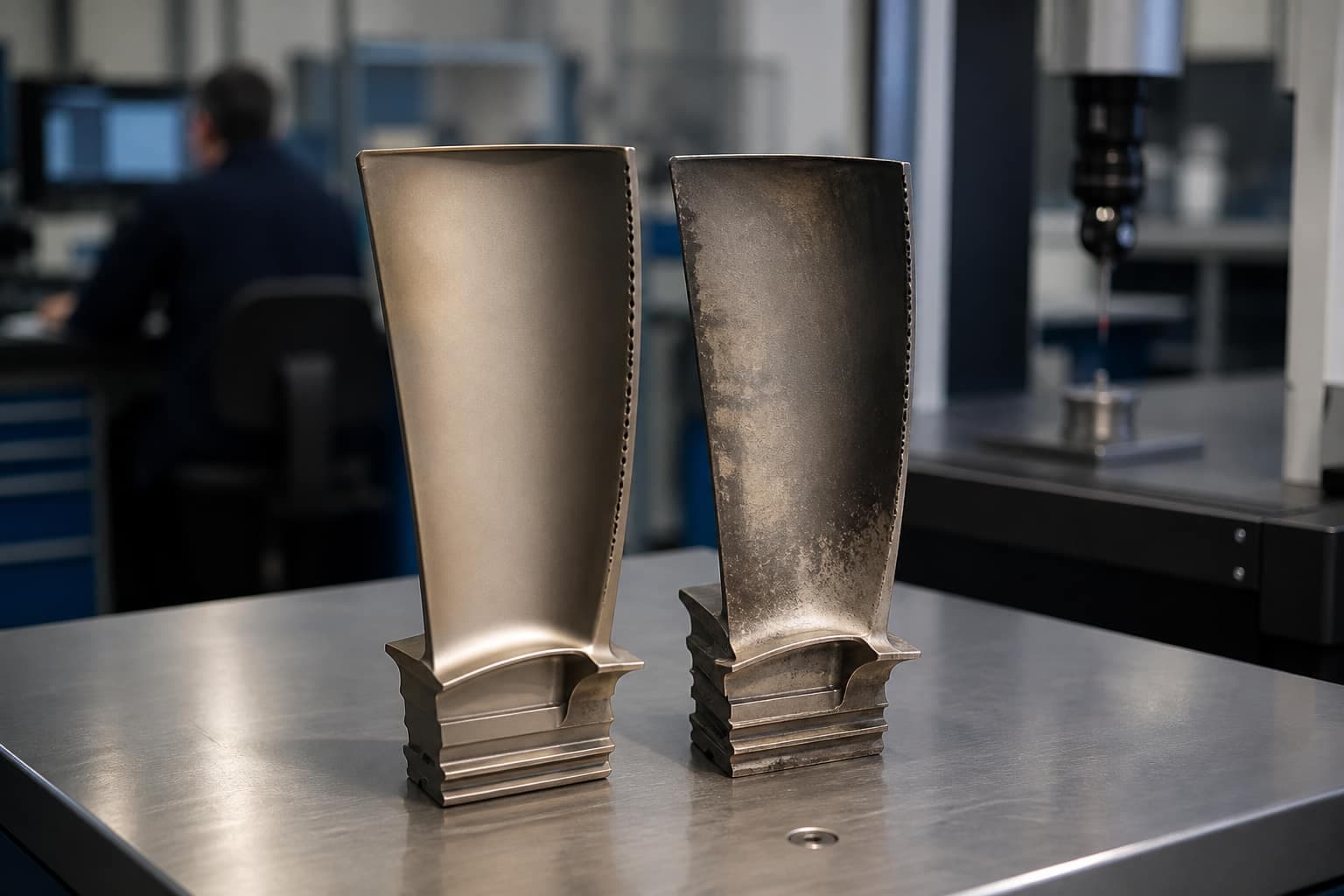
Do not book the HIP vessel on a photograph. Book it on remaining wall and a written repair limit.
This assessment can sit inside an LTSA so the same tree repeats every outage. Or it can be a one-off before a heavy HGP. Either way, start with the hours and the last inspection — not with a verbal “it looks fine”.
Frequently asked questions
Is RLTA only for first-stage blades?
First-stage hardware is the usual trigger, but vanes and later stages benefit when hours are high or previous repairs are undocumented. Euroturbine scopes the set you actually intend to run another interval.
What if we have no last NDT report?
Then incoming inspection is the assessment. Do not book HIP on a photograph. Send the set or a sample with hours and any shop history you still have.
Can RLTA sit inside an LTSA?
Yes. A useful LTSA has an RLTA / HIP decision tree in the appendix so the plant is not renegotiating metallurgy every outage.
Get a written HIP / replace decision
Send hours, last NDT and the OEM numbers. Euroturbine will say remaining-life, HIP or new-make.
Talk to repair engineeringMore articles
Buying Hot-Gas-Path Parts for a Siemens V94.3A
Emergency Hot-Gas-Path Parts When the Unit Is Already Down
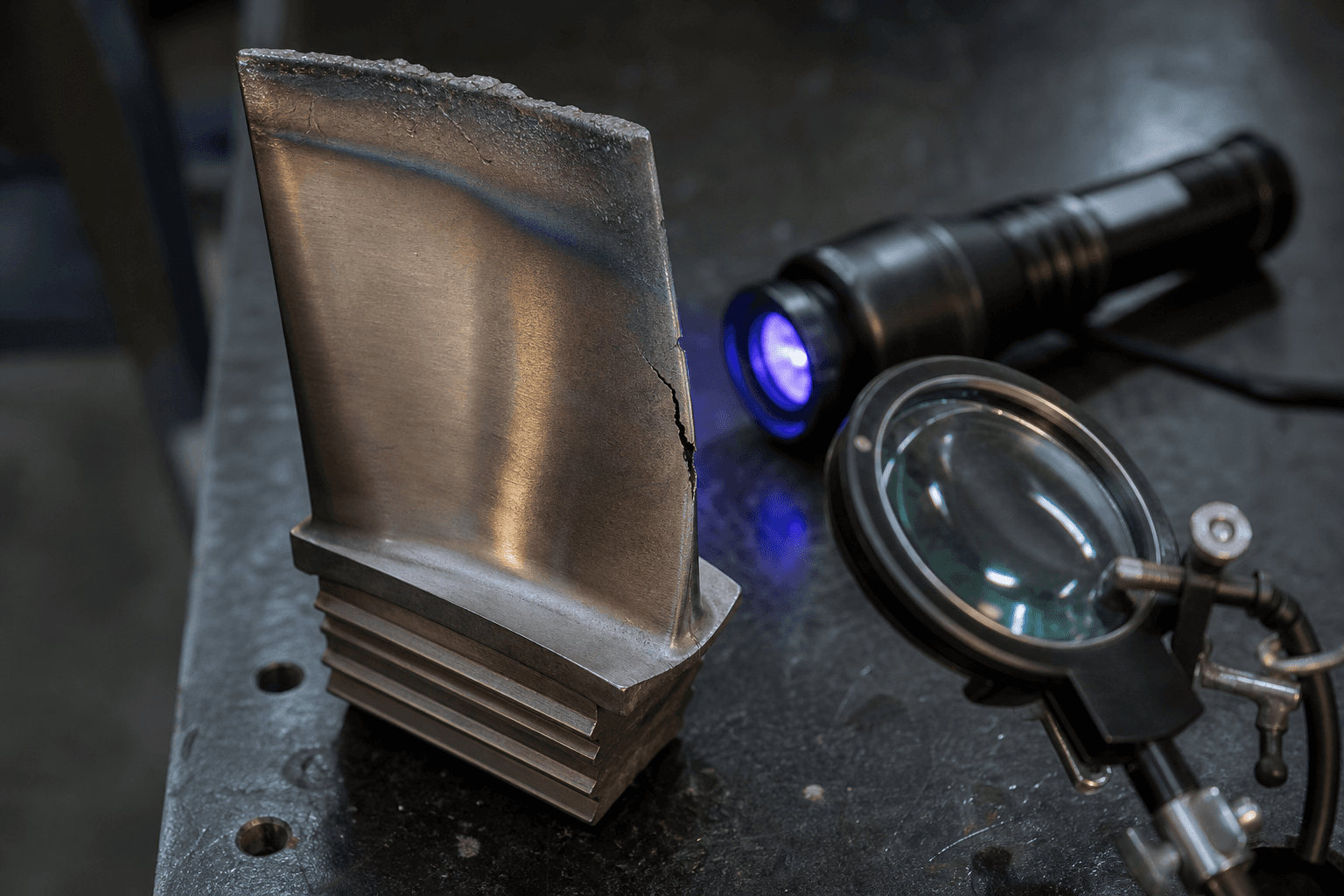
Gas Turbine Blade Damage: Repair, HIP or Replace
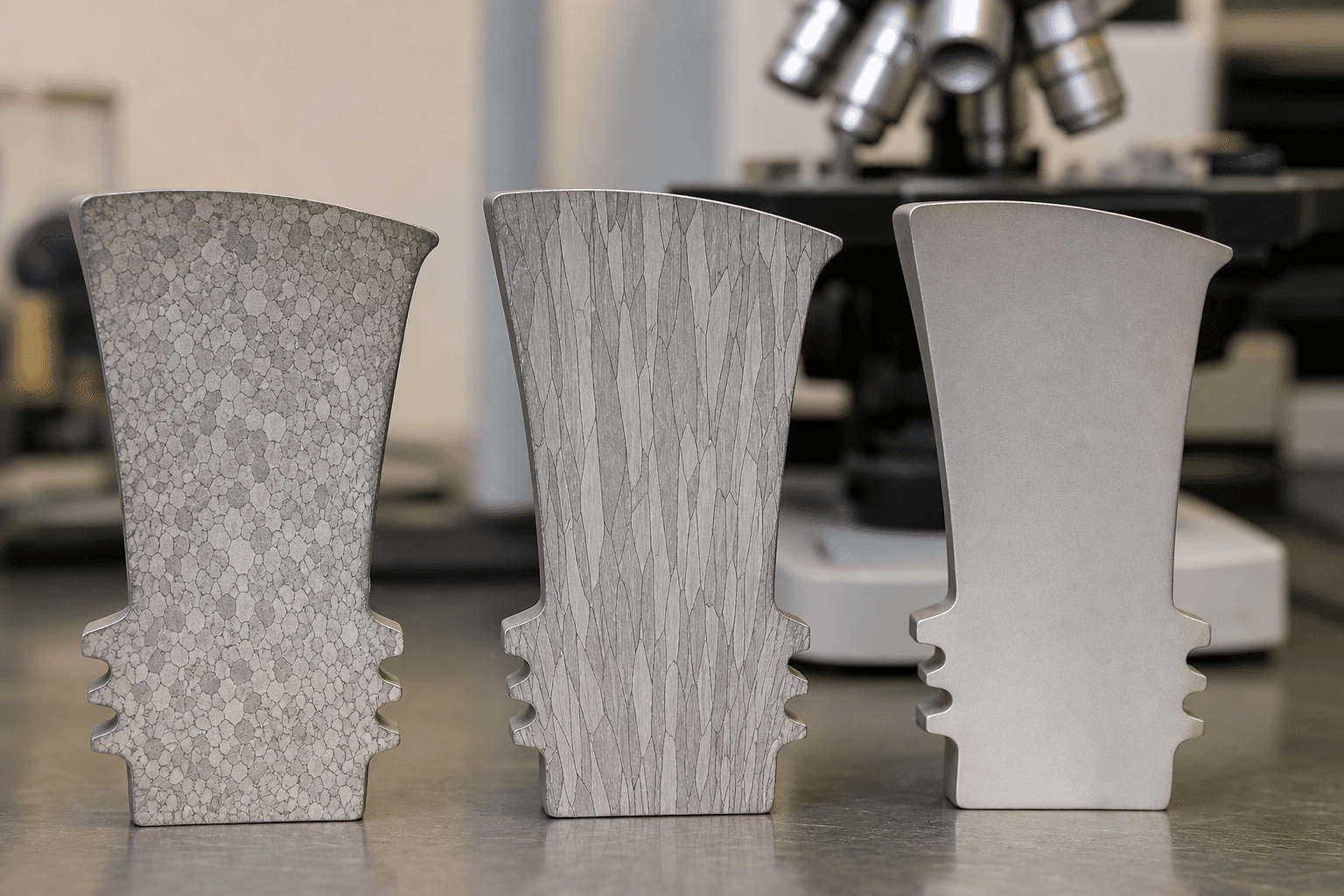
Equiaxed, Directionally Solidified and Single-Crystal Blades: Three Different Products

Vacuum Investment Casting of Turbine Blades: From Wax Pattern to Inspected Metal
Last updated: August 29, 2026